
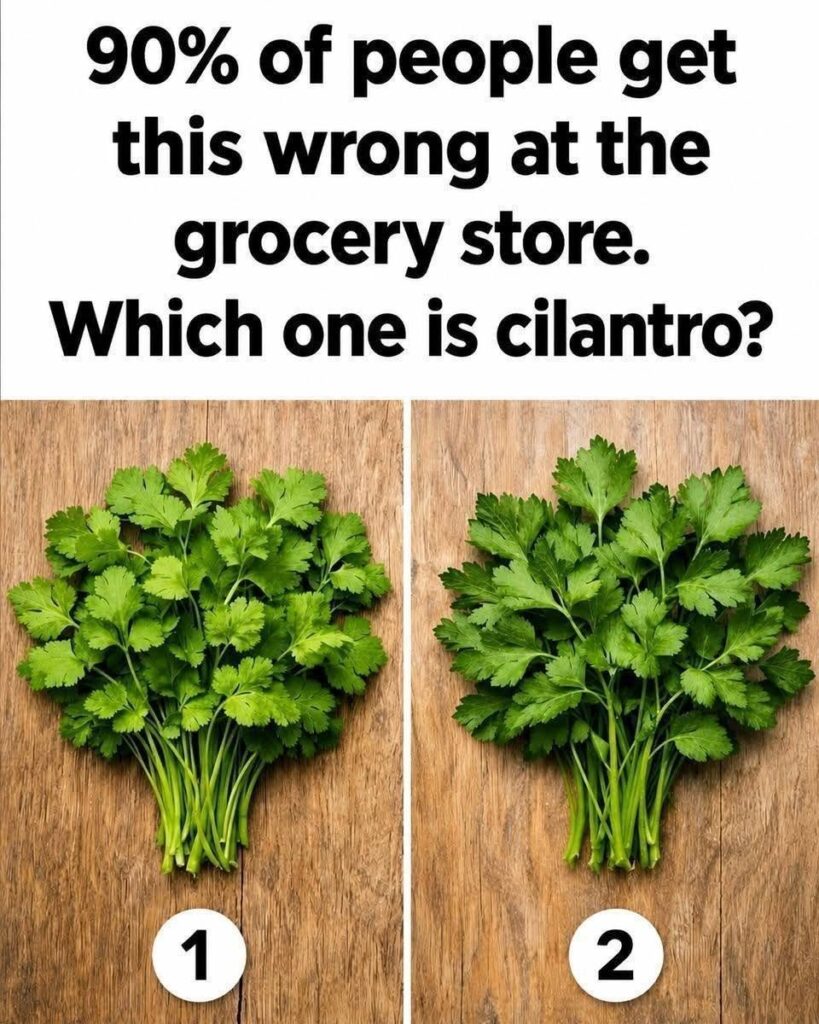
Mixing up fresh herbs at the produce section is an extremely common grocery mistake. Flat-leaf parsley and cilantro (coriander) share similar green colors, stemmed bunches, and leaf structures, making them look almost identical at first glance.
A viral social graphic titled “90% of people get this wrong at the grocery store. Which one is cilantro?” shows two side-by-side herb bunches labeled 1 and 2 resting on a wooden background.
Image 1 is cilantro, featuring softer, rounded, fan-shaped leaves. Image 2 is flat-leaf Italian parsley, characterized by darker green, pointed, serrated leaves.
Here is a full visual breakdown, taste and aroma comparison, and quick identification hacks to ensure you buy the right herb every time.
Visual Comparison: Cilantro vs. Italian Parsley
Understanding key visual markers makes identifying herbs straightforward:
+-----------------------------------------------------------------------------------+
|                        CILANTRO vs. FLAT-LEAF PARSLEY COMPARISON                  |
+-------------------+----------------------------+----------------------------------+
| Feature           | Cilantro (Image 1)         | Italian Parsley (Image 2)        |
+-------------------+----------------------------+----------------------------------+
| Leaf Shape        | Curved, rounded, fan-like  | Pointed, sharp, serrated edges   |
| Color Tone        | Lighter, bright lime green | Darker, deep forest green        |
| Aroma             | Pungent, citrusy, peppery  | Mild, grassy, fresh earthiness   |
| Stems             | Tender, thin, soft         | Stiff, thick, fibrous            |
+-------------------+----------------------------+----------------------------------+
Cilantro (Bunch 1)
- Leaf Appearance: The leaves are rounded, softer, and feature gentle curve cuts along the edges, resembling a small fan.
- Color: Typically a lighter, brighter lime-green shade.
- Flavor Profile: Bright, citrusy, complex, and pungent. It is a fundamental staple in Mexican, Asian, and Latin American cuisines.
Flat-Leaf Italian Parsley (Bunch 2)
- Leaf Appearance: The leaves are larger, elongated, and feature distinct sharp, pointed, triangular edges.
- Color: Deeper, darker forest-green hue.
- Flavor Profile: Fresh, clean, mildly peppery, and grassy. It is commonly used as a garnish and base in Mediterranean and European dishes.
3 Quick Grocery Store Identification Hacks
If you are unsure while browsing the produce aisle, rely on these reliable sensory tests:
- The Smell Test: Gently rub a leaf between your thumb and forefinger. Cilantro releases an immediate, pungent citrus aroma, whereas parsley smells mild, fresh, and earthy.
- Check the Stems: Cilantro stems are delicate and hollow, while parsley stems are firmer, thicker, and more rigid.
- Inspect the Leaf Tips: Look closely at the tips of individual leaves—rounded tips mean cilantro; pointed tips mean parsley.
Financial Impact: Maximizing Freshness & Preventing Food Waste
Herbal ingredients add incredible culinary value, but proper storage prevents premature spoiling:
- Extend Shelf Life: Store fresh cilantro or parsley bunches upright in a jar filled with an inch of fresh water covered loosely with a plastic bag in the fridge to keep them crisp for up to two weeks.
- Cost-Effective Cooking: Fresh herbs cost under $2 a bunch and deliver high-impact flavor, replacing high-sodium packaged seasonings.
Fascinating Facts About Cilantro and Parsley
- The “Soap” Gene: Between 4% and 14% of the population possesses a genetic variation (OR6A2 olfactory receptor gene) that causes cilantro to taste strongly like dish soap!
- Nutrient Density: Both herbs are rich in Vitamin C, Vitamin K, and antioxidants that support bone health and immune defense.
Conclusion: Shop Fresh Herbs with Confidence
By looking for rounded leaf edges and testing for a signature citrus aroma, you can easily identify cilantro every time you shop.
Frequently Asked Questions
Q1: Which number in the photo is cilantro?
A1: Number 1 is cilantro (rounded, fan-shaped leaves), and Number 2 is flat-leaf Italian parsley (pointed, serrated leaves).
Q2: Can you substitute flat-leaf parsley for cilantro in recipes?
A2: Visually yes, but flavor-wise no. Parsley offers a mild grassy taste, whereas cilantro delivers a strong, distinctive citrus flavor that defines dishes like salsa and guacamole.
Q3: Why does cilantro taste like soap to some people?
A3: A specific genetic olfactory receptor variant detects aldehydes present in cilantro, which are also compounds used in soap manufacturing.
Q4: How do you keep cilantro fresh in the refrigerator?
A4: Trim the bottom stems, place the bunch in a cup of fresh water, cover the leaves loosely with a plastic bag, and refrigerate.
Q5: Is curly parsley easier to distinguish from cilantro?
A5: Yes. Curly parsley features ruffled, thick, ruffled leaves that look completely different from both cilantro and flat-leaf Italian parsley.
