
Kit Kat is one of the most recognizable candy bars in the world, famous for its crisp wafer layers, chocolate coating, and signature “Have a Break” slogan.
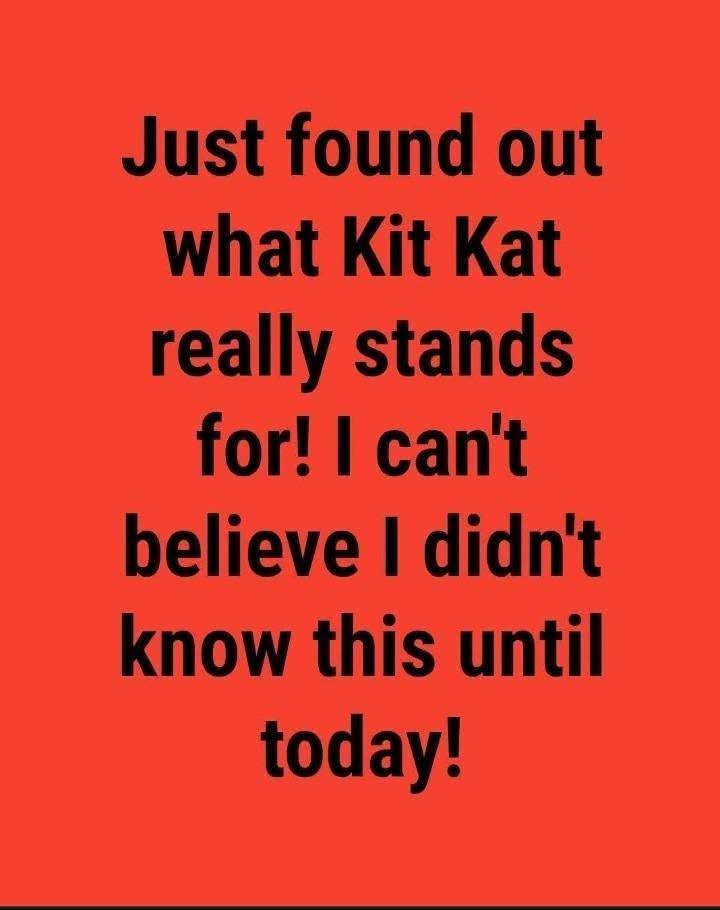
A viral social graphic—headlined “Just found out what Kit Kat really stands for! I can’t believe I didn’t know this until today!”—highlights a common internet myth that “Kit Kat” is an acronym or hidden abbreviation.
In reality, “Kit Kat” is not an acronym, but rather a name steeped in 17th-century English history. The candy bar was named after the famous Kit-Cat Club, a 17th-century political and literary society in London.
Here is a full breakdown of the history behind the Kit Kat name, how the chocolate bar was created, and interesting facts about its evolution.
The Real Origin of the Name “Kit Kat”
The history of the name long predates the creation of the chocolate bar itself:
+-----------------------------------------------------------------------------------+
|                           KIT KAT NAME ORIGINS & HISTORY                          |
+-------------------+----------------------------+----------------------------------+
| Historical Era    | Key Entity                 | Connection to Kit Kat            |
+-------------------+----------------------------+----------------------------------+
| 17th Century      | Christopher Catling        | London pastry chef known as "Kit Cat"|
| 1690s - 1700s     | The Kit-Cat Club           | Influential political/literary club|
| 1911              | Rowntree's Trademark       | Name registered for future use   |
| 1935              | Rowntree's Chocolate Crisp | Original four-finger wafer launched|
| 1937              | Kit Kat Chocolate Crisp    | Official rebranding of the bar   |
+-------------------+----------------------------+----------------------------------+
1. The Kit-Cat Club & Christopher Catling
In late 17th-century London, a political and literary group known as the Kit-Cat Club met at a tavern run by a pastry chef named Christopher Catling. Friends affectionately shortened his name to “Kit Cat.”
2. The Original Mutton Pies
Chef Catling was famous for serving delicious mutton pies at these club meetings, which became known as “Kit-Cats” or “Kit-Kat pies.”
3. Rowntree’s Trademark Registration
In 1911, British confectionery manufacturer Rowntree’s (based in York, England) registered the trademark names “Kit-Cat” and “Kit-Kat.” While they initially produced box chocolates under these names in the 1920s, the name was later repurposed.
4. From “Chocolate Crisp” to “Kit Kat”
In 1935, Rowntree’s launched a four-finger chocolate-covered wafer called Rowntree’s Chocolate Crisp. Two years later, in 1937, the company rebranded the product as Kit Kat Chocolate Crisp, giving birth to the brand we know today.
Common Myths About the Kit Kat Name
The internet frequently circulates false backstories regarding the name:
- Myth 1: It stands for “Keep In Touch, Keep A Touch.” While a popular online myth, there is no historical record connecting the brand to this phrase.
- Myth 2: It is an acronym for manufacturing terms. The name was purely inspired by traditional English history and existing trademark registrations.
- Myth 3: The Japanese “Kitto Katsu” Origin. In Japan, Kit Kat is immensely popular because “Kit Kat” sounds similar to the Japanese phrase “Kitto Katsu” (きっと勝つ), meaning “you will surely win.” While this phonetic coincidence led to a tradition of giving Kit Kats to students before exams, it was not the original inspiration for the brand name.
Financial Impact: Global Scale of a Confectionery Giant
The brand’s memorable name and unique four-finger design created an enduring global phenomenon:
- Massive Production Volume: Over 1 billion Kit Kat fingers are consumed annually worldwide, making it one of the top-selling chocolate brands in history.
- International Licensing: Today, Kit Kat is produced by Nestlé worldwide, while Hershey manufactures and distributes the brand under license in the United States.
Fascinating Facts About Kit Kat
- Blue Wrapper Era: During World War II, milk shortages forced Rowntree’s to switch from milk chocolate to dark chocolate, temporarily changing the signature red wrapper to blue.
- Japan’s Flavor Varieties: Japan has released over 300 unique Kit Kat flavors, ranging from Green Tea (Matcha) and Wasabi to Sake and Purple Sweet Potato.
Conclusion: A Historic Name for a Modern Icon
Far from being a modern acronym, the name Kit Kat carries a rich legacy tracing back over 300 years to a London tavern, proving that simple design and iconic branding stand the test of time.
Frequently Asked Questions
Q1: Does Kit Kat stand for anything?
A1: No. Kit Kat is not an acronym. It was named after the 17th-century London Kit-Cat Club, which met at a tavern owned by Christopher “Kit Cat” Catling.
Q2: Who invented the Kit Kat bar?
A2: The four-finger wafer bar was invented by Rowntree’s of York in England in 1935, originally named “Rowntree’s Chocolate Crisp.”
Q3: Why is Kit Kat so popular in Japan?
A3: The name sounds similar to the encouraging Japanese phrase “Kitto Katsu” (“you will surely win”), making it a lucky gift for students during exam seasons.
Q4: Is there a hyphen in “Kit Kat”?
A4: The original trademark was hyphenated as “Kit-Kat,” but modern packaging drops the hyphen, branding it simply as “Kit Kat.”
Q5: Why is Kit Kat sold by two different companies?
A5: Nestlé acquired Rowntree’s in 1988 and owns the global rights to Kit Kat, but Hershey retains licensing rights to produce and sell the candy in the United States based on a 1970 agreement.
