
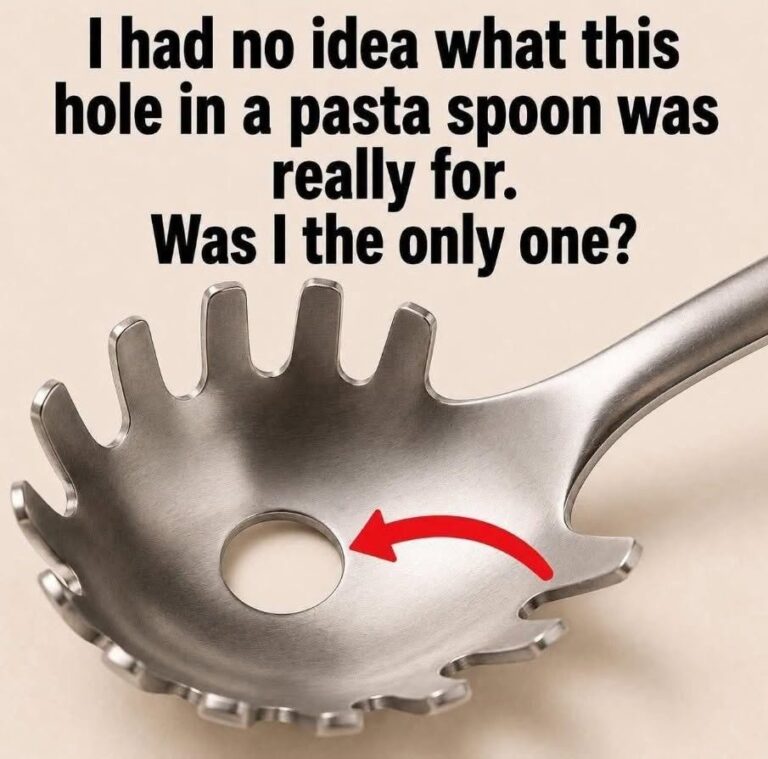
Pasta spoons (also known as pasta servers or spaghetti forks) are a staple in almost every kitchen drawer. With their distinct claw-like teeth and deep center, they make scooping slippery noodles out of boiling water effortless.
A viral social graphic—captioned “I had no idea what this hole in a pasta spoon was really for. Was I the only one?”—shows a metal pasta server with a red arrow pointing directly to the round hole in the center of the bowl.
While most home cooks assume the opening exists solely to drain starchy water while serving, it actually serves a dual purpose: measuring out a single, precise portion of dry spaghetti.
Here is a full breakdown of how the hole works, practical kitchen portioning hacks, and smart ways to elevate your pasta cooking.
The Dual Purpose of the Hole in a Pasta Spoon
Kitchen utensil designers incorporated two distinct functions into a single tool:
+-----------------------------------------------------------------------------------+
|                        PASTA SPOON HOLE DUAL FUNCTIONS                            |
+-------------------+----------------------------+----------------------------------+
| Function          | Primary Mechanism          | Benefit                          |
+-------------------+----------------------------+----------------------------------+
| Portion Control   | Sizing ring for dry pasta  | Measures ~2 oz (single serving)   |
| Water Drainage    | Fluid release opening      | Prevents soggy, watered-down sauce|
+-------------------+----------------------------+----------------------------------+
1. Dry Pasta Portioning Guide
Before you boil your water, insert a bundle of dry long pasta (such as spaghetti, linguine, or angel hair) into the hole. A tight, full bundle of dry noodles fitting through the center hole equals approximately 2 ounces (56 grams) of dry pasta—the standard single serving size recommended by culinary experts.
2. Water Drainage
When lifting cooked noodles from boiling water or sauce, the center hole allows excess liquid to drain quickly back into the pot, ensuring your sauce isn’t diluted by trapped cooking water.
How to Measure Pasta Portions Correctly
Using the built-in hole on your pasta server makes portion control simple and consistent:
Step 1: Gather Your Dry Pasta
Hold a handful of dry spaghetti or long noodles vertically over the pasta spoon.
Step 2: Thread Through the Center Hole
Feed the dry noodles directly through the hole until the bundle fills the circumference completely.
Step 3: Adjust for Servings
One full bundle equals one adult serving. For two people, simply repeat the process twice before adding the noodles to the boiling pot.
Financial Impact: Reducing Food Waste & Saving Money
Utilizing simple portioning hacks creates real benefits for your household budget:
- Eliminating Food Waste: Cooking more pasta than needed is one of the most common causes of kitchen waste. Measuring precise portions prevents leftover noodles from sitting in the fridge and going to waste.
- Lowering Grocery Costs: Accurate portion control extends pantry supplies and keeps meal planning predictable and cost-effective.
Fascinating Facts About Pasta & Utensils
- The Ideal Serving Size: Standard culinary guidelines define a single side-dish serving of pasta as 2 ounces (56g) dry weight, which cooks up to about 1 cup of finished pasta.
- Starchy Pasta Water Secret: Traditional Italian chefs save a few tablespoons of the starchy pasta water before draining to help bind and emulsify pasta sauces.
Conclusion: A Simple Design That Solves Daily Problems
Far from being a random drain slot, the hole in your pasta spoon is a clever, built-in kitchen measurement tool that guarantees perfect portion sizes every time you cook.
Frequently Asked Questions
Q1: How much dry pasta fits through the hole in a pasta spoon?
A1: The hole is sized to measure approximately 2 ounces (56 grams) of dry long pasta, which equals one standard single serving.
Q2: Does this measuring trick work for short pasta like penne or rotini?
A2: No. The center hole measuring method works specifically for long pasta strands like spaghetti, fettuccine, and linguine.
Q3: Why is my pasta water turning cloudy?
A3: Cloudy water is completely normal—it is caused by starches releasing from the pasta dough as it cooks, which helps thicken sauces when tossed together.
Q4: Should you rinse cooked pasta with cold water?
A4: No. Rinsing removes the surface starch needed for sauces to stick to the noodles. Only rinse pasta if you are preparing a cold pasta salad.
Q5: What other utensils have hidden features?
A5: Many wooden spoons feature a flat edge for scraping pan bottoms, while some pot handles feature built-in slot openings to hold spoon handles vertically off the countertop.
