
Bath towels are a daily essential in every home, yet few people ever stop to think about their design features.
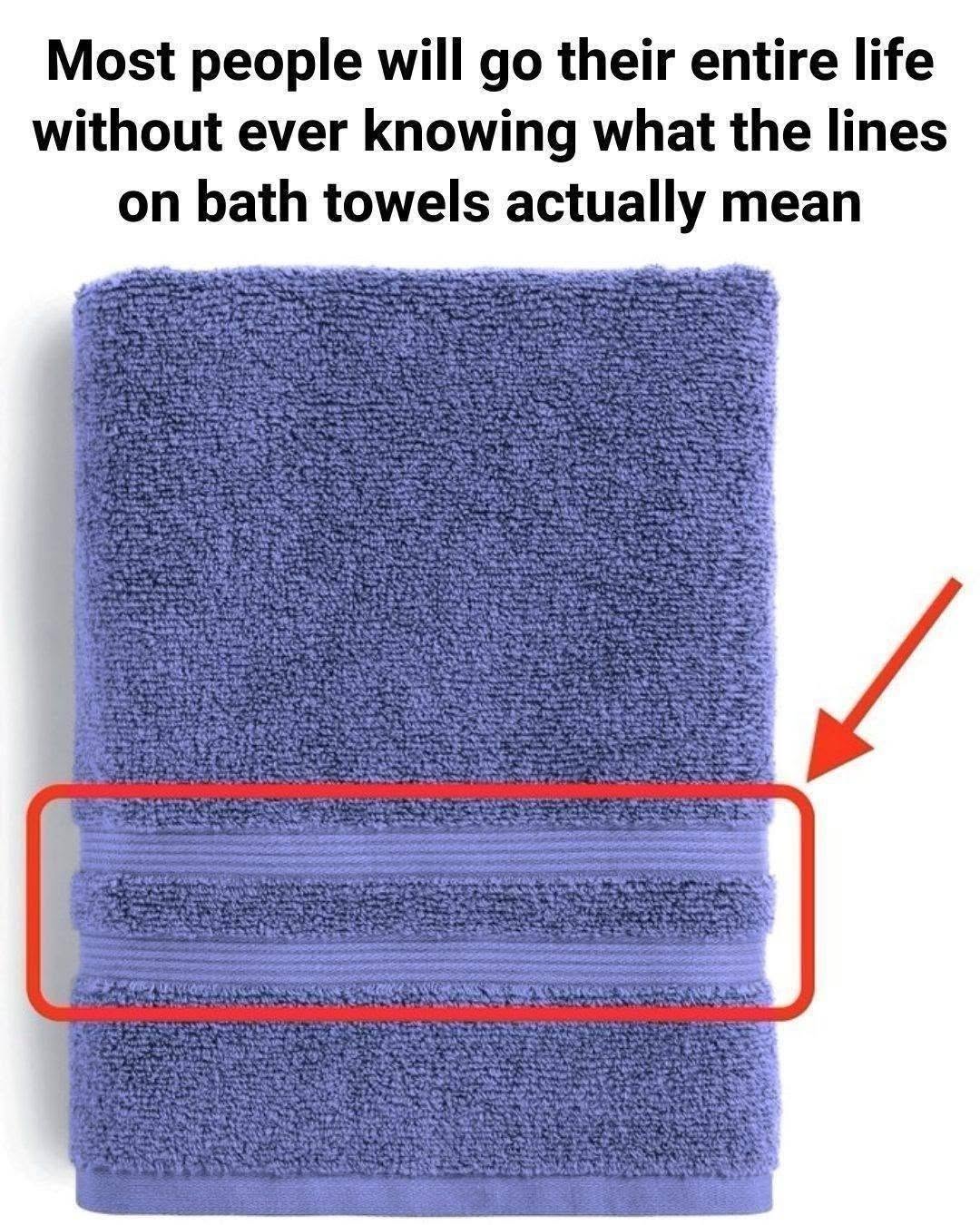
A viral social graphic—captioned “Most people will go their entire life without ever knowing what the lines on bath towels actually mean”—highlights a folded purple towel with a red arrow pointing to the woven flat bands near the bottom edge.
Known in the textile industry as a dobby border (or dobby band), these flat woven strips are far more than just a decorative accent. They play a critical role in towel durability, manufacturing structural integrity, and folding symmetry.
Here is a full breakdown of what towel bands actually do, how they are made, and essential tips for extending towel life.
What Is a Dobby Border?
Understanding the difference between the fluffy pile and the flat band explains its purpose:
+-----------------------------------------------------------------------------------+
|                        BATH TOWEL ANATOMY & STRUCTURE                             |
+-------------------+----------------------------+----------------------------------+
| Towel Section     | Weave Type                 | Primary Purpose                  |
+-------------------+----------------------------+----------------------------------+
| Main Body         | Terry Loop Weave           | Maximum water absorption         |
| Dobby Band / Line | Flat Dobby Weave           | Structural stability & hem anchor|
| Edges & Hems      | Reinforced Selvage         | Prevents unraveling & fraying    |
+-------------------+----------------------------+----------------------------------+
1. Structural Reinforcement & Shape Retention
The main body of a bath towel consists of loose, uncut loops of cotton thread (terry cloth) designed to trap water. However, terry loops are prone to stretching, sagging, and warping when pulled or washed repeatedly. The flat, tightly woven dobby band acts as a structural anchor that prevents the towel from losing its rectangular shape.
2. Preventing Hem Fraying and Unraveling
Without a flat transition zone, the tension from heavy terry loops would pull directly on the end hems during high-speed washing machine spin cycles. The dobby band absorbs mechanical stress, keeping the edge hems intact and preventing fraying.
3. Visual Folding Indicator and Aesthetics
For hotels, spas, and home storage, the dobby border provides a clean visual guideline for folding symmetry. It allows towels to be stacked neatly with uniform presentation.
The Common Internet Myth vs. Textile Reality
A popular internet myth claims that the flat lines indicate “where to hold the towel” or separate a “face side” from a “body side.”
- The Myth: Many viral posts claim the lines divide towel sections for hygiene or grip.
- The Reality: Textile engineers design dobby borders strictly for structural stability during industrial weaving and laundry laundering. Both sides of the towel are functionally identical.
Financial Impact: Making Bath Towels Last Longer
Understanding proper textile care maximizes your investment in quality bath linens:
- Avoiding Fabric Softeners: Liquid fabric softeners coat terry loops with a waxy silicone layer, dramatically reducing water absorbency and causing dobby bands to pucker.
- Proper Washing Techniques: Washing towels in warm water with vinegar once a month strips detergent buildup, keeping the pile plush and preventing shrink bands from tightening unevenly.
Fascinating Facts About Towel Manufacturing
- Dobby Loom Invention: The “dobby” loom attachment was invented in the 1840s to weave small geometric patterns into fabrics without requiring a full Jacquard mechanism.
- GSM Rating: Towel density is measured in GSM (Grams per Square Meter). Higher GSM towels (600–900 GSM) feature thicker terry loops and sturdier dobby borders for luxury durability.
Conclusion: Smart Design Behind Daily Comfort
Far from being a mystery or a simple decorative choice, the flat lines on bath towels are a clever engineering feature designed to keep your towels durable, absorbent, and beautifully shaped wash after wash.
Frequently Asked Questions
Q1: What is the official name for the flat lines on a towel?
A1: The flat woven bands near the ends of a bath towel are called a dobby border or dobby band.
Q2: Do the lines on a bath towel mean one side is for face and one for body?
A2: No. That is an internet myth. Both sides of a towel are identical in material and function; the dobby border serves structural and manufacturing purposes.
Q3: Why do towel lines sometimes shrink or pucker after washing?
A3: Puckering occurs when the flat dobby band shrinks at a different rate than the surrounding terry loop cotton. Washing in lower heat settings prevents uneven shrinkage.
Q4: What is the best way to keep towels fluffy?
A4: Skip liquid fabric softeners, use a moderate amount of detergent, and tumble dry on medium heat with wool dryer balls.
Q5: How often should bath towels be replaced?
A5: High-quality cotton towels last 2 to 5 years with proper care before the terry loops lose their absorbency and structural integrity.
