
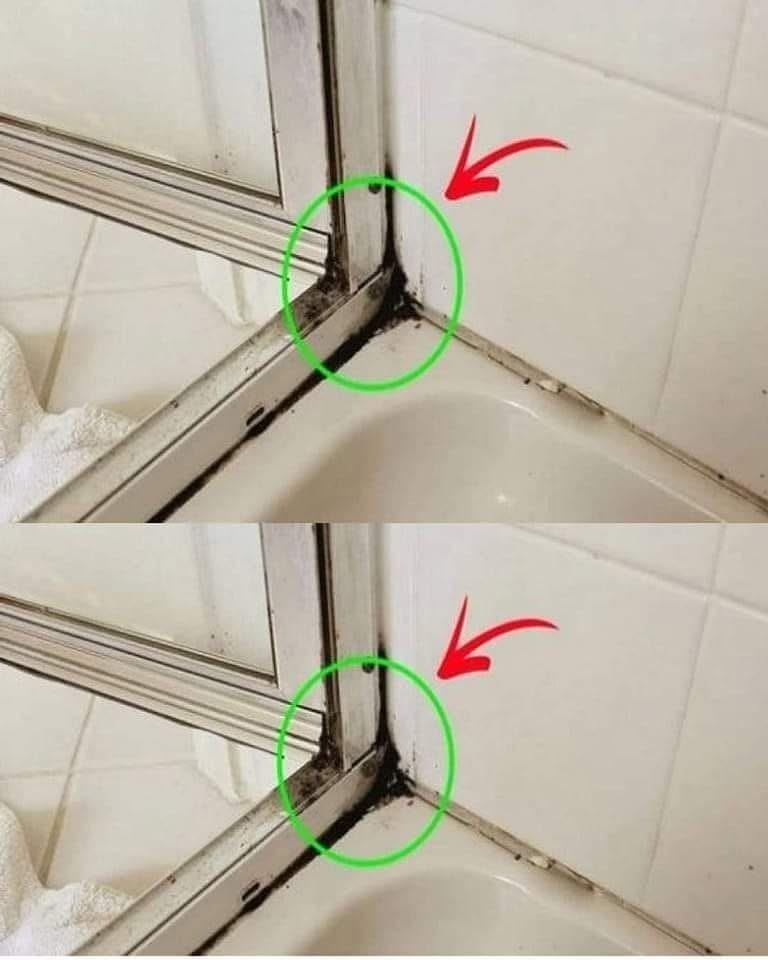
Bathrooms are prime breeding grounds for dark mold, mildew, and stubborn soap scum. High humidity, standing water, and porous silicone caulking create the ideal environment for fungal growth, especially along shower door tracks and tub corners.
A viral social graphic displays a common household frustration: dark black mold buildup concentrated at the junction where a metal shower door frame meets tile walls and tub caulking, highlighted by a green circle and red arrow.
Simply spraying standard surface cleaners often fails because liquid runs down vertical tile before it can penetrate mold root systems embedded in caulk.
Here is a full breakdown of why shower mold forms, how to eradicate it using targeted home methods, and preventative steps to keep your bathroom spotless.
4 Effective Steps to Deep-Clean Shower Mold
To eliminate black mold from stubborn shower corners, use the saturated soak method:
+-----------------------------------------------------------------------------------+
|                        SHOWER MOLD TREATMENT METHODS                              |
+-------------------+----------------------------+----------------------------------+
| Method / Cleaner  | Application Strategy       | Best For                         |
+-------------------+----------------------------+----------------------------------+
| Bleach-Soaked     | Saturate paper towels or   | Deeply embedded mold in caulk,   |
| Cotton Method     | cotton coils; leave overnight| vertical corners, & door tracks   |
| Vinegar Solution  | Spray 50/50 white vinegar  | Daily non-toxic maintenance and  |
|                   | & water mixture            | porous surface spore prevention  |
| Recaulking        | Strip degraded silicone,   | Permanently damaged or peeling   |
|                   | sanitize, & re-apply caulk | sealant with sub-surface mold    |
+-------------------+----------------------------+----------------------------------+
1. The Paper Towel Bleach Trap
Roll paper towels or cotton coils into thin strips, press them tightly into moldy shower corners or along black caulk lines, and saturate them with household bleach. The wet paper holds bleach directly against vertical mold for 4 to 8 hours, allowing deep penetration to destroy fungal roots without drying out.
2. Scrub Deep Tracks with Small Brushes
After soaking, remove the paper strips and use a stiff-bristled detail brush or old toothbrush to scrub away loosened grime and mold spores trapped inside metal shower door tracks.
3. Neutralize and Rinse Thoroughly
Rinse the treated area completely with hot water. For non-bleach maintenance, spraying pure distilled white vinegar destroys mold spores at the cellular level and prevents rapid regrowth.
4. Replace Severely Damaged Caulking
If mold has penetrated underneath silicone sealant, top cleaning will not fix the issue. Use a caulk scraper tool to remove old sealant, sanitize the exposed gap with rubbing alcohol, and apply fresh 100% silicone mold-resistant bath caulk.
Preventative Measures to Stop Shower Mold Regrowth
Stopping mold before it starts saves time and protects indoor air quality:
- Squeegee After Every Shower: Spend 30 seconds wiping down glass doors, tile walls, and metal tracks to remove standing surface water.
- Improve Bathroom Ventilation: Run exhaust fans during showers and for at least 20 minutes after to reduce ambient humidity below 50%.
- Keep Door Tracks Clear: Clean metal shower door tracks monthly to prevent soap scum and skin oil buildup, which provide organic food sources for mold.
Financial Impact: DIY Cleaning vs. Bathroom Repairs
Proactive mold control protects your home budget from major repairs:
- Avoiding Water Damage: Unchecked mold around shower frames often signals failing caulk seals. Replacing a $10 tube of silicone prevents thousands of dollars in hidden subfloor water damage.
- Saving on Commercial Chemicals: Simple household solutions like bleach, white vinegar, and baking soda cost a fraction of specialized commercial spray cleaners while delivering identical or superior results.
Fascinating Facts About Household Mold
- Humidity Threshold: Indoor mold spores require relative humidity levels above 60% to sprout and colonize bathroom surfaces actively.
- Bleach vs. Vinegar: While bleach effectively lightens surface stains on hard non-porous surfaces, distilled white vinegar penetrates porous materials to kill mold roots more thoroughly.
Conclusion: Targeted Soaking Eliminates Mold
Eliminating dark mold from shower corners requires holding sanitizing agents directly against fungal growth. Using saturated paper towel traps combined with proper bathroom ventilation keeps your tub and shower track sparkling clean.
Frequently Asked Questions
Q1: Why does mold keep returning to shower corners?
A1: Mold returns due to trapped moisture, high humidity, soap scum residue, or mold roots embedded beneath deteriorating silicone caulk.
Q2: Can you mix bleach and vinegar to clean shower mold?
A2: No, never mix bleach and vinegar. Combining them creates toxic chlorine gas, which causes severe respiratory irritation. Use them separately and rinse between applications.
Q3: How long should bleach sit on shower mold?
A3: Leaving bleach-soaked cotton or paper towels on moldy caulk for 4 to 8 hours (or overnight) ensures deep penetration and complete stain removal.
Q4: What type of caulk is best for shower door frames?
A4: Use 100% silicone bath and kitchen caulk containing built-in antimicrobial/mold-resistant additives.
Q5: Does vinegar kill black shower mold?
A5: Yes, distilled white vinegar kills approximately 82% of mold species and penetrates porous surfaces effectively to prevent spore regeneration.
