
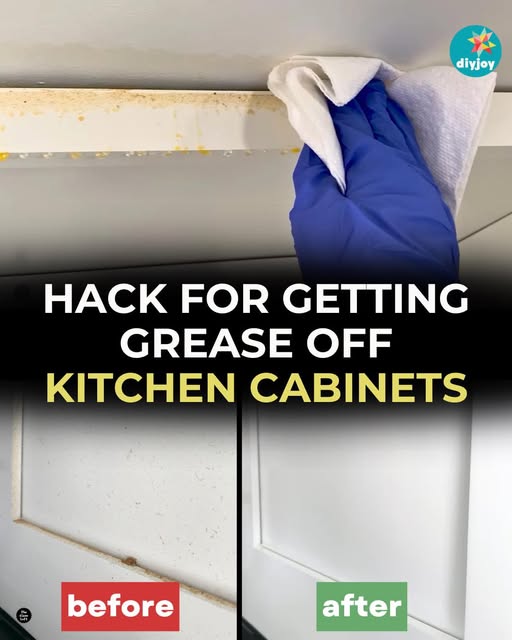
Every home cook knows how quickly airborne cooking grease, steam, and oil splatter can form a tacky, yellowish film across kitchen cabinets. Over time, dust attaches to this sticky residue, creating stubborn grime that soap and water alone struggle to lift.
A viral social graphic titled “HACK FOR GETTING GREASE OFF KITCHEN CABINETS” features a hand wearing a blue rubber glove wiping away thick grease along cabinet trim, alongside dramatic before-and-after panels showing sticky yellowed wood transformed into a clean white surface.
Cleaning sticky cabinet grease requires balancing heavy-duty degreasing power with gentle methods that preserve cabinet paint, varnish, and wood finishes.
Here is a full breakdown of the most effective kitchen cabinet degreasing hacks, step-by-step cleaning routines, and preventative cabinet care tips.
Top 3 Cabinet Degreasing Methods Compared
Selecting the right cleaning solution depends on the severity of the grease buildup and your cabinet finish:
+-----------------------------------------------------------------------------------+
|                        KITCHEN CABINET DEGREASING METHODS                         |
+-------------------+----------------------------+----------------------------------+
| Cleaning Solution | Ingredients / Recipe       | Best For                         |
+-------------------+----------------------------+----------------------------------+
| Mineral Oil /     | Mineral oil applied on a   | Dissolving old, hardened grease  |
| Vegetable Oil     | microfiber cloth           | on finished wood surfaces        |
| Dish Soap & Warm  | Concentrated dish soap +   | General everyday cleaning on     |
| Water Solution    | warm water mixture         | painted & laminate cabinets      |
| Baking Soda & Dish| Baking soda paste + dish   | Spot-treating heavy, sticky      |
| Soap Paste        | soap drop                  | corner buildup and stubborn spots|
+-------------------+----------------------------+----------------------------------+
1. The Oil-Dissolves-Oil Hack (Safest for Wood)
One of the most surprising and effective ways to lift hardened kitchen grease is using mineral oil or vegetable oil.
- How It Works: Basic chemistry dictates that like dissolves like. Pouring a small amount of oil onto a microfiber cloth and rubbing it over sticky cabinet edges softens and breaks down old, hardened cooking oils without stripping wood varnish or paint.
- Finishing Touch: Wipe away the loosened grease residue using a clean cloth dipped in warm, soapy water, then buff dry.
2. Concentrated Degreasing Dish Soap
High-performance dish soaps are formulated to break down food grease on cookware. Mixing a few drops of concentrated dish soap into a bowl of warm water creates a mild yet effective degreasing solution safe for painted, laminate, and wood cabinets.
3. Gentle Baking Soda Scrub for Heavy Grime
For stubborn grime along cabinet trim, mold, or handles, mix baking soda with a few drops of dish soap and warm water to create a soft paste. Baking soda acts as a non-abrasive scrubber that gently lifts thick residue without scratching painted surfaces.
Step-by-Step Cabinet Cleaning Guide
Follow these steps to restore your cabinets safely:
- Dust First: Wipe down cabinet doors with a dry microfiber cloth to remove loose dust before applying wet cleaning solutions.
- Apply Solution: Spray or apply your chosen degreasing solution onto a microfiber towel (avoid spraying liquid directly onto wooden cabinet joints).
- Wipe Along the Grain: For natural wood cabinets, wipe gently in the direction of the wood grain to avoid forcing moisture into micro-cracks.
- Rinse and Dry Thoroughly: Wipe away cleaning residue using a cloth dampened with clean warm water. Immediately dry surfaces with a soft towel to prevent wood warping or moisture damage.
Financial Impact: Preserving Kitchen Cabinet Value
Routine cabinet maintenance offers significant long-term financial benefits:
- Avoiding Costly Refinishing or Replacement: Replacing or professionally refinishing kitchen cabinets can cost thousands of dollars. Keeping cabinets free of acidic cooking oils preserves original paint coatings and varnish seals for decades.
- Low-Cost DIY Cleaning: Household staples like dish soap, baking soda, and mineral oil cost a fraction of expensive specialty wood-cleaning sprays.
Fascinating Facts About Kitchen Surface Maintenance
- Airborne Grease Migration: Cooking oils aerosolize into micro-droplets during high-heat frying or searing. Without proper ventilation, these floating oil particles coat surfaces up to 10 to 15 feet away from the stovetop.
- Microfiber Efficiency: Microfiber towels feature split synthetic fibers that create electrostatic charges, capturing loosened grease and dust particles far more effectively than traditional cotton rags or paper towels.
Conclusion: Gentle Degreasing Keeps Kitchens Spotless
Clearing sticky grease off kitchen cabinets does not require harsh chemical strippers or aggressive scrubbing. Using smart household solutions like dish soap, mineral oil, and baking soda keeps cabinet surfaces clean, smooth, and protected for years.
Frequently Asked Questions
Q1: Does vinegar ruin kitchen cabinets?
A1: Undiluted vinegar is acidic and can dull or erode protective varnish coatings on natural wood cabinets over time. If using vinegar, dilute it thoroughly with warm water and dry the surface immediately.
Q2: Why do kitchen cabinets get sticky?
A2: Cooking oils aerosolize during frying and settle on cabinet surfaces. Over time, exposure to air causes these oil layers to oxidize and harden into a sticky film that attracts dust.
Q3: What is the best cloth to use for degreasing cabinets?
A3: Non-abrasive microfiber towels are ideal because they absorb oil and trap dirt without scratching painted or varnished wood surfaces.
Q4: Can you use magic erasers on kitchen cabinets?
A4: Use caution. Melamine foam sponges act like extra-fine sandpaper and can permanently dull glossy paint or wear away clear wood finishes if rubbed forcefully.
Q5: How can you prevent grease from building up on cabinets?
A5: Always turn on your range hood exhaust fan while cooking, wipe down cabinet doors near the stove weekly, and deep-clean cabinets every 3 to 6 months.
