
Sink drains across kitchens and bathrooms collect an accumulation of food debris, grease, soap scum, and hair over time. Left untreated, these trapped organic materials decay inside the P-trap, causing unpleasant sewer-like smells and slow drainage.
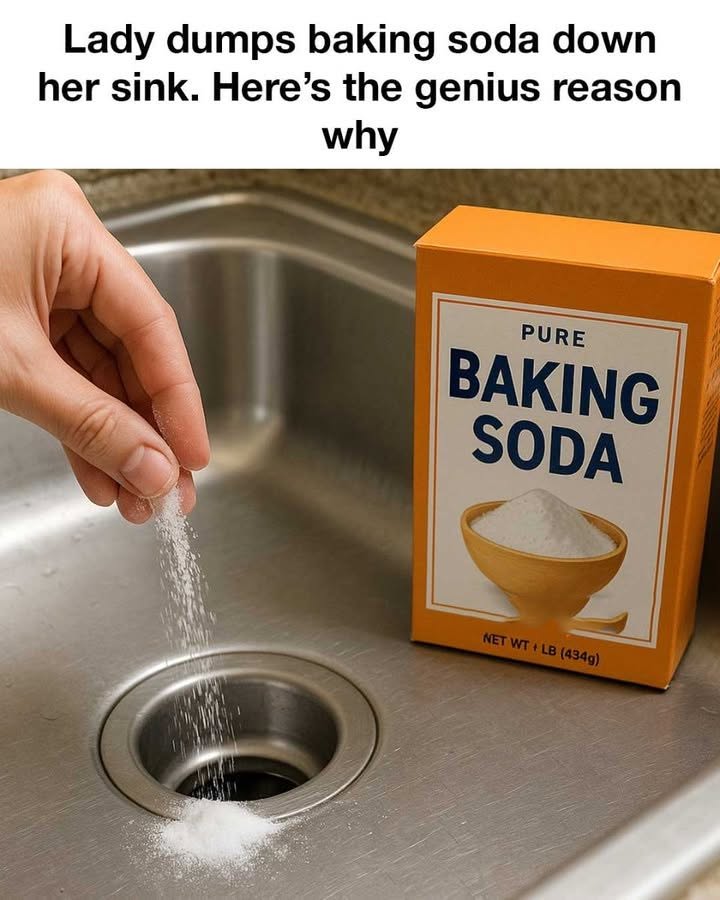
A viral social graphic—captioned “Lady dumps baking soda down her sink. Here’s the genius reason why”—shows a hand sprinkling white baking soda straight into the drain of a stainless steel sink alongside a box of pure baking soda.
While commercial liquid drain openers use aggressive caustic chemicals that can heat up and erode pipes, baking soda (sodium bicarbonate) provides a safe, natural, non-toxic alternative for drain maintenance and odor elimination.
Here is a full breakdown of why pouring baking soda down your sink works, the chemical reaction behind it, and step-by-step instructions for deep-cleaning drains.
How Baking Soda Deodorizes and Cleans Sink Drains
Baking soda performs multiple functional roles when introduced into household plumbing:
+-----------------------------------------------------------------------------------+
|                        BAKING SODA DRAIN CLEANING MECHANISM                       |
+-------------------+----------------------------+----------------------------------+
| Action / Phase    | Chemical Combination       | Primary Benefit                  |
+-------------------+----------------------------+----------------------------------+
| Odor Neutralization| Pure Baking Soda          | Neutralizes acidic & alkaline    |
|                   |                            | organic smell molecules          |
| Effervescent Scrub| Baking Soda + White Vinegar| Fizzing carbon dioxide action    |
|                   | (1:1 ratio)                | physically dislodges slime & dirt|
| Thermal Flush     | Hot Boiling Water Flush    | Melts loosened grease & sweeps   |
|                   |                            | debris down the main stack       |
+-------------------+----------------------------+----------------------------------+
1. Natural Odor Neutralization
Unlike air fresheners or scented soaps that merely mask bad smells, baking soda is a natural pH buffer. Most foul drain odors stem from acidic organic decay. Sodium bicarbonate chemically reacts with acidic odor compounds to neutralize them completely at the molecular level.
2. Physical Scouring and Greasy Slime Removal
Baking soda is mildly abrasive. When poured into the drain, it coats the interior walls of the pipe fitting and P-trap, absorbing grease deposits and breaking down sticky soap film.
3. The Fizzing Chemical Reaction with Vinegar
When followed by distilled white vinegar (acetic acid), the combination triggers an immediate acid-base reaction that produces bubbling carbon dioxide gas:
$$\text{NaHCO}_3 + \text{CH}_3\text{COOH} \rightarrow \text{CH}_3\text{COONa} + \text{H}_2\text{O} + \text{CO}_2 \uparrow$$
The expanding foam expands through the P-trap, mechanically loosening trapped food particles, hair strands, and scum build-up stuck to pipe walls.
Step-by-Step Guide: How to Freshen Your Drain with Baking Soda
Follow this simple routine monthly to keep kitchen and bathroom sinks running smoothly:
- Pour Baking Soda: Dump $1/2$ cup of pure baking soda directly down the open sink drain.
- Add Vinegar: Pour 1 cup of distilled white vinegar down after the baking soda. Cover the drain opening immediately with a drain plug or cloth to force the expanding fizzing action downward into the pipes.
- Wait 15 to 20 Minutes: Let the effervescent mixture work inside the P-trap to dissolve grease film and destroy odor-causing bacteria.
- Flush with Boiling Water: Pour a kettle of hot boiling water directly down the drain to flush away dislodged debris and melted grease residue.
Financial Impact: Eco-Friendly DIY vs. Expensive Plumber Calls
Using simple pantry staples saves money while preserving your home’s plumbing infrastructure:
- Preventing Caustic Pipe Damage: Chemical drain openers rely on harsh lye or sulfuric acid, which can corrode older metal pipes or weaken PVC glue joints over time. Baking soda is 100% pipe-safe.
- Low-Cost Preventative Care: A box of baking soda costs less than a dollar, making routine monthly drain flushes a fraction of the cost of commercial gel cleaners or emergency plumbing service visits.
Fascinating Facts About Household Baking Soda
- Versatile pH Buffer: Sodium bicarbonate has an amphoteric nature, meaning it can react with both acids and strong bases to bring surrounding pH levels back toward a neutral 7.0.
- Garbage Disposal Refreshes: Freezing baking soda and vinegar into ice cubes and running them through a garbage disposal sharpens the blades while scrubbing grease off the rubber splash guard.
Conclusion: Simple Pantry Solutions Keep Plumbing Clean
Dumping baking soda down the sink is not an internet gimmick—it is a proven, safe, and chemical-free method to eliminate drain odors, melt away grease film, and maintain free-flowing pipes.
Frequently Asked Questions
Q1: Can baking soda unclog a completely blocked sink?
A1: Baking soda and vinegar excel at removing minor grease buildup, soap scum, and odors. However, for total clogs caused by heavy hair masses or solid foreign objects, a mechanical drain snake or plunger is required.
Q2: How often should you put baking soda down your sink?
A2: Performing a baking soda flush once every 2 to 4 weeks keeps kitchen and bathroom drains fresh and prevents heavy grease accumulation.
Q3: Is it safe to use baking soda and vinegar in PVC pipes?
A3: Yes. Baking soda and vinegar are completely non-corrosive and safe for all plumbing materials, including PVC, ABS, copper, and cast iron pipes.
Q4: Why should you flush drains with boiling water after baking soda?
A4: Boiling water melts grease deposits that were loosened by the fizzing reaction, sweeping them completely out of the home’s drainage line.
Q5: Can you leave baking soda in the drain overnight?
A5: Yes. Leaving baking soda in the drain overnight allows it to absorb deep-seated odors before flushing it out with hot water in the morning.
