
Commercial fabric softeners promise plush towels and bright whites, but over time, they leave behind a waxy chemical film. This coating traps odors, degrades towel absorbency, and causes white fabrics to look dingy and yellowed.
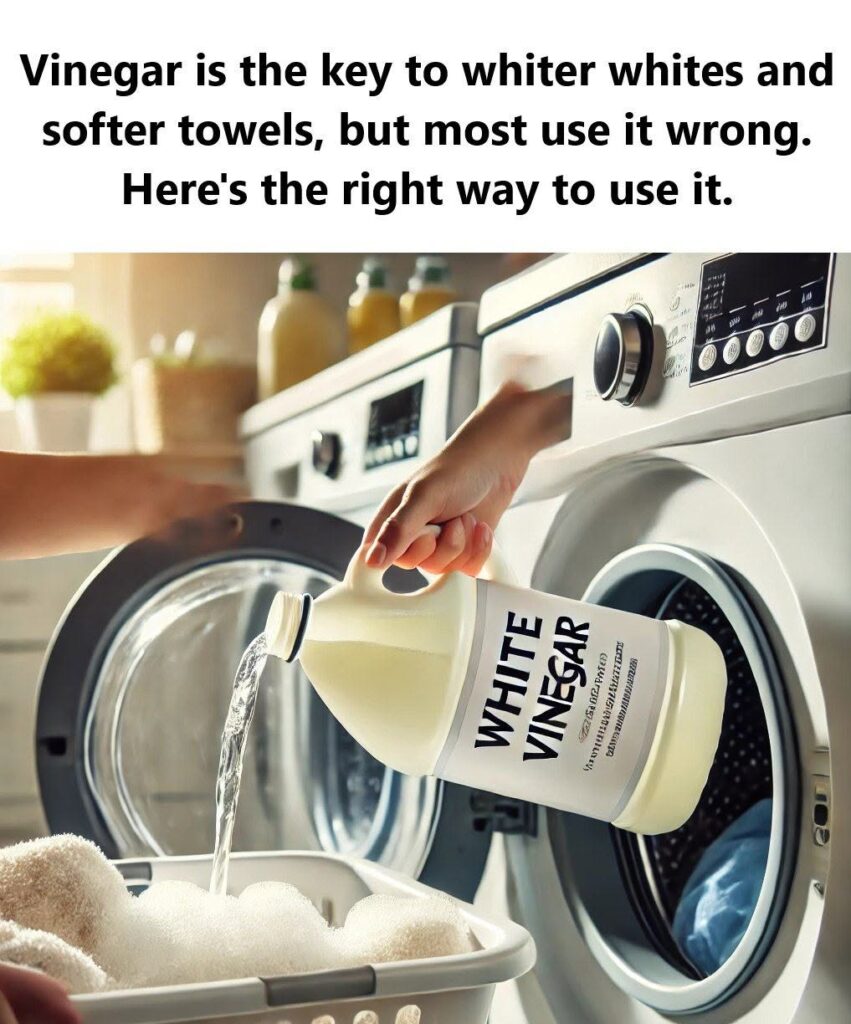
A viral social graphic titled “Vinegar is the key to whiter whites and softer towels, but most use it wrong. Here’s the right way to use it.” shows white vinegar being poured near a front-load washing machine and a hamper full of fluffy laundry.
Distilled white vinegar (acetic acid) acts as a powerful, non-toxic laundry booster. However, adding vinegar directly with your laundry detergent cancels out the cleaning benefits of both products.
Here is a full breakdown of why vinegar works, the common mistakes to avoid, and step-by-step instructions for softer towels and brighter whites.
Why Vinegar Works Better Than Commercial Softeners
Vinegar targets the root causes of fabric stiffness and discoloration:
+-----------------------------------------------------------------------------------+
|                        VINEGAR VS. COMMERCIAL SOFTENER COMPARISON                 |
+-------------------+----------------------------+----------------------------------+
| Property          | Distilled White Vinegar    | Commercial Fabric Softener       |
+-------------------+----------------------------+----------------------------------+
| Mechanism         | Strips detergent & mineral  | Coats fibers in a slick silicone|
|                   | buildup from fabric fibers | or wax-based chemical layer      |
| Towel Absorbency  | Restores maximum water     | Severely reduces water absorbency|
|                   | absorption                 | over time                        |
| Odor Removal      | Kills bacteria & dissolves | Masks odors with artificial      |
|                   | detergent residue          | heavy fragrances                 |
+-------------------+----------------------------+----------------------------------+
1. Strips Detergent and Mineral Buildup
Standard detergent residue and hard water minerals bind to cotton fibers, causing towels to dry scratchy and stiff. The mild acetic acid in vinegar dissolves these alkaline mineral deposits and soapy films, leaving fabric fibers naturally soft and flexible.
2. Brightens Whites and Fades Discoloration
Dullness in white clothing often comes from trapped body oils and soap scum rather than actual wear. Vinegar cuts through this buildup, restoring the natural brightness of white garments without harsh chlorine bleach.
3. Neutralizes Mildew and Musty Odors
Towels that stay damp in the laundry basket often develop a stubborn musty odor that standard detergent cannot wash out. Vinegar kills odor-causing bacteria and breaks down sweat and body oils trapped in heavy fabrics.
The Big Mistake: Mixing Vinegar and Detergent Together
The most common mistake people make is pouring vinegar directly into the main wash drum alongside laundry detergent:
- Chemical Neutralization: Laundry detergents are formulated to be slightly alkaline (pH above 7.0) to remove dirt and grease. Vinegar is acidic (pH around 2.5 to 3.0). Adding them together at the start of the wash cycle causes them to neutralize each other, reducing the efficacy of both detergent and vinegar.
- The Solution: Add detergent during the main wash cycle, and add vinegar during the rinse cycle when the main soapy wash water has already been drained.
Step-by-Step Guide: How to Add Vinegar to Your Wash
Follow these instructions to maximize brightness and softness:
- For Front-Loaders & Top-Loaders with Dispensers: Pour $1/2$ cup of distilled white vinegar directly into the fabric softener compartment before starting the cycle. The machine will automatically release the vinegar during the final rinse.
- For Manual Top-Loaders: Wash your clothes with standard detergent first. Pause the machine during the final rinse cycle, open the lid, and pour $1/2$ cup of white vinegar directly into the water tub.
- Deep-Strip Stiff Towels: For old towels that have lost absorbency, run a hot cycle with 1 cup of vinegar and no detergent. Follow with a second hot cycle using $1/2$ cup of baking soda to strip years of chemical buildup.
Financial Impact: Replacing Expensive Laundry Additives
Switching to white vinegar offers significant long-term financial benefits:
- Eliminating Specialty Softeners and Boosters: A single jug of distilled white vinegar costs a fraction of premium fabric softeners, scent beads, and laundry brighteners while serving multiple purposes.
- Extending Fabric Lifespan: Chemical softeners break down synthetic elastic and natural cotton fibers over time. Vinegar rinses clean, helping clothes, bed sheets, and towels last much longer.
Fascinating Facts About Vinegar in Laundry Care
- Zero Permanent Vinegar Smell: While white vinegar has a sharp scent out of the bottle, it completely dissipates during the rinse and drying cycles, leaving clothes completely odor-free.
- Washing Machine Maintenance: Using vinegar regularly in the rinse cycle prevents limescale buildup on the machine heating element and keeps internal rubber door seals free of mildew slime.
Conclusion: Use Vinegar in the Rinse Cycle for Best Results
Unlocking softer towels and brighter whites comes down to proper timing. By adding distilled white vinegar to the final rinse cycle instead of mixing it with detergent, you strip away soapy residue and mineral buildup for cleaner, softer laundry.
Frequently Asked Questions
Q1: Will vinegar make my clothes smell like salad dressing?
A1: No. The sour vinegar smell completely disappears as clothes rinse and dry, leaving your laundry smelling completely neutral and fresh.
Q2: Can vinegar damage washing machine rubber seals?
A2: Undiluted vinegar used constantly in extreme quantities can degrade rubber over years, but adding $1/2$ cup diluted during the automatic rinse cycle is safe for modern washing machines.
Q3: Can you use apple cider vinegar instead of white vinegar?
A3: It is best to stick to distilled white vinegar. Apple cider vinegar contains natural tannins and amber coloring that can stain light fabrics.
Q4: Can you use vinegar and bleach together?
A4: No, never mix vinegar and bleach. Combining acid and bleach creates hazardous chlorine gas, which causes severe respiratory damage.
Q5: How much vinegar should you use for a full load of laundry?
A5: Use $1/2$ cup of 5% distilled white vinegar for standard loads, or up to 1 cup for heavy loads of bulky towels and bedding.
