
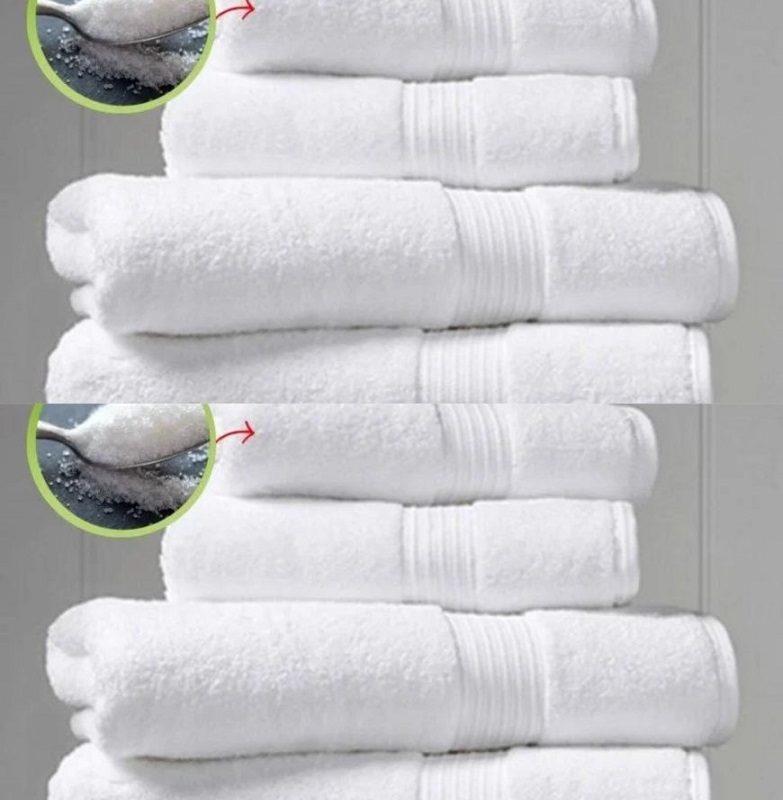
Few things compare to the crisp, fresh feeling of wrapping yourself in a plush, bright white towel after a relaxing shower. White bath towels evoke a sense of luxury, cleanliness, and hotel-like comfort in any bathroom. However, keeping white towels pristine over time can prove surprisingly difficult. After multiple uses and wash cycles, even high-end cotton linens can gradually lose their brilliance, turning dull, gray, or dingy yellow.
Many homeowners immediately resort to harsh chemical bleaches when their towels fade, only to find that overusing traditional bleach can actually weaken cotton fibers, strip fabric softness, and cause yellowing over time. Fortunately, restoring and preserving bright white towels doesn’t require expensive commercial chemicals or constant replacements. Simple household ingredients—such as salt, baking soda, and distilled white vinegar—can work wonders to break down detergent buildup, eliminate odors, and restore soft brightness naturally.
This comprehensive guide explores the science behind why white towels lose their shine, step-by-step methods using accessible natural remedies, practical tips for daily laundry care, and insights into household budgeting, property care, and consumer choices.
1. Why White Towels Lose Their Brightness and Softness
To fix dull or stiff towels effectively, it helps to understand why cotton fabrics degrade in the wash over time. Towel discoloration is rarely caused by soil alone; it is often the result of chemical reactions and laundry habits.
1. Detergent and Fabric Softener Buildup
One of the most common causes of stiff, dingy towels is the accumulation of excess laundry detergent and commercial liquid fabric softeners.
- Detergent Residue: Using too much detergent leaves soap residue trapped within dense cotton loops. During the rinse cycle, water cannot completely wash away the heavy soap, leaving a microscopic coating that attracts dirt and turns towels gray.
- Fabric Softeners: Liquid fabric softeners work by depositing a thin layer of silicone or oil over fabric fibers to make them feel smooth. Over time, this coating builds up, trapping moisture, reducing absorbency, and turning white towels a dull yellow color.
2. Mineral Buildup from Hard Water
Homes with hard water contain elevated levels of minerals like calcium and magnesium. During washing, these minerals bind with laundry detergent to form insoluble soap scum. This residue settles directly into towel fibers, causing them to feel scratchy, stiff, and discolored.
3. Body Oils and Sweat Accumulation
Even after a thorough shower, human skin sheds natural oils, dead skin cells, and microscopic traces of sweat onto bath towels. Over days and weeks of use, these organic compounds oxidise within the fabric, creating yellow patches around towel centers and edges.
4. Simple Natural Remedies to Whiten and Refresh Towels
Before considering expensive replacements or harsh chemical sprays, turning to simple kitchen cupboards offers surprisingly effective solutions.
The Salt Soak Method: Brightening and Setting Colors
Adding common table salt (sodium chloride) or Epsom salt to your washing routine is a time-tested technique for refreshing fabrics:
- How It Works: Salt helps dissolve mineral deposits and prevents soap residue from sticking to cotton fibers. It also acts as a natural water softener, allowing detergents to clean more effectively.
- Step-by-Step Salt Soak:
- Fill a large basin or washing machine tub with warm water.
- Add 1/2 cup to 1 cup of plain salt and stir until completely dissolved.
- Submerge discolored white towels in the salt solution for 30 to 60 minutes before running a standard wash cycle.
- Wash with a normal amount of detergent for refreshed, brighter fibers.
Baking Soda for Deep Cleaning and Odor Elimination
Sodium bicarbonate (baking soda) is a gentle alkali that neutralizes acidic odors and lifts stubborn stains without damaging delicate cotton threads:
- Application: Add 1/2 cup of baking soda directly to your laundry drum alongside your white towels before starting the wash cycle. Baking soda naturally brightens whites and neutralizes trapped mildew smells.
Distilled White Vinegar for Stripping Buildup
Acetic acid in distilled white vinegar acts as a powerful, non-toxic stripping agent that breaks down mineral scale and old detergent film:
- Application: Pour 1 cup of white vinegar into the fabric softener compartment during the final rinse cycle. The mild acid dissolves soap scum, leaving towels noticeably softer and brighter without leaving a vinegar scent once dried.
3. Step-by-Step Towel Stripping Technique
If your white towels are exceptionally dull, stiff, or non-absorbent, performing a deep “towel stripping” process every few months will remove built-up residues and restore original texture.
Ingredients Required:
- Hot water
- 1/4 cup Washing Soda (Sodium Carbonate)
- 1/4 cup Borax
- 1/2 cup Heavy-Duty Laundry Detergent
Instructions:
- Fill the Tub: Fill a bathtub or large sink with hot water.
- Mix the Stripping Solution: Add the washing soda, borax, and laundry detergent to the hot water, stirring thoroughly until all powders are fully dissolved.
- Soak the Towels: Submerge clean white towels into the solution, pushing them down so they are fully saturated.
- Rest and Agitate: Allow the towels to soak for 4 to 5 hours, stirring occasionally with a wooden spoon or gloved hands. You will notice the water turning dark yellow or brown as trapped detergent and minerals leech out.
- Drain and Wash: Drain the dirty water, wring out excess liquid from the towels, and transfer them immediately to your washing machine. Run a complete wash cycle using hot water without adding any extra detergent or softeners.
4. Best Practices for Washing and Drying White Towels
Adopting proper laundry habits prevents yellowing and extends the usable lifespan of your household linens significantly.
Separate Whites from Colors
Never mix white towels with colored garments, dark clothing, or printed linens. Even colorfast fabrics release microscopic dyes into wash water, which slowly dulls bright white cotton over multiple loads.
Wash at the Right Water Temperature
Hot water is essential for white towels because it activates detergent enzymes, dissolves body oils, and kills lingering bacteria or mold spores. Always check care labels, but most 100% cotton white towels benefit from hot water washes.
Avoid Overloading the Washer
Densely packed washing machines prevent water and detergent from circulating freely through towel loops. Give your towels enough room to tumble loosely during wash and rinse cycles for optimal cleaning performance.
Line Drying vs. Machine Drying
- Sunlight Drying: Drying white towels outdoors in direct sunlight provides natural bleaching through ultraviolet (UV) rays, which naturally brighten white fabrics while eliminating bacteria.
- Machine Drying: Use a medium-heat setting when tumble drying to protect cotton fibers from heat damage. Adding wool dryer balls helps fluff towel loops without using chemical softeners.
5. Home Management, Property Care, and Financial Planning
Proper household maintenance extends far beyond laundry; it directly impacts personal budgeting, home appeal, and property value management.
The Financial Benefits of Proper Linen Maintenance
Purchasing high-quality, 100% Egyptian or Pima cotton towels is a investment in comfort. Protecting that investment through proper care practices prevents premature fraying, discoloration, and frequent replacements:
- Cost Savings: By extending towel lifespan from one year to three or four years through simple care methods like salt soaks and vinegar rinses, households save hundreds of dollars in recurring domestic expenses over time.
- Budget Allocation: Redirecting savings from household linen replacements toward personal savings, short-term emergency funds, or financial investments helps strengthen overall financial stability.
Enhancing Home Aesthetics for Real Estate and Hospitality
Clean, bright white towels are standard features in luxury hotels, short-term vacation rentals, and staged homes for sale:
- Property Value & Staging: In real estate sales or vacation rental hosting, presenting spotless, fluffy white linens enhances guest perception, improves listing reviews, and creates a clean aesthetic that boosts overall property appeal.
- Insurance and Loss Prevention: Proper home laundry maintenance—such as cleaning dryer lint traps regularly—reduces fire risks within the home, keeping property safe and aligned with standard homeowners insurance safety guidelines.
6. Fascinating Facts About Cotton and Towel Care
- The Absorbency Mystery: Brand-new towels often feel soft but absorb water poorly because manufacturers treat them with silicone coatings to look appealing in retail stores. Washing new towels before initial use removes this finish.
- Why Salt Fixes Dyes: In textile manufacturing, salt is used during the dyeing process to help fabric fibers absorb and lock in color pigments evenly.
- Terrycloth History: The plush, looped fabric used in modern towels is called terrycloth, invented in the mid-19th century in Britain to maximize water absorption surface area.
- The Sun’s Natural Bleach: UV radiation breaks down chemical bonds in stains and organic matter, making sunlight one of the oldest and safest whitening methods available.
7. Frequently Asked Questions (FAQ)
Can I use bleach on white towels every wash?
No. Frequent use of chlorine bleach weakens cotton fibers over time, leading to holes, frayed edges, and chemical yellowing. It is best to use natural alternatives like baking soda, vinegar, or oxygen-based bleaches for regular maintenance.
How often should bath towels be washed?
Bath towels should typically be washed after 3 to 4 uses, provided they are hung properly in a well-ventilated space to dry completely between uses.
Why do my white towels smell musty even after washing?
Musty smells are caused by mildew growth trapped in detergent residue or damp storage. Wash the affected towels in hot water with 1 cup of white distilled vinegar (and no detergent) to kill lingering mildew spores and strip residue.
Does salt damage washing machine drums?
Using moderate amounts of fully dissolved salt (1/2 cup to 1 cup) in laundry loads or soaking tubs is safe for modern stainless-steel washing machine drums and plumbing systems.
What is the best type of towel for durability and absorbency?
Towels made from 100% long-staple cotton—such as Egyptian or Turkish cotton—offer superior softness, durability, and absorbency compared to synthetic blends or short-staple cotton varieties.
Conclusion: Bright, Fresh Linens with Simple Everyday Care
Restoring the bright, fluffy beauty of your white towels does not require complex routines or expensive chemical products. By understanding how detergent buildup and water minerals affect cotton fibers, you can easily maintain crisp, fresh linens using affordable household staples like salt, vinegar, and baking soda.
Adopting smart laundry habits preserves fabric quality, saves money, and adds a touch of everyday hotel luxury to your home routine. A little simple care goes a long way toward keeping your whites brilliantly clean for years to come.
