
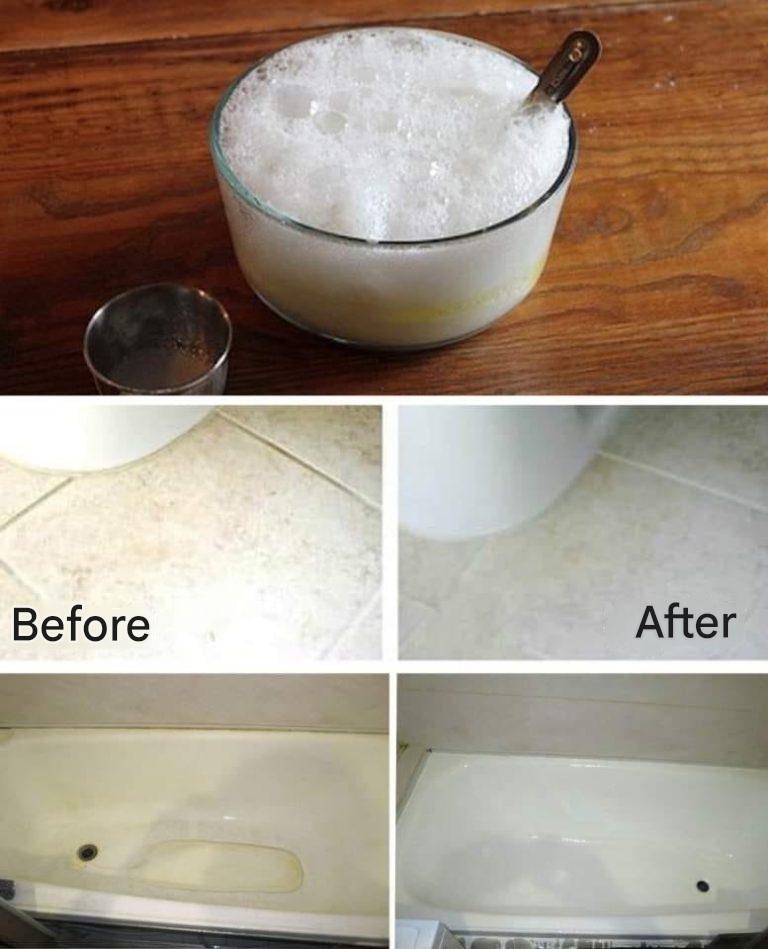
Maintaining a sparkling clean bathroom can often feel like an uphill battle. Over time, bathroom tiles, grout lines, and porcelain or acrylic bathtubs accumulate stubborn soap scum, hard water minerals, grime, and mildew. Standard commercial spray cleaners can be expensive, harsh on the respiratory system, and frequently fall short of restoring original shine without hours of intense scrubbing.
Fortunately, professional cleaning experts and savvy homeowners rely on a simple, inexpensive DIY mixture that cuts through tough bathroom grime effortlessly. By combining common household staples—specifically baking soda, liquid dish soap, and hydrogen peroxide or white vinegar—you can create a powerful foaming cleaner that deep-cleans grout and lifts yellowed bathtub stains in minutes.
This comprehensive guide explores why traditional bathroom cleaners fail, how to make and apply the ultimate DIY cleaning paste, safe practices for various surface materials, and key insights into home maintenance, budgeting, and property valuation.
1. Why Standard Cleaners Fail and How Soap Scum Forms
To understand why simple household ingredients work so effectively, it helps to examine the chemistry behind common bathroom grime.
1. The Composition of Soap Scum
Soap scum is formed when the fatty acids in bar soap or body wash react with the minerals (calcium and magnesium) found in hard water. This chemical reaction creates an insoluble, sticky residue that adheres tightly to tiles, glass doors, and tub surfaces. Over time, soap scum traps body oils, dust, and airborne spores, turning yellow, brown, or grey.
2. The Porous Nature of Tile Grout
Tile grout is composed primarily of cement and sand, making it inherently porous unless sealed regularly. Grout absorbs dirty water, soap residue, and moisture like a sponge, leading to deep discoloration and providing a breeding ground for surface mold and mildew. Commercial aerosol sprays often float over the surface without penetrating these deep pores.
2. The DIY Magic Formula: Homemade Grout and Tub Restorer
Creating a foaming cleaning mixture at home is cost-effective, environmentally friendly, and remarkably powerful.
Ingredients & Supplies Needed
- Baking Soda (Sodium Bicarbonate): 1/2 cup (Acts as a gentle abrasive and odor neutralizer)
- Liquid Dish Soap: 1 tablespoon (Breaks down grease, fat, and oil deposits)
- Hydrogen Peroxide (3%) or Distilled White Vinegar: 1/4 cup (Hydrogen peroxide lightens stains and sanitizes, while vinegar dissolves mineral scale)
- Tools: A small mixing bowl, an old toothbrush or stiff grout brush, and a soft microfiber cloth or sponge.
Step-by-Step Preparation and Application
- Mix the Paste: In a glass or plastic bowl, combine the baking soda, liquid dish soap, and hydrogen peroxide (or vinegar). Stir thoroughly until a thick, rich foam forms.
- Apply to Targeted Areas: Using a spoon or brush, spread a generous layer of the paste over discolored tile grout lines, stained bathtub surfaces, oraround the drain.
- Allow Dwell Time: Let the mixture sit undisturbed for 10 to 15 minutes. This allows the surfactants to break down grease while the abrasive paste lifts deeply embedded grime.
- Scrub Lightly: Gently scrub the grout lines or tub surface using a toothbrush or stiff brush. You will notice dirt lifting away with minimal exertion.
- Rinse Thoroughly: Wipe away the loosened paste with a damp microfiber cloth or rinse the tub with warm water to reveal a sparkling white surface.
3. Surface Safety: Protecting Your Bathroom Materials
While natural DIY cleaners are far gentler than chemical bleaches, using the correct ingredients for your specific bathroom surfaces is essential to prevent accidental dulling or etching.
1. Ceramic and Porcelain Tiles
Ceramic and porcelain are non-porous and highly durable, making them safe for both acidic (vinegar) and alkaline (baking soda) cleaners.
2. Natural Stone (Marble, Travertine, Granite)
- Caution: Never use vinegar or acidic cleaners on natural stone. Acid reacts with calcium carbonate in stone, causing irreversible dulling and etching.
- Safe Solution: Use baking soda, dish soap, and hydrogen peroxide (or warm water) for natural stone surfaces.
3. Acrylic and Fiberglass Bathtubs
Avoid harsh abrasive pads or steel wool on acrylic or fiberglass tubs, as they can create microscopic scratches that harbor future grime. Stick to soft sponges paired with baking soda pastes.
4. Long-Term Maintenance Practices for a Pristine Bathroom
Preventing grime accumulation requires small, consistent habits that save hours of deep cleaning down the road.
- Use a Daily Squeegee: Wipe down shower walls and glass doors with a rubber squeegee after every shower to remove water droplets before minerals can settle.
- Ensure Proper Ventilation: Run your bathroom exhaust fan during showers and leave it on for 20 minutes afterward to reduce moisture levels and prevent mold growth.
- Reseal Grout Annually: Apply a quality penetrating grout sealer once a year to create a waterproof barrier that repels oils, dirt, and water stains.
5. Home Management, Utility Savings, and Property Protection
Maintaining clean, well-kept bathroom fixtures extends beyond aesthetics, yielding tangible financial advantages for homeowners and renters alike.
Financial and Home Value Benefits
- Cost Efficiency: A batch of homemade cleaner costs mere pennies compared to specialized commercial chemicals, saving tens or hundreds of dollars annually on household supply budgets.
- Preserving Fixture Longevity: Replacing a stained, degraded bathtub or re-tiling a shower can cost thousands of dollars. Routine maintenance prevents enamel degradation and costly structural bathroom renovations.
- Protecting Property Resale Value: Clean, bright bathrooms and fresh grout lines are major selling points in real estate transactions, enhancing buyer perception and appraisal values.
- Home Insurance Compliance: Preventing hidden moisture buildup and mold growth around leaking tile grout helps prevent hidden water damage that might compromise property integrity.
6. Fascinating Facts About Cleaning and Materials
- The Power of Microfiber: Microfiber cloths possess positively charged fibers that naturally attract negatively charged dirt and dust particles without chemical aids.
- Ancient Soap Origins: The earliest recorded evidence of soap making dates back to 2800 BC in ancient Babylon, made from water, alkali, and cassia oil.
- Why Baking Soda Foams: When baking soda (a base) reacts with vinegar (an acid), it immediately produces carbon dioxide gas bubbles that physically lift debris from microscopic crevices.
- Hydrogen Peroxide Breakdown: Hydrogen peroxide ($H_2O_2$) degrades into harmless water and oxygen gas after reacting, leaving zero toxic fumes behind.
7. Frequently Asked Questions (FAQ)
Can I mix baking soda, vinegar, and dish soap in a sealed bottle?
No. Combining baking soda and vinegar produces carbon dioxide gas. Storing them in a sealed container creates pressure that can cause the bottle to leak or burst. Always mix right before use in an open bowl.
How often should I deep-clean tile grout?
Deep cleaning grout lines every 1 to 2 months prevents permanent staining and keeps mold from taking root in porous surfaces.
Is hydrogen peroxide safe for colored grout?
While 3% hydrogen peroxide is a mild brightener, test it on a small, inconspicuous area of dark or colored grout first to ensure no color fading occurs.
How do I get rid of persistent black mold in caulking?
If black mold has penetrated deep beneath silicone caulk, topical cleaners may not reach it. Removing the old caulk, treating the gap with peroxide or bleach, and applying new mold-resistant silicone sealant is the best solution.
Conclusion: Transform Your Bathroom with Household Staples
Restoring your bathroom tiles, grout, and bathtub to like-new condition does not require expensive commercial products or harsh chemicals. By leveraging simple, budget-friendly ingredients like baking soda, dish soap, and hydrogen peroxide, you can achieve professional-quality deep cleaning results effortlessly.
Adopting these simple cleaning hacks saves money, protects your home’s structural integrity, and ensures a clean, fresh, and welcoming environment for your family every day.
