
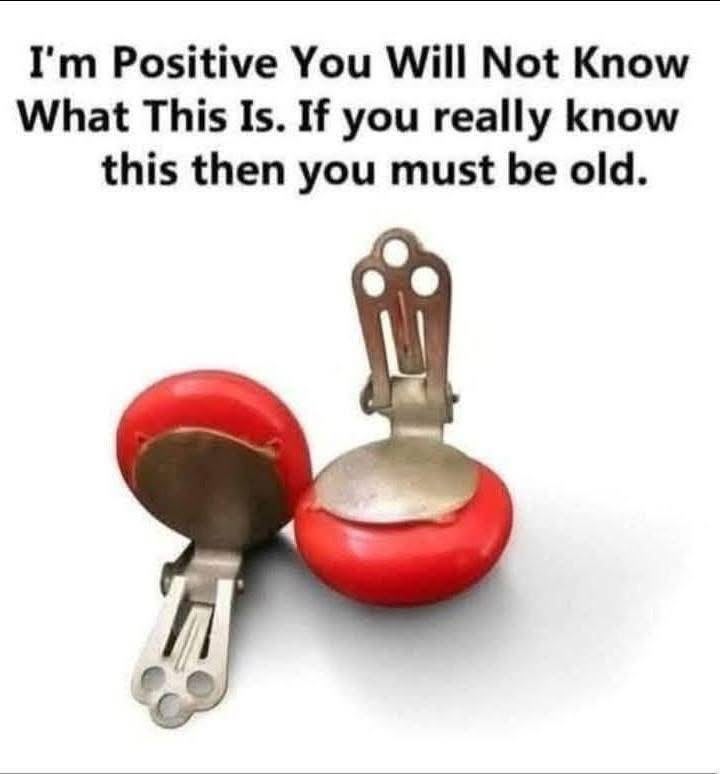
Nostalgia is a powerful emotional trigger, and internet culture thrives on sharing retro objects that instantly transport us back in time. When a cryptic image of vintage red dome-shaped items with metal clip mechanisms appears online accompanied by a challenge—such as “I’m positive you will not know what this is”—it sparks a massive wave of curiosity. For some, these objects are immediately recognizable relics of mid-century fashion and household design; for others, they are completely baffling mysteries. Let’s take a nostalgic journey back in time to explore what these fascinating little items are, how they were used, and why vintage everyday objects continue to capture our collective imagination.
The Mystery Revealed: What Exactly Are These Red Clips?
To anyone who grew up browsing through their grandmother’s jewelry box or dressing up in vintage costume accessories during the mid-to-late 20th century, these items are instantly identifiable as clip-on earrings—specifically, vintage red button or cabochon style clip-ons utilizing a paddle-back hinge mechanism.
During an era when pierced ears were far less common than they are today, clip-on earrings reigned supreme. Women and girls who wanted to wear fashionable, bold statement jewelry without the permanence or pain of ear piercings relied entirely on tension-based fasteners. The metal hinge component shown in the image features a classic paddle clutch that pressed against the earlobe, holding the colorful decorative front securely in place.
The Evolution of Earring Fasteners
The history of non-pierced jewelry dates back centuries, but the specific mechanical clasps seen on mid-century fashion pieces evolved rapidly during the 1930s through the 1960s.
- Screw-Back Mechanisms: Early vintage earrings often used a tiny threaded screw that users would manually tighten against the back of the lobe, which could sometimes become uncomfortable over long periods.
- Paddle Clip-Ons: The spring-loaded paddle back (or omega clip) revolutionized comfort and speed, allowing wearers to snap their earrings on and off instantly.
- The Bright Red Aesthetic: Brightly colored plastic, Bakelite, lucite, and enameled metal dominated mid-century fashion, making bold red button earrings a staple accessory for matching handbags, shoes, and lipstick.
The Psychology of Nostalgia and Viral Internet Challenges
The caption on the image—suggesting that only older generations would recognize the object—is a classic example of engagement bait designed to drive comments, shares, and debates online. But beyond social media metrics, why do these nostalgic artifacts evoke such strong feelings?
Nostalgia psychology shows that revisiting items from our youth or past eras activates the brain’s reward pathways, fostering a sense of comfort, warmth, and shared identity. When younger generations encounter these forgotten technologies or fashion items, a bridge of intergenerational curiosity is built. Comments sections fill up with fond memories of rummaging through vintage jewelry boxes, playing dress-up with mother’s accessories, or joking about the mild pinch that came with wearing clip-ons all day.
Cultural Shifts in Fashion and Body Modification
The decline in popularity of clip-on earrings mirrors broader cultural changes in personal grooming and body modification.
- The Rise of Pierced Ears: Once pediatricians and shopping mall kiosks popularized safe, quick ear piercing in the 1970s and 1980s, the market for clip-on earrings shrank dramatically.
- Comfort vs. Style: While modern consumers heavily prioritize lightweight, comfortable pierced jewelry, vintage collectors still actively seek out signed designer clip-on pieces from houses like Trifari, Monet, and Chanel for their intricate craftsmanship and bold visual impact.
- Accessibility: Clip-on earrings served as an important equalizer in fashion, allowing anyone—regardless of whether their ears were pierced—to participate in high-style trends.
Financial Investment and the Booming Vintage Market
What starts as a nostalgic social media post often translates into tangible economic interest. The market for vintage fashion accessories, retro costume jewelry, and mid-century collectibles has experienced steady growth.
Valuing Retro Collectibles
For estate sale hunters, antique dealers, and online resellers, identifying a pair of mid-century clip-on earrings can represent a profitable venture.
- Designer Hallmarks: Signed pieces from renowned 20th-century costume jewelry makers can command significant prices among collectors.
- Material Integrity: Items made from early plastics like Bakelite or featuring hand-set rhinestones hold substantial resale value in the modern vintage market.
- Financial Planning and Asset Diversification: For micro-entrepreneurs and antique investors, building a portfolio of physical collectibles is a unique way to blend a personal hobby with tangible asset acquisition.
The Business of Online Content and Traffic
From a digital publishing perspective, leveraging retro imagery is a proven strategy to boost web traffic, increase reading times, and optimize site performance for content discovery platforms. When users encounter a viral image on social media and click through to read the full historical context on a website, it creates a high-engagement loop. This traffic flow supports website monetization strategies, such as Google AdSense optimization, by keeping visitors engaged across comprehensive multi-section articles.
Practical Tips for Identifying and Preserving Vintage Jewelry
If you have recently inherited a collection of vintage clip-on earrings or discovered similar items while cleaning out an attic, proper care and identification are essential.
- Check for Hallmarks: Look closely at the metal hinge or the back of the decorative face for tiny stamped manufacturer logos or brand names.
- Clean Gently: Use a soft, dry microfiber cloth to wipe away dust. Avoid submerging vintage plastics or glued-in stones in harsh chemical cleaning solutions.
- Store Properly: Keep clip-on earrings stored flat in lined jewelry boxes to prevent the spring mechanisms from weakening and to protect the decorative finishes from scratching.
Conclusion: Bridging the Generations Through Shared History
Whether you instantly recognized the spring-loaded fasteners or stared at the image in total confusion, objects like these serve as a fascinating mirror to our past. They remind us of how fashion, technology, and daily life have evolved over the decades. More importantly, they spark conversations that connect different generations—proving that even the simplest everyday items carry rich stories worth exploring.
FAQ Section
Q: What are the items shown in the image? A: They are vintage clip-on earrings, specifically featuring a paddle-back spring hinge mechanism commonly popular during the mid-20th century.
Q: Why did people wear clip-on earrings instead of pierced ones?
A: Pierced ears were much less common in earlier decades, and clip-on earrings allowed individuals to wear fashionable, statement jewelry without needing to pierce their earlobes.
Q: Are vintage clip-on earrings worth any money today?
A: It depends on the manufacturer, materials, and condition. Unsigned costume pieces usually hold modest sentimental or nostalgic value, while signed pieces from high-end mid-century designers can be quite collectible and valuable.
Q: How do you know if vintage clip-on earrings are designer pieces?
A: Look for a maker’s mark or copyright stamp etched into the metal on the back of the earring or along the clip mechanism.
Q: Why do older fashion items like this trend on social media? A: They rely on nostalgia and curiosity, prompting users to comment, share memories, and debate whether younger generations would recognize obsolete or changing everyday objects.
