
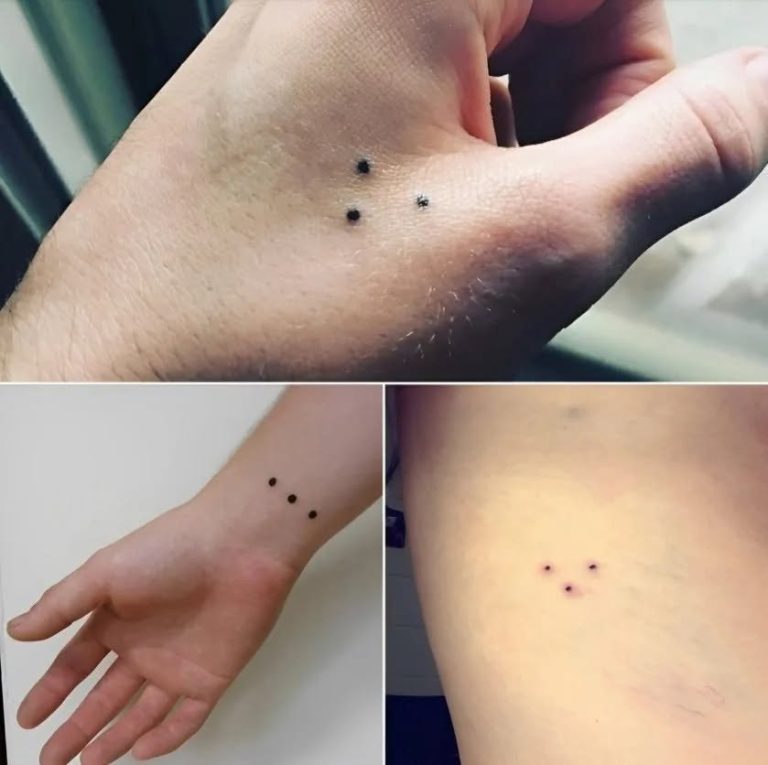
Throughout history and across various global cultures, body markings, tattoos, and symbolic designs have served as powerful visual languages. From ancient tribal traditions to modern subcultures, tattoos often carry profound personal, cultural, or social significance. Among the many minimalist designs that frequently spark curiosity and debate are three small dots arranged in a triangle or line.
While minimalist geometric tattoos are common today, historical three-dot markings often carry specific symbolic weight depending on the context in which they appear. Understanding the history behind these symbols, the psychology of body art, and the broader world of symbolic modifications offers a fascinating look into human expression.
This comprehensive guide explores the origins of symbolic dot tattoos, the evolution of modern body art, the psychology of personal identity, and practical considerations for anyone exploring tattoos.
The History and Symbolism of Three-Dot Markings
In various subcultural contexts, small dot tattoos—often placed near the eye, on the hand between the thumb and index finger, or on the wrist—have historical associations.
Cultural and Subcultural Meanings
- The “Mi Vida Loca” Tattoo: In certain historical prison and street subcultures, three dots arranged in a triangle symbolize “my crazy life” (mi vida loca). It often represented a lifestyle associated with gang culture, hardship, or living on the fringe of society.
- Religious and Spiritual Symbolism: In other contexts, three dots can represent the Holy Trinity in Christian iconography or serve as minimalist geometric representations of balance, beginning-middle-end, or past-present-future.
- Modern Minimalist Art: In contemporary tattooing, many people choose three simple dots purely for aesthetic reasons, representing an ellipsis, continuity, or a subtle geometric accent without any underlying subcultural affiliation.
The Psychology of Body Modification
Human beings have practiced tattooing, scarification, and body modification for tens of thousands of years. The reasons individuals choose to ink their skin are as diverse as humanity itself.
Identity, Belonging, and Expression
Tattoos frequently act as external manifestations of internal identity. Whether marking a significant life milestone, expressing allegiance to a community, or reclaiming autonomy over one’s physical body, body art serves as a permanent canvas for personal storytelling.
Practical Considerations Before Getting a Tattoo
If you are inspired to explore body art, approaching the process thoughtfully ensures a safe and satisfying experience:
- Research Symbolism: Always investigate the historical, cultural, or social connotations of a design before getting it permanently inked to ensure it aligns with your personal values.
- Choose a Licensed Professional: Ensure your tattoo artist operates in a sterile, licensed studio that follows strict health and safety guidelines.
- Consider Placement: Think carefully about how tattoo placement might impact professional environments or personal preferences over time.
- Commit to Proper Aftercare: Follow your artist’s healing instructions diligently to prevent infection and maintain vibrant ink quality.
Interesting Facts About the History of Tattooing
- Ancient Roots: The oldest known physical evidence of human tattoos comes from Ötzi the Iceman, a mummified man dating back to approximately 3200 BCE, who bore dozens of geometric lines and cross symbols across his body.
- Global Traditions: Tattooing has independently evolved across countless ancient civilizations, including indigenous peoples of the Americas, Polynesia, Africa, and Asia, often denoting social status, rites of passage, or protection.
- The Rise of Modern Acceptance: Once heavily stigmatized in Western societies, tattooing has transformed into a mainstream art form embraced by millions across diverse professions and backgrounds.
Conclusion
Minimalist symbols like the three-dot tattoo demonstrate how simple marks can carry layers of history, interpretation, and personal meaning. Whether viewed through the lens of subcultural history or modern aesthetic expression, body art remains a powerful medium for human communication. By understanding the backgrounds of these symbols, we gain a greater appreciation for the complex stories written on skin.
FAQ Section
Q: What do three dot tattoos typically symbolize in traditional contexts? A: Historically, in certain street and prison subcultures, three dots arranged in a triangle represent “mi vida loca” (my crazy life), though they can also have religious or purely aesthetic meanings.
Q: Are three dot tattoos always associated with gang culture?
A: No. While they have historical roots in specific subcultures, many modern individuals get three small dots simply as minimalist geometric or artistic tattoos.
Q: Why do people choose minimalist tattoos?
A: Minimalist tattoos offer a subtle, clean aesthetic that is easy to conceal, quick to complete, and deeply symbolic for the wearer.
Q: How has societal perception of tattoos changed over time?
A: Tattoos have shifted from being heavily associated with marginalized or specific subcultures to becoming widely accepted as a mainstream form of personal art and self-expression.
Q: What should I check before choosing a tattoo studio?
A: Verify that the studio is fully licensed, uses single-use sterilized needles, maintains immaculate hygiene standards, and employs experienced professional artists.
Q: Can tattoos be safely removed if my preferences change?
A: Yes, modern laser tattoo removal technology has made it possible to fade or remove unwanted tattoos, though the process requires multiple sessions and can be costly.
