
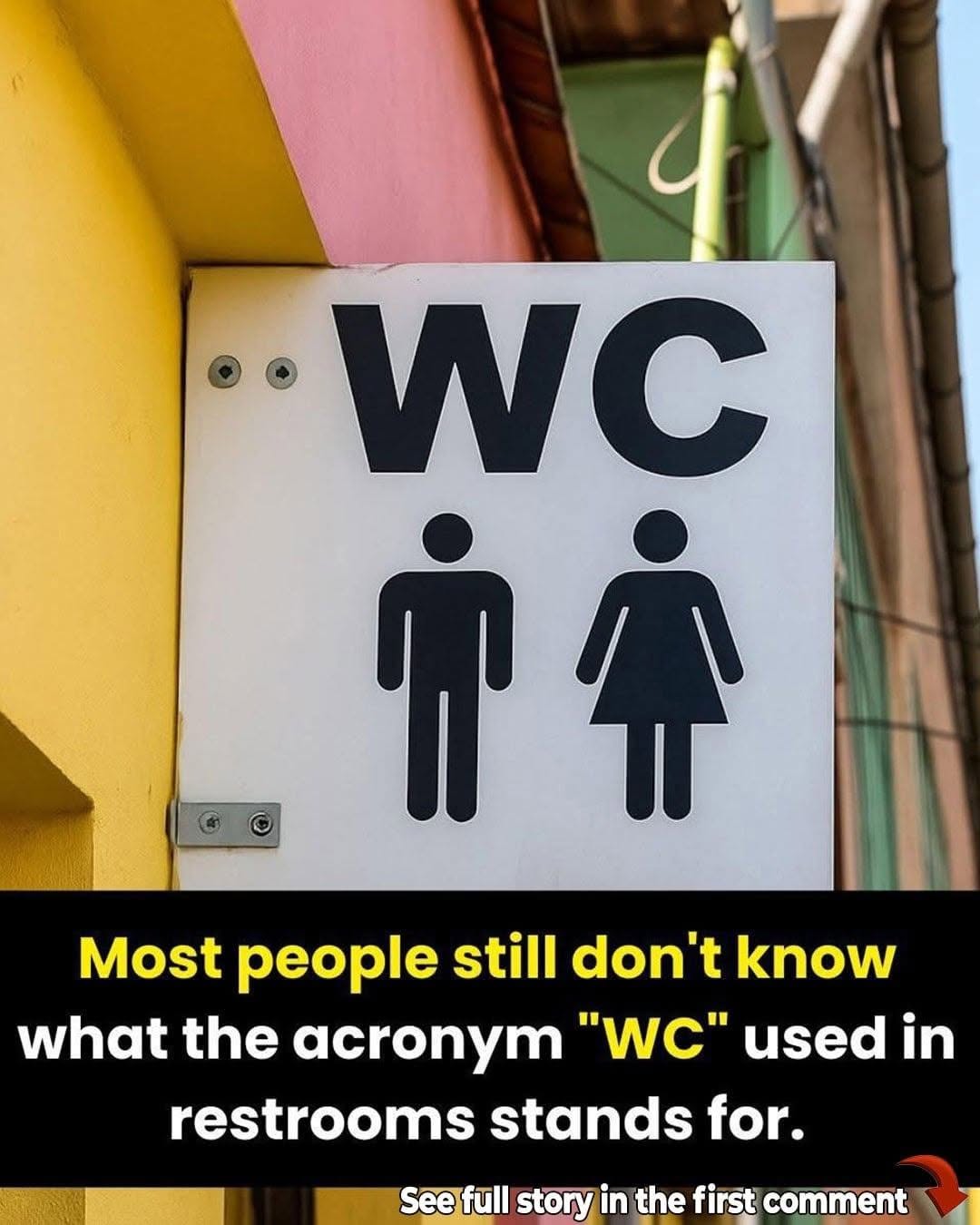
Traveling, visiting public spaces, or navigating international airports often brings us face-to-face with familiar signs and abbreviations. Among the most universally recognized symbols is a simple two-letter acronym: WC. Found on doors, maps, and directional signs across Europe, Asia, and various parts of the world, it clearly indicates a restroom or toilet facility.
Despite its widespread use, many travelers and everyday people rarely stop to wonder where the abbreviation came from or what specific words it represents. Understanding the linguistic and historical background behind common public signage offers a fascinating glimpse into international communication and sanitation history.
This comprehensive guide explores the origins of the term “WC,” its evolution in modern architecture, the history of public sanitation, and practical tips for navigating international travel signage.
The Linguistic Roots of “WC”
The acronym WC stands for water closet. This historical term originated in 19th-century Britain during the early days of modern indoor plumbing development.
The History of the Water Closet
Before modern flush toilets became standard household fixtures, human waste management relied on outhouses, chamber pots, and primitive drainage systems. When indoor plumbing and flush mechanisms were invented, inventors and builders needed a discreet, polite term to describe the new contraption.
- The “Water” Element: The word “water” referred to the running water supply used to flush waste through the piping system.
- The “Closet” Element: The word “closet” originally described a small private room or partitioned space, rather than a wardrobe for clothes. Thus, a “water closet” literally meant a small private room equipped with a flushing toilet.
Over time, while English-speaking countries largely transitioned to terms like “restroom,” “bathroom,” or “toilet,” many European and international regions retained the concise acronym “WC” on public signage due to its brevity and universal recognition.
The Evolution of Public Restroom Signage
As global travel expanded throughout the 20th century, standardizing public signage became essential to overcome language barriers. Airports, railway stations, and hotels needed symbols that anyone, regardless of native language, could instantly understand.
Universal Symbols and Clarity
Today, “WC” is frequently paired with graphical pictograms representing men, women, or universal accessibility. This dual approach—combining traditional text with clear visual symbols—ensures maximum clarity for international visitors navigating unfamiliar environments.
Practical Tips for International Travel and Signage
Navigating public facilities in foreign countries can sometimes present minor communication challenges. Keep these practical tips in mind when traveling abroad:
- Learn Basic Local Terminology: Familiarize yourself with common local translations for restrooms before arriving at your destination.
- Look for Universal Icons: When text abbreviations like “WC” are absent, look for international stick-figure symbols or wheelchair accessibility icons.
- Carry Essentials: Public restrooms in certain regions may occasionally lack basic amenities like soap or paper towels, so carrying small packets of tissues or hand sanitizer is always wise.
- Understand Cultural Etiquette: Research local expectations regarding tipping restroom attendants or paying small fees for public facility usage.
Interesting Facts About Sanitation History
- Victorian Innovation: The widespread adoption of the water closet revolutionized public health in Victorian London, drastically reducing waterborne diseases by separating waste from living spaces.
- Global Adaptability: While native English speakers rarely use the phrase “water closet” in everyday conversation, the acronym “WC” remains an official, legally recognized term in many international building codes and architectural plans.
- Signage Standardization: Modern international pictograms for public facilities were largely popularized during major global events like the Olympic Games, where visual language was necessary for multicultural crowds.
Conclusion
The ubiquitous acronym “WC” is more than just a random pair of letters; it is a linguistic artifact carrying over a century of sanitation history. By understanding that it stands for “water closet,” travelers gain a deeper appreciation for how modern plumbing and international signage evolved. Whether exploring a historic European city or navigating a modern transit hub, recognizing these small details makes global travel smoother and more informed.
FAQ Section
Q: What does the acronym “WC” stand for? A: “WC” stands for water closet, a historical term for a room containing a flushing toilet.
Q: Why is “WC” still used on signs if people say “restroom” or “toilet”?
A: “WC” is short, standardized, and easily understood across multiple European and international languages, making it ideal for global signage.
Q: Where did the term “water closet” originate?
A: The term originated in 19th-century Great Britain during the invention and early installation of indoor plumbing and flush toilets.
Q: Is “WC” commonly used in the United States?
A: No. In the United States, terms like “restroom,” “bathroom,” or “men’s/women’s room” are standard, and “WC” is rarely used in everyday conversation or signage.
Q: Why is a toilet room referred to as a “closet”?
A: In historical architectural terminology, a “closet” referred to a small, private, enclosed room rather than a storage space for clothing.
Q: What should I look for if I cannot find a “WC” sign while traveling?
A: Look for universal pictograms of people, symbols for male/female/gender-neutral facilities, or universal wheelchair icons indicating accessible restrooms.
