
Introduction
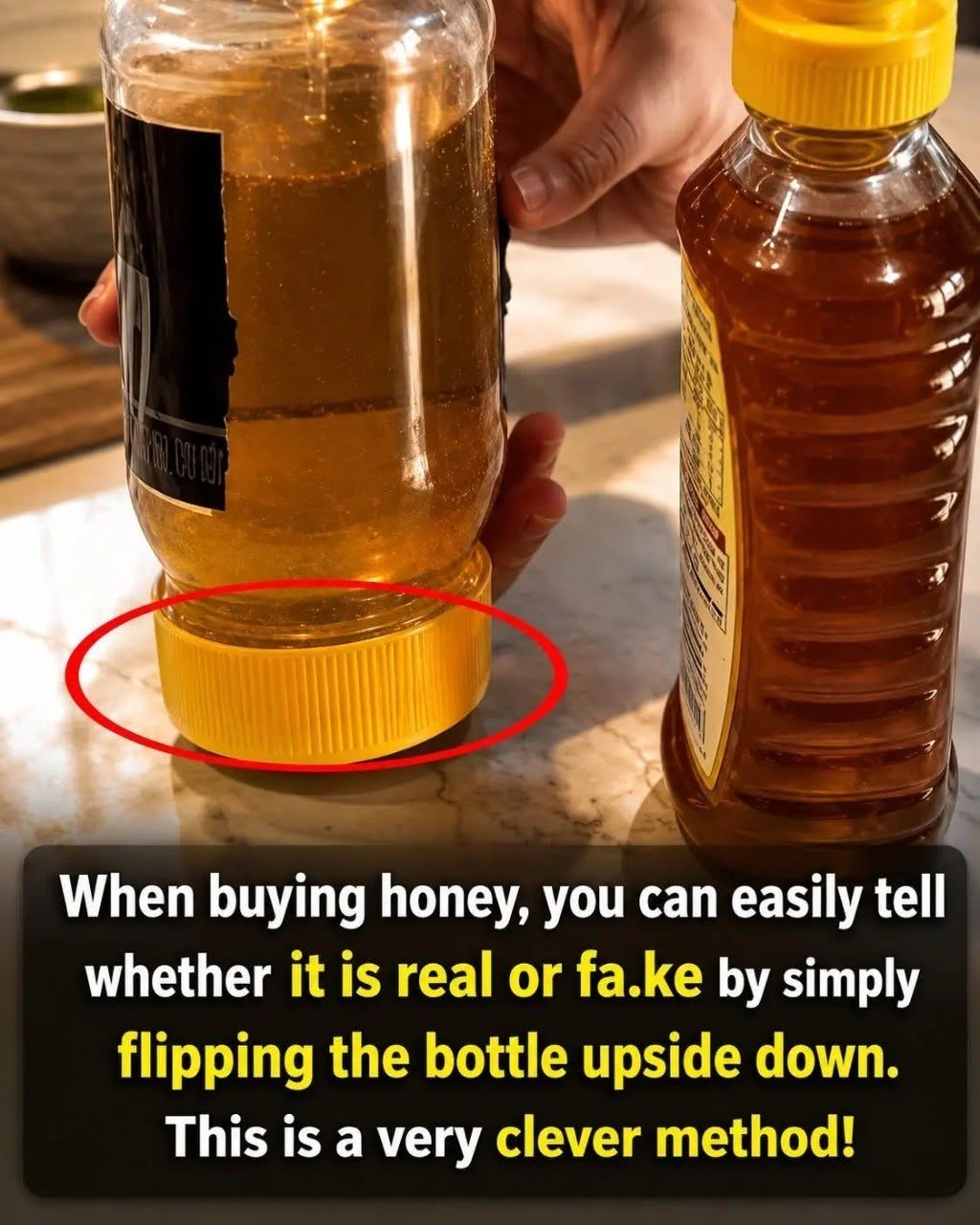
Food quality tips and clever kitchen hacks frequently circulate across social media, offering simple ways to test grocery items at home. When an engaging graphic appears online claiming that you can easily determine whether honey is real or fake just by flipping the bottle upside down, it instantly catches the attention of shoppers looking for quick authenticity checks.
Navigating food purchasing, understanding honey properties, and adopting reliable grocery habits are essential parts of smart consumerism. Furthermore, relying on established scientific standards rather than oversimplified internet tricks ensures accurate food choices. This comprehensive guide explores the realities of honey production, purity tests, and evidence-based food science.
The Reality of Honey Purity Tests: What Science Says
Pure honey is a natural sweet substance produced by bees from floral nectar, consisting primarily of sugars, water, enzymes, and trace minerals.
Why Visual “Flip” Tests Are Misleading
While viral posts suggest that observing how quickly an air bubble travels or how honey settles when inverted can reliably distinguish real honey from adulterated or fake products, these visual tricks are scientifically unreliable. Honey’s viscosity and flow rate depend heavily on its moisture content, floral source, ambient temperature, and crystallization state rather than its purity alone. Pure honey with high moisture content can flow faster than thick, blended, or adulterated syrups stored at cooler temperatures.
The Importance of Certified Food Standards
Accurately determining honey authenticity requires laboratory analysis—such as stable isotope ratio mass spectrometry (SIRMS)—to detect added corn syrup or cane sugar, rather than simple home kitchen experiments.
Practical Tips for Making Informed Honey Purchases
Selecting high-quality honey and protecting yourself from misleading marketing involves reliable, practical consumer habits:
- Check the Ingredient Label: Look for 100% pure honey with no added corn syrup, high-fructose syrups, or extraneous sweeteners.
- Buy from Reputable Brands: Purchase honey from trusted local apiaries, certified organic producers, or well-established grocery suppliers.
- Observe Crystalization: Recognize that natural, raw honey will eventually crystallize over time, which is a sign of purity rather than spoilage.
- Research Food Safety Regulations: Stay informed about industry standards and guidelines for honey labeling and authenticity.
- Be Skeptical of Viral Kitchen Hacks: Question overly simplistic online tests that claim to verify complex food chemistry through casual visual observations.
Interesting Facts About Honey and Bee Science
- Bees visit millions of flowers and fly thousands of miles collectively to gather enough nectar to produce a single jar of honey.
- Natural honey has a unique chemical composition containing natural enzymes and antioxidants that give it a remarkably long shelf life.
- Adulterated honey often involves mixing pure honey with cheaper sweeteners like rice syrup or sugar cane syrup to reduce production costs.
- Honey production varies widely depending on the seasonal blooms and regional floral sources available to honeybees.
Conclusion
While viral social media posts use clever kitchen tricks to drive engagement, evaluating food authenticity relies on proper labeling, certified suppliers, and laboratory science rather than simple bottle-flipping methods. By shopping carefully and understanding food standards, you can ensure quality purchases. Relying on verified science guarantees true consumer confidence.
Frequently Asked Questions (FAQ)
Can flipping a honey bottle upside down prove if it is real?
No, the speed at which honey flows or how bubbles move depends on temperature, moisture content, and floral source, making the inversion test unreliable.
What is the most reliable way to test honey purity?
Laboratory testing, such as pollen analysis and stable isotope testing, is the only definitive method to detect adulteration or added sugars in honey.
Why does real honey sometimes crystallize?
Crystallization is a natural process where liquid honey turns semi-solid over time due to its natural glucose and moisture balance.
Why do food-testing hacks go viral online?
Simple, visual kitchen tests appeal to everyday shoppers looking for easy ways to verify product quality, making them popular content for social media.
