
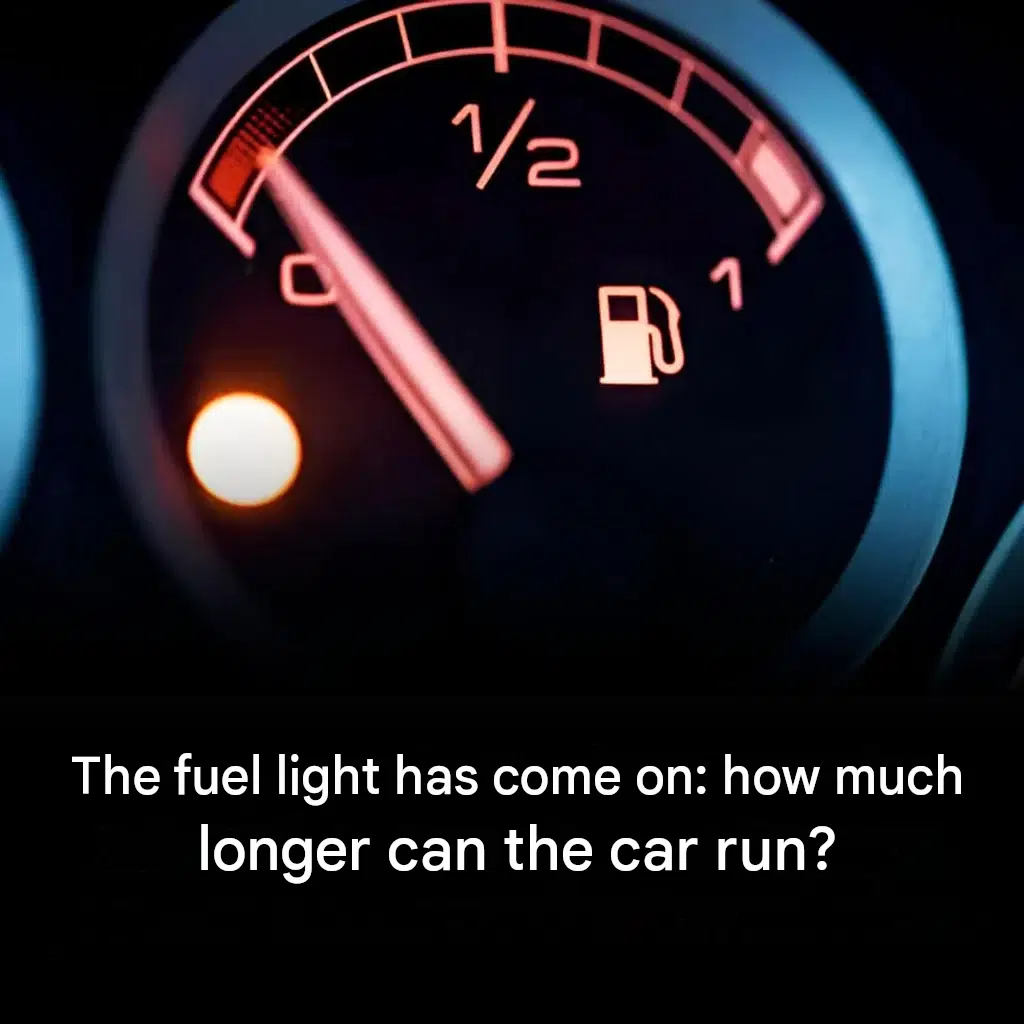
For most drivers, few things on the dashboard incite as much immediate anxiety as that sudden, solitary amber glow: the low fuel light. It’s an instant pulse-raiser, especially when you are far from home, on an unfamiliar highway, or running late. But beyond the immediate panic lies a critical, practical question: “How much longer can the car run?”
This article will pull back the curtain on this universal automotive experience. We will explore the mechanics, the statistics, the risks, and the legal implications. We will move beyond the fear and provide you with practical, data-driven knowledge to handle this situation with calm confidence and, more importantly, to understand how to keep your fuel budget from becoming a fuel crisis.
==================================================
The Science and Psychology of the “Reserve” Tank
The term “reserve tank” is a common misnomer. In almost all modern passenger vehicles, there is no physical, separate tank of backup gasoline. It’s all the same fuel supply. Instead, what we have is a predetermined point, calculated by the vehicle’s computer, at which the remaining amount of fuel is considered to be a “reserve.”
The low fuel light is an early warning system designed by automotive engineers to provide you with a margin of error. They understand that drivers are human and will occasionally procrastinate on refueling. The system is intentionally designed to trigger before the tank is completely dry, but calculating that exact tipping point is a blend of fluid dynamics and psychology.
A common driver psychology is that “E” stands for “Emergency.” However, for automotive manufacturers, “E” might just be a notification to start planning your next stop. The psychology is also tied to “Empty Anxiety”—a documented state of stress caused by low fuel, sometimes leading to dangerous driving behavior. Understanding how much fuel is left is the first step in combating this.
==================================================
The Estimated Miles: Unraveling the Mystery
This is the number everyone wants to know: the magic distance. Unfortunately, there is no universal answer. The distance you can travel once the light illuminates is highly variable, depending on a perfect storm of factors.
1. Vehicle Make and Model
Different manufacturers set their reserve points at different levels. A large pickup truck or SUV with a huge fuel tank may have 3-4 gallons (11-15 liters) left when the light comes on, while a compact hybrid might only have 1-1.5 gallons (4-6 liters).
As a general, very loose rule of thumb for most modern cars, the reserve tank usually holds approximately 1-2 gallons (4-8 liters) of fuel. This translates to a typical range of 30 to 60 miles (48 to 96 kilometers). However, relying on a rule of thumb is a dangerous game. Some trucks could go 80 miles, while a performance car might barely manage 20 miles.
2. Real-World Fuel Economy
The actual number of miles you can cover is calculated not just by how much fuel is left, but by how efficiently you are using that fuel. A car that averages 40 MPG will obviously travel much farther on one gallon than a car that gets 15 MPG.
This is where the variables get complex. If the light comes on during bumper-to-bumper city traffic, your fuel economy will plummet, giving you a much shorter range than if you are on a flat highway at a steady speed.
3. Driving Conditions and Style
- Terrain: Driving uphill consumes significantly more fuel than driving on flat or downhill roads.
- Climate Control: Running the air conditioning is one of the biggest power draws in any car and will noticeably reduce fuel range. Heating is less of an issue, but the initial warming of the cabin uses some energy.
- Speed: Fuel economy generally peaks between 40-60 MPH (64-96 KPH). Speeding on the highway (75+ MPH) will drag your economy down, as will the constant stop-and-go of city driving.
- Aggressive Driving: Rapid acceleration and sudden braking are terrible for fuel economy.
4. Vehicle Load and Maintenance
A car full of passengers and luggage will use more fuel. Similarly, poorly maintained vehicles—those with low tire pressure, old spark plugs, or a clogged air filter—will have decreased fuel efficiency, shortening your remaining range. A poorly tuned engine is like a leaky pipe for your fuel budget.
==================================================
The Risks: What Happens When You Push Your Luck?
Driving on empty is more than just a source of anxiety; it can have genuine, long-term consequences for your vehicle.
1. Clogged Fuel Filter and Fuel Injectors
Over months and years, small particles and debris naturally accumulate at the bottom of your fuel tank. When the fuel level gets extremely low, the fuel pump can start picking up this sediment. While there is a fuel filter, pushing sediment into the system repeatedly can lead to a clogged filter. In severe cases, fine sediment can bypass the filter and damage delicate fuel injectors, which are expensive to repair or replace. A new fuel injector can feel like taking out an unexpected loan for a small mistake.
2. Overheated Fuel Pump
This is perhaps the biggest mechanical risk. Modern fuel pumps are often located inside the fuel tank and use the gasoline itself to cool and lubricate the pump’s electric motor. If you regularly drive on an almost-empty tank, there is less fuel around the pump to absorb the heat. Over time, this constant overheating can cause premature fuel pump failure. Replacing a fuel pump is a major repair that can cost hundreds, sometimes thousands, of dollars.
3. Engine Misfiring
When the fuel pump struggles to pull fuel up, it can result in an inconsistent flow of gasoline to the engine. This can cause the engine to misfire or hesitate. In severe cases, this lack of fuel delivery, called “running lean,” can cause engine component damage. This is a far more serious legal problem for your vehicle than simply being late.
==================================================
Legal Services and Your Budget: When It’s More Than Just a Sputter
There is another serious dimension to running completely out of gas, one that extends past a simple mechanical fix. While not common, it can lead to situations that require professional legal counsel.
Is Running Out of Gas Illegal?
In most jurisdictions in the United States, running out of gas is not itself a crime. However, the actions that result from it can be.
If your car dies and you become stranded in a dangerous lane of traffic, causing an obstruction or a hazard, you could face legal services issues. You might be issued a citation for obstructing traffic or even reckless driving.
Furthermore, if you are stopped by a police officer while pulling away from a gas station on empty, you could still be ticketed. If the officer determines that your lack of fuel is creating a safety issue for yourself and other drivers, you may face charges. For example, if you run out on a bridges, in a tunnel, or in a high-speed lane. Some states, like New Jersey, have laws allowing police to issue tickets for creating an unnecessary traffic hazard if your car is disabled and you cannot move it. This is where a traffic attorney may be required, which will add to your cost.
A more serious implication is that running out of fuel could, in rare cases, be considered an act of negligence if you cause an accident. If another driver collides with your disabled vehicle because you failed to take reasonable care to keep it fueled, your car insurance provider may dispute a claim, leading to a legal battle and potentially significant financial liability. If you ever find yourself in this complex situation, engaging the services of a competent car accident attorney is crucial to navigate the process.
The legal and financial risks of pushing your fuel reserve are often overlooked but are much greater than simply needing a tow. The cost of a few gallons of gas is always preferable to legal fees.
==================================================
Pro Tips for Maximum Range and Peace of Mind
Instead of playing “fuel roulette,” adopt a proactive approach to fuel management. This is the cornerstone of sound personal finance for vehicle owners.
Get to Know Your Specific Vehicle
Don’t guess; find out. When your fuel light comes on, drive to the nearest gas station and fill the tank completely. Look at your receipt to see exactly how many gallons (or liters) you just added. Then, check your owner’s manual to find the manufacturer-rated full fuel capacity of your car. By subtracting the amount you just filled from the total capacity, you can get a very good idea of your car’s true “reserve” size. For example, if your tank holds 18 gallons and you just put in 16.5, you had 1.5 gallons remaining. This is much better information than a blind guess.
Adopt Fuel-Efficient Driving Habits
If the light does come on, switch your driving mode immediately to maximize your chances:
- Turn Off the A/C and Radio: Reducing the load on the electrical system and engine is a priority.
- Maintain a Steady Speed: Avoid aggressive acceleration and sudden stops. Try to maintain a constant speed that is both safe and fuel-efficient.
- Use Cruise Control: This is the easiest way to keep your speed consistent, which is always better for fuel economy. Use it only on flat terrain, not in hilly or heavy traffic situations.
- Do Not Idle: If you are stopped at a light that you know will be long, or if you are waiting for someone, it can be more efficient to turn off the car, though this is often not practical for very short periods.
- Remove Unnecessary Weight: A heavy vehicle is a thirsty vehicle. Clear out any junk in your trunk or back seat.
Maintain Your Car Proactively
A well-maintained car is inherently more fuel-efficient. This is a practical and easy way to optimize your fuel budget. Check your tire pressure at least once a month; underinflated tires can significantly reduce fuel economy. Keep up with your scheduled maintenance, like oil changes and spark plug replacements.
Use Navigation Wisely
Modern mapping apps like Google Maps and Waze are powerful tools. They don’t just find destinations; they find gas stations. If you’re driving in unfamiliar territory, use these apps to find the nearest and cheapest gas. Some apps will even help you plot a route that is most fuel-efficient.
==================================================
Practical Facts: Myth vs. Reality
Let’s clear up some common misconceptions about driving on empty.
Fact or Fiction: Shaking the Car Helps?
- Fiction. Physically rocking or shaking your car after running out of gas to “slosh around” the remaining few drops is completely ineffective. The remaining fuel is already moving with every acceleration, braking action, or turn you make. If you are truly out of gas, a slight rock will not make any difference to the fuel pump.
Fact or Fiction: Turning on Your Hazards Helps?
- Fact. If you run out of fuel and are forced to stop your vehicle, your hazard lights are your first line of defense for safety. They alert other drivers to your presence and are your primary way to signal that you are a disabled vehicle. Your priority should be safety first, and that includes making yourself as visible as possible. However, the energy to run them comes from the battery, so if your engine is off, they will eventually drain the battery.
Fact or Fiction: Coasting in Neutral Saves Gas?
- Fiction (Mostly). For modern, fuel-injected cars, the engine’s computer will automatically cut fuel flow to the injectors when you are coasting in gear (with your foot off the accelerator). The inertia of the vehicle’s motion keeps the engine turning. If you shift to neutral, the engine will still require fuel to idle. So, for maximum economy, it’s almost always better to leave the car in gear. The exception is coasting down a long, shallow hill where you can coast in neutral without gaining excessive speed, allowing the engine to idle. This is a niche technique that can be dangerous if not done correctly, and should be avoided in low-fuel situations.
==================================================
Conclusion
The little amber light on your dashboard is not an immediate command to panic; it is an intelligent, early warning system. While the average car can travel 30-60 miles once it illuminates, this distance is extremely variable and depends on numerous factors you can control, such as your driving style and route choice.
However, the fact remains that driving on empty is bad for your car’s fuel system and can expose you to unexpected and expensive mechanical repairs, from a clogged filter to a new fuel pump. The financial logic of spending a minute at a gas station far outweighs the cost of a major repair.
Furthermore, running out of fuel isn’t just a physical inconvenience; it can have legal and financial consequences. Getting stranded can lead to dangerous situations and traffic violations, potentially involving car insurance disputes and a search for an accident attorney.
The next time you see that light, don’t play a game of risk. Use the knowledge you now possess to drive efficiently to the nearest station and fill up your tank. It’s a small act of maintenance that will pay huge dividends for your car’s longevity, your financial peace of mind, and your personal safety.
==================================================
FAQ Section
How many gallons are in a typical reserve tank?
As a general rule for most passenger cars, the reserve “tank” is not a separate tank at all. It represents a predefined amount, typically holding between 1-2 gallons (4-8 liters) of fuel left, which triggers the sensor for the light.
Can driving on empty damage my car?
Yes, repeatedly driving on empty can damage your car’s fuel pump. Modern fuel pumps are often located inside the fuel tank and are cooled and lubricated by the gasoline itself. Running the tank too low means there is less fuel around to dissipate the heat from the pump, potentially leading to premature failure. Additionally, the pump is more likely to suck in debris and sediment from the bottom of the tank, which can lead to a clogged fuel filter and even damage to fuel injectors.
Can I get a ticket for running out of gas?
While running out of gas itself is not illegal in most places, the consequences can be. If you become a hazard by stalling in traffic, or if you create a nuisance for others, you can be ticketed for obstructing traffic or creating a hazard. Laws vary, so it’s always best to move to the side of the road if your car stalls and be proactive about getting fuel. If you’re involved in an accident, even if you run out of gas first, that could create a legal issue that would require a attorney.
Will turning off the air conditioning help?
Yes, turning off the air conditioning will slightly increase your range. The A/C system is powered directly by the engine’s accessory belt and is a significant load. Turning it off can provide a small but crucial boost to your fuel economy, giving you valuable extra minutes of driving time.
Why does my gas mileage seem lower than usual?
Several factors can affect gas mileage, including tire pressure, vehicle weight, and driving habits. Maintaining your vehicle with regular tune-ups and oil changes is one of the best ways to ensure optimal fuel efficiency and extend its overall life. It can also save you money in the long run.
Is coasting in neutral going to save any gas?
For most modern fuel-injected cars, the engine’s control unit will cut fuel to the injectors while you coast in gear with your foot off the pedal. Letting the inertia turn the engine while in gear will save more fuel than putting the car in neutral and letting the engine idle. This is a more safe and fuel-efficient technique.
What should I do if I actually run out of gas?
If you do run out of gas, your priority is to safely guide your vehicle out of the path of oncoming traffic. Find a safe spot, turn on your hazard lights, and pull your vehicle off the road as far as you safely can. From there, you can either call a roadside assistance service, a tow truck, or a friend to bring you a container of fuel. In an emergency, stay in your car and call for help.
How often should I check my tire pressure?
You should check your tire pressure at least once a month. Underinflated tires are dangerous and can significantly reduce your fuel economy. This simple maintenance check can save you money and keep you safe on the road.
