
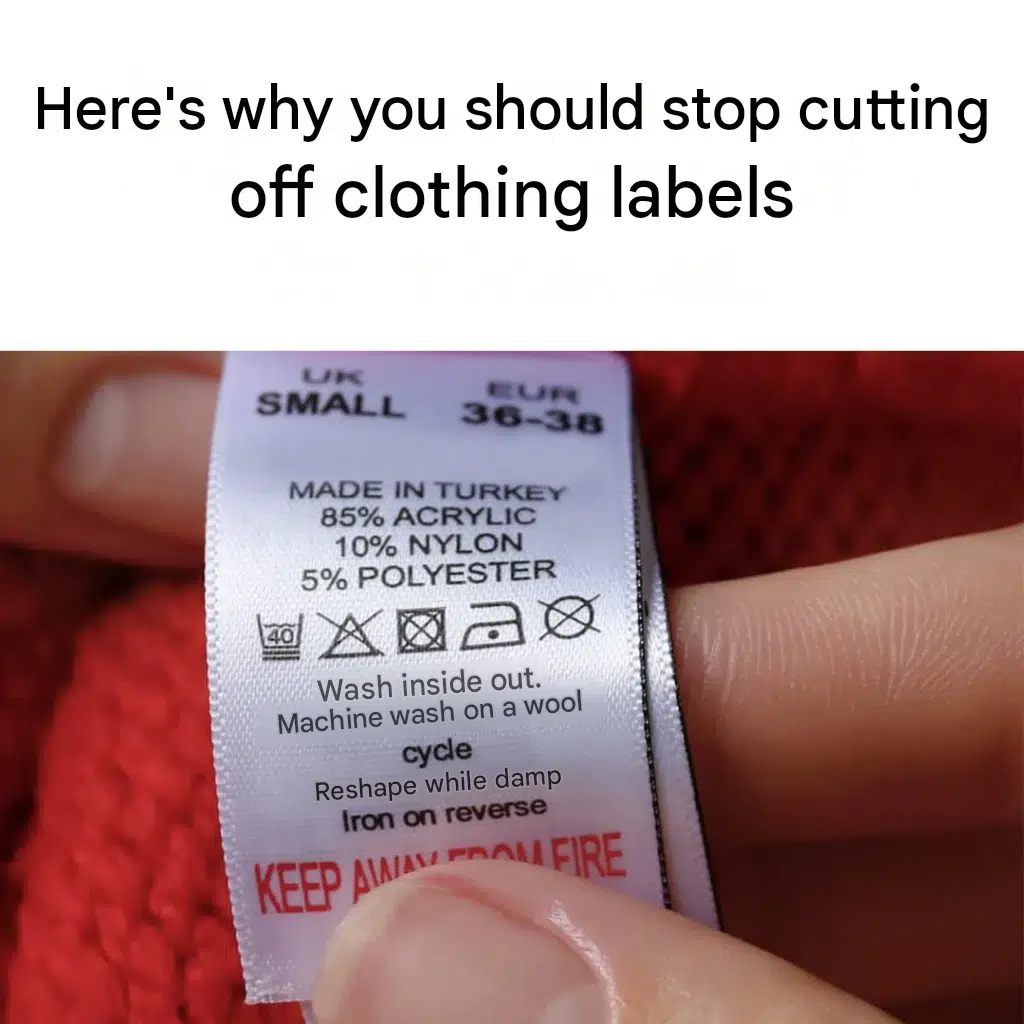
When buying new clothes, one of the most common habits for many people is immediately grabbing a pair of scissors to snip off the inner clothing tags. Whether motivated by sensitive skin, an itchy neckline, or simply annoyance at feeling fabric rub against your neck throughout the day, cutting out care labels feels like a quick way to boost comfort. However, discarding these tags can lead to ruined garments, laundry mishaps, and lost information.
Examining what information clothing labels actually contain and why manufacturers include them highlights why you should think twice before reaching for the scissors. Keeping these tags intact preserves your wardrobe, ensures proper garment care, and protects your clothing investments.
What Clothing Labels Actually Tell Us
Clothing tags are far more than just annoying tags; they serve as a manual for the garment’s composition and maintenance.
1. Fabric Composition and Material Care
- Fiber Content: Labels list precise material percentages (such as cotton, wool, acrylic, nylon, or polyester), which dictate how the fabric reacts to heat, water, and friction.
- Preventing Laundry Damage: Knowing the exact fiber blend prevents you from accidentally shrinking wool, melting synthetic fibers in a hot dryer, or ruining delicate knits.
2. Standardized Washing and Ironing Symbols
The cryptic symbols printed on care labels are standardized international icons providing explicit instructions:
- Water Temperature: Tub icons indicate maximum safe washing temperatures (e.g., $40\text{°C}$).
- Bleaching and Drying: Crossed-out symbols warn against using harsh chlorine bleach or tumble drying.
- Ironing Guidelines: Iron icons specify maximum safe temperatures or warn against ironing synthetic components.
Financial, Environmental, and Consumer Protection Considerations
Preserving clothing tags intersects with broader financial budgeting and sustainable consumer habits.
Protecting Your Wardrobe and Investments
- Extending Garment Lifespan: Following the manufacturer’s cleaning instructions prevents premature fading, fabric pilling, and structural wear, saving you money on constant clothing replacements.
- Resale and Recycling Value: If you plan to donate or resell pre-owned clothing, having the original size and material tag intact makes it much easier for buyers or consignment shops to verify quality.
- Manufacturer Accountability: In many regions, regulatory standards require clear labeling of fiber content and country of origin to protect consumers from misrepresentation.
Practical Tips for Managing Itchy Tags Without Cutting Them Off
If itchy tags drive you crazy, you don’t have to ruin your clothes to find relief. Try these practical alternatives:
- Use Soft Fabric Tape: Cover rough tag edges or stiff embroidered borders with smooth moleskin or soft fabric tape to eliminate skin irritation.
- Tuck or Sew Down Corners: Secure loose, flapping tags by tacking the corners down with a quick needle and thread so they lie flat against the seam.
- Opt for Tagless Garments: When shopping, look for brands that print care instructions directly onto the inner fabric rather than using sewn-in woven labels.
- Snip Carefully If Necessary: If you must remove a tag, cut as close to the seam as possible without slicing into the structural stitching that holds the garment together.
Fascinating Insights Into Textile History
- The Evolution of Care Labeling: Standardized care symbols were developed in the 1950s by the International Association for Care Labeling to help consumers navigate an explosion of newly invented synthetic fibers like nylon and polyester.
- Thermal Printing Technology: Modern garment tags often use specialized inks designed to withstand dozens of industrial wash cycles without fading away.
- The “Keep Away From Fire” Warning: Certain garments—particularly children’s sleepwear and specific loungewear—are legally mandated to feature strict flammability warnings on their labels to ensure household fire safety.
Preserving Your Clothing Through Smart Care
While clipping off an itchy clothing tag feels satisfying in the moment, keeping your labels intact provides vital instructions that keep your favorite outfits looking brand new. By balancing comfort modifications with proper laundry care, you protect your wardrobe and maximize the lifespan of every piece you own.
Frequently Asked Questions (FAQ)
What do the washing symbols on clothing labels mean?
They provide standardized instructions for safe washing temperatures, bleaching rules, tumble drying settings, and ironing limits to prevent ruining the fabric.
Can I wash all clothes in warm water if I cut the tag off?
No. Washing delicate fabrics like wool or certain synthetics in warm or hot water can cause severe shrinking, misshaping, or fabric degradation.
Why do clothing tags feel so itchy?
Many woven tags are made from stiff synthetic threads or feature sharp heat-cut edges that rub against sensitive skin during movement.
Is it legal to remove clothing tags?
It is entirely legal for consumers to remove tags from clothing they own. However, manufacturers and retailers are legally prohibited from removing required fiber-content and country-of-origin tags before sale.
