
Every single day, hundreds of millions of plastic bottles are opened around the globe. While many conscious consumers diligently toss their empty beverage containers into blue recycling bins, a surprising number of plastic bottle caps end up in regular trash, oceans, or landfills. Despite being small in size, plastic bottle caps represent one of the most persistent and prevalent sources of plastic waste on earth. Fortunately, with a growing cultural shift toward sustainable living, circular economies, and home upcycling, these colorful little pieces of plastic are finding brand-new life in unexpected ways.
Whether you are looking to declutter your pantry, launch a creative DIY project with your family, reduce your household carbon footprint, or even turn home waste management into a smart personal finance strategy, understanding the lifecycle of plastic bottle caps is crucial. In this comprehensive, deep-dive guide, we will explore the science of plastic caps, creative upcycling ideas, community collection initiatives, environmental policies, and practical steps you can take today to turn everyday plastic caps into real value.
1. Understanding the Anatomy of Plastic Caps: Why Are They Different?
To understand why plastic bottle caps require special attention, it helps to look at how modern beverage containers are manufactured. Most standard single-use plastic bottles are made from Polyethylene Terephthalate (PET or PETE), denoted by resin identification code #1. PET is transparent, strong, and ideal for containing liquids under pressure.
However, plastic bottle caps are almost never made from PET. Instead, caps are manufactured using high-density plastics designed to withstand frequent torque, twisting, and sealing stresses:
- High-Density Polyethylene (HDPE / Resin #2): Known for its exceptional strength-to-density ratio, stiff feel, and heat resistance. HDPE is commonly used for milk jug caps, soda bottle lids, and detergent caps.
- Polypropylene (PP / Resin #5): Renowned for its high melting point, flexibility, and fatigue resistance. Polypropylene is frequently used for flip-top caps, prescription medicine lids, sauce bottle dispensing caps, and sport-bottle lids.
The Melting Point Dilemma in Recycling Facilities
Because HDPE (#2) and PP (#5) melt at significantly higher temperatures than PET (#1), mixing bottle caps directly into the PET processing stream historically caused major problems for material recovery facilities (MRFs). When PET plastic was melted down to create new fibers or food-grade containers, unmelted cap remnants created structural flaws and impurities in the recycled resin.
For many years, municipal recycling guidelines explicitly asked consumers to remove the caps before recycling bottles. Unfortunately, unattached small caps often slipped through the sorting screens at recycling plants, falling into waste residue chutes and ending up in local landfills. Modern recycling machinery has evolved, and today many facilities encourage people to leave the cap screwed tightly onto the empty, crushed bottle.
2. Environmental Impact and the True Cost of Plastic Waste
Understanding the impact of microplastics and discarded plastic caps goes beyond simple environmental awareness; it directly intersects with economic health, community development, and municipal funding.
Marine Ecosystems and Wildlife
Due to their lightweight nature and buoyant structure, discarded plastic caps float easily in waterways, storm drains, and rivers, eventually migrating to ocean gyres. Marine animals, seabirds, and sea turtles frequently mistake brightly colored red, blue, and green bottle caps for food. Ingesting non-biodegradable plastics leads to internal blockages, malnutrition, and toxic chemical exposure within marine food chains.
Economic Costs to Municipalities and Local Taxpayers
Managing municipal solid waste is one of the largest expenses for local governments. When recyclable materials are landfilled instead of processed back into commercial supply chains, tax dollars are wasted on landfill management, toxic runoff monitoring, and incinerator operations. Cities and towns that invest in robust recycling infrastructure reduce waste handling fees, saving taxpayers substantial money over time while generating municipal revenue through reclaimed material sales.
3. Financial Benefits: How Upcycling and Recycling Save You Money
Adopting a sustainable mindset in your household isn’t just an ethical choice—it’s a smart strategy for managing personal finance, cutting down on discretionary spending, and discovering practical household cost savings.
       +-------------------------------------------------------+
       |           Plastics Resource Stream Cycle               |
       +-------------------------------------------------------+
                                  |
                                  v
       +-------------------------------------------------------+
       |   Collection & Sorting (HDPE #2 & PP #5 Separated)    |
       +-------------------------------------------------------+
                                  |
            +---------------------+---------------------+
            |                                           |
            v                                           v
+-----------------------+                   +-----------------------+
|  Industrial Shredding |                   | Household Upcycling   |
|   & Resin Pelleting   |                   |  & Creative DIY Craft |
+-----------------------+                   +-----------------------+
            |                                           |
            v                                           v
+-----------------------+                   +-----------------------+
| New Eco-Manufacturing |                   | Home Decor, Garden    |
| (Furniture, Pipes)    |                   | Tools, Storage Items  |
+-----------------------+                   +-----------------------+
Reducing Household Expenses Through Smart Reuse
Before throwing items away or buying brand-new plastic organizers, decorative tiles, or garden tags, look at the materials you already have at home. Repurposing plastic bottle caps directly saves money on kitchen organization supplies, children’s educational toys, and garden markers.
Unlocking Local Incentive Programs and Community Grants
Many local environmental non-profits, school districts, and community hubs run charitable cap collection drives. Some specialty recyclers pay cash by weight for dense HDPE and PP plastics. Participating in community donation programs can support local schools, finance park cleanups, or help charities purchase wheelchairs for individuals with mobility challenges in exchange for sorted plastic caps.
4. Creative Upcycling Projects for Home, Garden, and Education
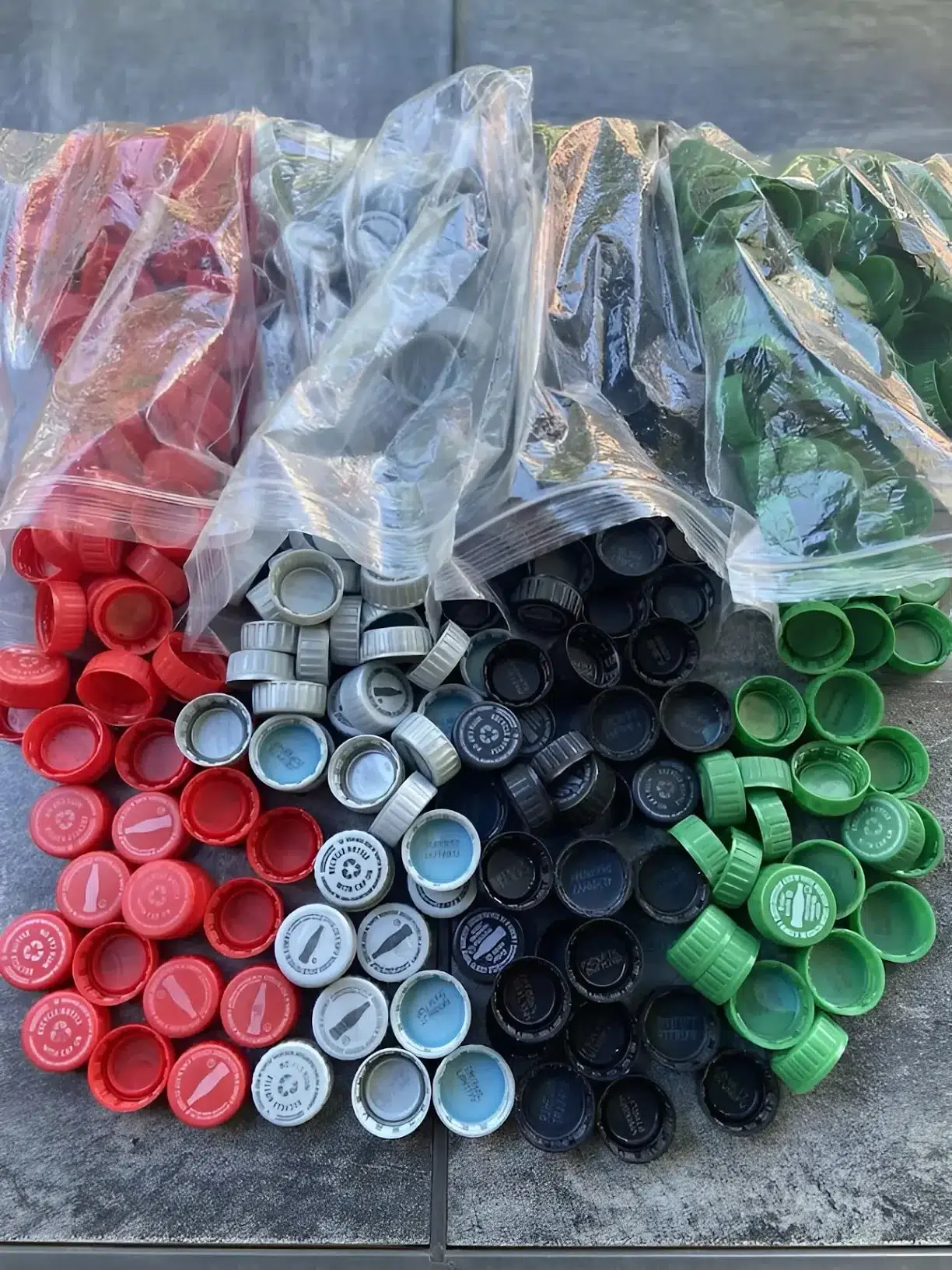
If you have accumulated bags of colorful caps like those pictured above, don’t throw them away! Here are practical, fun, and visually stunning ways to transform everyday bottle caps into functional household items.
| Project Category | Project Name | Difficulty Level | Primary Plastic Used | Key Materials Needed |
| Home Decor | Mosaic Table Tops & Coasters | Intermediate | HDPE (#2) & PP (#5) | Wooden base, non-toxic epoxy/glue |
| Gardening | Waterproof Plant Labels | Easy | Any bottle cap | Wooden skewers, permanent marker |
| Education | Alphabet & Math Counters | Very Easy | Smooth caps | Sticker dots or sharpie marker |
| Workshop | Small Hardware Organizers | Easy | Clear or solid caps | Screws, magnetic strips |
| Arts & Crafts | Wall Art & Murals | Advanced | All color varieties | Canvas/plywood, hot glue gun |
Educational Games for Kids
Plastic caps make ideal, durable learning tools for young children. By writing letters, numbers, or math symbols inside cap bottoms, parents and teachers can create interactive games:
- Spelling Bees: Write consonants on red caps and vowels on white caps to teach phonics.
- Math Drills: Create addition, subtraction, and multiplication counters for elementary students.
- Color Sorting & Pattern Recognition: Help toddlers develop fine motor skills and spatial awareness by grouping caps by shade and size.
DIY Garden & Patio Innovations
Plastic caps are fully weather-resistant, UV-durable, and waterproof, making them ideal for outdoor applications:
- Custom Drainage Layers: Place inverted caps at the bottom of heavy indoor planters before adding soil to improve root aeration and drainage without adding excess weight.
- Permanent Plant Tags: Write herb and vegetable names on bright caps attached to stakes to easily track garden rows throughout the growing season.
5. Industrial Plastic Recycling: What Happens After Collection?
When plastic bottle caps enter commercial recycling streams, they undergo an impressive industrial transformation:
- Optical Sorting: Automated sensors and infrared scanners sort incoming materials by color, density, and chemical composition.
- Shredding & Washing: Caps are ground down into tiny plastic flakes and washed thoroughly with hot water and eco-friendly detergent to remove sugar, liquid residues, paper labels, and adhesive glue.
- Density Flotation Separation: Flakes pass through large water baths. Since HDPE and PP float while PET sinks, workers easily skim cap materials off the surface for pure batch processing.
- Extrusion & Pelletizing: Clean plastic flakes are melted, filtered, pressed into long ribbons, and chopped into uniform plastic pellets.
These high-grade recycled HDPE and PP pellets are sold back to manufacturers to build durable products such as:
- Heavy-duty outdoor patio furniture and park benches
- Commercial storage totes and tool crates
- Underground drainage pipes and irrigation systems
- Automotive engine covers, battery cases, and splash guards
- Plastic lumber for decks and residential fencing
6. Navigating Insurance, Legal, and Health Standards in Recycled Products
As recycled materials become more integrated into consumer goods, regulatory frameworks and quality assurance standards play an essential role in consumer safety.
Food Safety and FDA Regulations
Not all recycled plastics are safe for direct food contact. The U.S. Food and Drug Administration (FDA) enforces strict safety guidelines regarding reclaimed plastic resin. While original bottle caps are food-grade, re-melted caps converted at home or through uncertified processes should generally not be used for drinking cups, food storage, or cookware due to potential chemical degradation during reheating.
Health & Safety Considerations at Home
When working on DIY home upcycling projects that involve melting or reshaping plastic caps:
- Avoid Overheating: Never melt plastic caps above $350^\circ\text{F}$ ($175^\circ\text{C}$), as high temperatures can release irritating fumes.
- Maintain Adequate Ventilation: Always melt or craft plastics outdoors or under a strong exhaust hood.
- Wear Protective Equipment: Use heat-resistant gloves, eye protection, and a respirator mask designed for organic vapors whenever working with heated polymers.
Property Insurance and Home Crafts
Homeowners interested in building larger furniture or functional installations using recycled plastics should follow basic home safety protocols. Storing massive quantities of loose plastic in attics, garages, or near water heaters can present fire hazards. Checking with your home insurance provider about workshop safety guidelines ensures your property remains fully protected while you enjoy your hobbies.
7. Step-by-Step Guide: How to Properly Recycle Caps at Home
To ensure your plastic bottle caps make it through the recycling pipeline successfully, follow this straightforward checklist:
- Step 1: Check Local Municipal Guidelines. Confirm whether your city’s curbside program accepts caps attached to bottles or prefers cap-free collection.
- Step 2: Empty and Rinse Containers. Remove leftover milk, soda, juice, or soap to prevent foul odors and contamination at processing plants.
- Step 3: Flatten the Bottle (If Required). Squeezing air out of plastic bottles saves space in transit vehicles, reducing carbon emissions during collection trips.
- Step 4: Screw the Cap Back On Tightly. Securing the cap ensures it won’t fall through sorting screens at municipal recovery facilities.
- Step 5: Separate Special Cap Types. Steel crown caps, aluminum twist-offs, pump sprayers, and rubber seals should be sorted separately from rigid pure plastic caps.
8. Interesting Facts About Plastic Caps and Recycling
- The World’s Largest Mosaic: Communities around the globe have built giant public murals containing over 500,000 plastic bottle caps to raise awareness for ocean preservation.
- Extreme Durability: High-density polyethylene caps can take upwards of 450 to 500 years to naturally decompose in landfills if not properly recycled.
- Color-Coded Sorting: Red, black, white, and green caps (like those featured in our photo) are prized by artisanal plastic crafters because they create vibrant, solid colors without needing chemical dyes.
- Energy Efficiency: Manufacturing products from recycled HDPE pellets consumes up to 88% less energy compared to producing brand-new virgin plastic from raw petroleum.
9. Frequently Asked Questions (FAQ)
Can I leave metal caps on glass bottles when recycling?
No. Metal caps (such as beer bottle crowns or pickle jar lids) should be removed from glass containers. Place metal lids in your scrap metal or general metal recycling bin so magnets can properly collect them.
Why do some charities collect plastic caps?
Specialized plastic recyclers buy clean, sorted HDPE and PP caps in high-volume bulk orders from non-profits. Charities use the proceeds to fund community outreach, medical care, education programs, and environmental cleanups.
Are drink caps biodegradable?
No. Standard plastic caps are made from synthetic petroleum-based polymers designed for strength and longevity. They do not naturally biodegrade and must be mechanically recycled or upcycled.
Can I melt plastic caps in my home kitchen oven?
It is strongly recommended not to melt plastic caps in household ovens used for cooking food. Fumes released during plastic heating can leave residues on oven walls, potentially contaminating future meals. Use dedicated crafting heat guns or toaster ovens in well-ventilated garage spaces instead.
How do I know if a cap is safe for upcycling?
Look inside the cap for a resin identification code (a number inside a triangle of arrows). Numbers 2 (HDPE) and 5 (PP) are rigid, durable, safe to clean, and ideal for structural DIY upcycling projects.
Conclusion: Small Actions Lead to Massive Environmental Impact
Individual action lies at the heart of every successful sustainability initiative. While a single bottle cap may seem insignificant on its own, collective daily choices add up to millions of tons of plastic diverted from ocean waters and local landfills each year.
By taking a few extra seconds to clean, sort, and properly recycle your plastic caps—or by turning them into beautiful, practical household crafts—you protect marine ecosystems, reduce community municipal waste costs, and contribute to a healthier planet. Start saving your caps today, share your favorite upcycling ideas with friends and family, and join the global movement toward a cleaner, greener future!
