
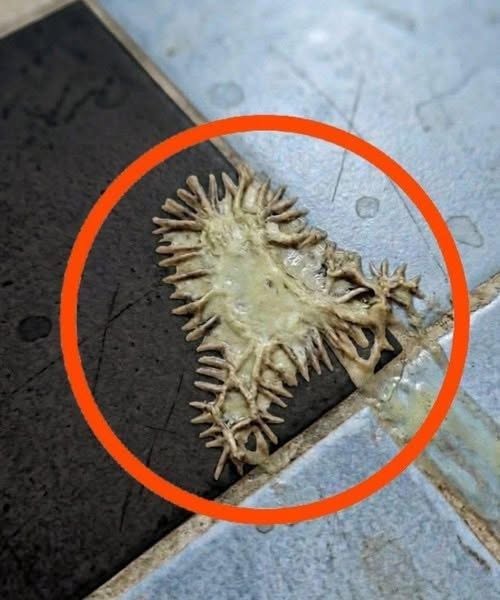
Encountering an unusual mark, dried spill, or strange residue on indoor tile flooring can cause immediate concern. A viral image asking for identification shows a spiky, fan-like white or pale residue squished across dark and light floor tiles, highlighted by a red circle.
Understanding common indoor residues and household materials helps homeowners quickly identify and clean mysterious spots without damaging flooring surfaces.
Visual Breakdown: Floor Residue Analysis
The visual highlights a flattened, semi-hardened substance spread across tiled flooring.
+-----------------------------------------------------------------------+
|                    FLOOR RESIDUE VISUAL ANALYSIS                      |
|                                                                       |
|   [ Floor Context ]     ---> Tiled floor surface with tile grout line |
|                                         |                             |
|                                         v                             |
|   [ Central Highlight ] ---> Red circle focusing on pale residue      |
|                                         |                             |
|                                         v                             |
|   [ Shape Features ]    ---> Radiating spiky/tentacle-like edges      |
+-----------------------------------------------------------------------+
Key Visual Components
- Textured Perimeter: Radiating spiky, tooth-like projections surrounding a central squished mass.
- Surface Placement: Positioned directly over the seam between two adjacent floor tiles.
- Material Appearance: Pale tan or off-white dried substance consistent with squashed organic material, dried adhesive, or molten plastic/wax.
Possible Identifications for Mysterious Household Residues
- Squashed Organic Matter or Food Splatter: Dough, melted candy, or dropped food items can splatter outward under pressure, creating unusual spiky patterns as they dry.
- Construction Adhesive or Caulking: Leftover tile grout, silicone sealant, or adhesive squeezed out during renovation can dry into irregular shapes along tile joints.
- Melted Wax or Plastic: Candle wax or melted synthetic materials that drip onto cold tile quickly solidify into fan-like shapes.
- Dried Fungi or Slime Mold Growth: In damp or high-humidity areas, organic molds can form radiating web-like structures before drying out.
Household Residue Identification Guide
| Residue Appearance | Likely Cause | Recommended Removal Method |
| Brittle & Chalky | Dried Grout or Drywall Compound | Scrape gently with a plastic putty knife and warm water |
| Sticky / Rubbery | Silicone Sealant or Dried Glue | Apply isopropyl alcohol or vinegar to loosen grip |
| Hard & Waxy | Candle Wax or Melted Plastic | Warm with a hair dryer, then wipe clear |
| Powdery or Organic | Food Residue or Mold Growth | Clean with disinfectant and a mild detergent solution |
Frequently Asked Questions (FAQ)
1. How can you remove tough dried residue from tile without scratching it?
Use a plastic scraper or non-abrasive sponge combined with warm soapy water or diluted white vinegar. Avoid using metal blades or harsh wire brushes that can scratch glazed tile surfaces.
2. Is this type of residue harmful?
Most household floor spots consist of dried food, wax, or leftover construction material. However, if the substance appears biological or fungal, wearing gloves and cleaning with a disinfectant is recommended.
Conclusion
Taking a systematic approach to identifying and cleaning unusual household spots keeps tile floors looking pristine while protecting surface finishes.
