
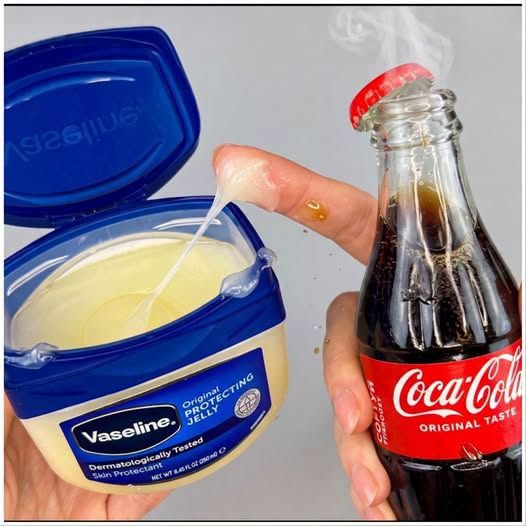
Social media platforms are constantly flooded with viral DIY skincare hacks promising quick fixes for everything from dark spots to body hair removal and skin brightening. One of the stranger trends circulating online involves mixing petroleum jelly (Vaseline) with Coca-Cola. While the combination makes for eye-catching photos and videos, putting soda on your face is far from a dermatologist-approved beauty treatment.
Understanding the actual science behind both ingredients reveals why this viral trend is best left on your screen rather than your skin.
The Reality Behind the Ingredients
                 [ Vaseline + Coca-Cola Analysis ]
                                 |
     +---------------------------+---------------------------+
     |                                                       |
[ Petroleum Jelly ]                                 [ Coca-Cola ]
  - Occlusive barrier layer                           - High acidic pH (~2.5)
  - Traps natural moisture                            - Sticky sugar residue
  - Non-comedogenic when pure                         - Artificial colorings & carbonation
1. Petroleum Jelly (Vaseline)
Vaseline is a classic, highly effective occlusive agent.
- Moisture Lock: It creates a physical barrier over the skin surface that prevents transepidermal water loss, helping dry skin heal.
- Barrier Protection: Dermatologists frequently recommend petroleum jelly for soothing chapped lips, minor cuts, and dry patches.
2. Coca-Cola
While delicious as a beverage, soda contains components that are actively harmful to facial skin:
- High Acidity: Coca-Cola has a very low pH (around $2.5$), mainly due to phosphoric acid. Applying highly acidic liquids directly to the face can strip the skin barrier, leading to redness, chemical irritation, and burning.
- High Sugar Content: The heavy concentration of sugar leaves a sticky residue on the skin, creating an ideal environment for bacteria to thrive and clogging pores.
- Carbonation & Additives: Artificial colorings and carbonation offer no dermatological benefits and can trigger contact dermatitis in sensitive individuals.
Common Viral Claims vs. Dermatological Facts
| Viral Claim | The Scientific Reality |
| Dyeing or Tanning the Skin | Soda stains the outer layer of dead skin cells temporarily, creating an uneven, blotchy, and sticky stain rather than a safe glow. |
| Removing Unwanted Hair | Neither Vaseline nor soda weakens hair follicles or acts as a depilatory agent. |
| Clearing Acne or Dark Spots | Acidic soda causes barrier damage and inflammation, which actually worsens hyperpigmentation and triggers acne breakouts. |
Safe Alternatives for Smooth, Glowing Skin
Rather than risking skin irritation with DIY soda concoctions, consider proven alternatives:
- For Brightening: Use serums containing Vitamin C, Niacinamide, or Alpha Arbutin to safely reduce dark spots.
- For Exfoliation: Opt for gentle chemical exfoliants like Lactic Acid or Glycolic Acid formulated at safe, controlled pH levels.
- For Moisture: Apply Vaseline alone over your favorite gentle moisturizer at night (a technique known as “slugging”) to lock in hydration.
Important Safety Notice: Avoid applying harsh household liquids, soft drinks, or acidic food products directly to your face. Always perform a patch test before trying any new skincare product.
Frequently Asked Questions (FAQ)
Can mixing Coca-Cola and Vaseline damage your skin?
Yes. The phosphoric acid in soda can disrupt your skin’s natural moisture barrier, leading to inflammation, irritation, micro-tears, and bacterial breakouts trapped under the heavy layer of Vaseline.
Why do these hacks go viral if they don’t work?
Sensational images, unusual ingredient combinations, and dramatic claims generate high click-through rates and engagement on social media platforms, regardless of whether the science is sound.
Final Thoughts
While DIY beauty trends can be entertaining to watch, mixing Vaseline and Coca-Cola offers no real skincare benefits and carries a high risk of irritation and clogged pores. Stick to formulated, dermatologist-tested products for a healthy, glowing complexion.
