
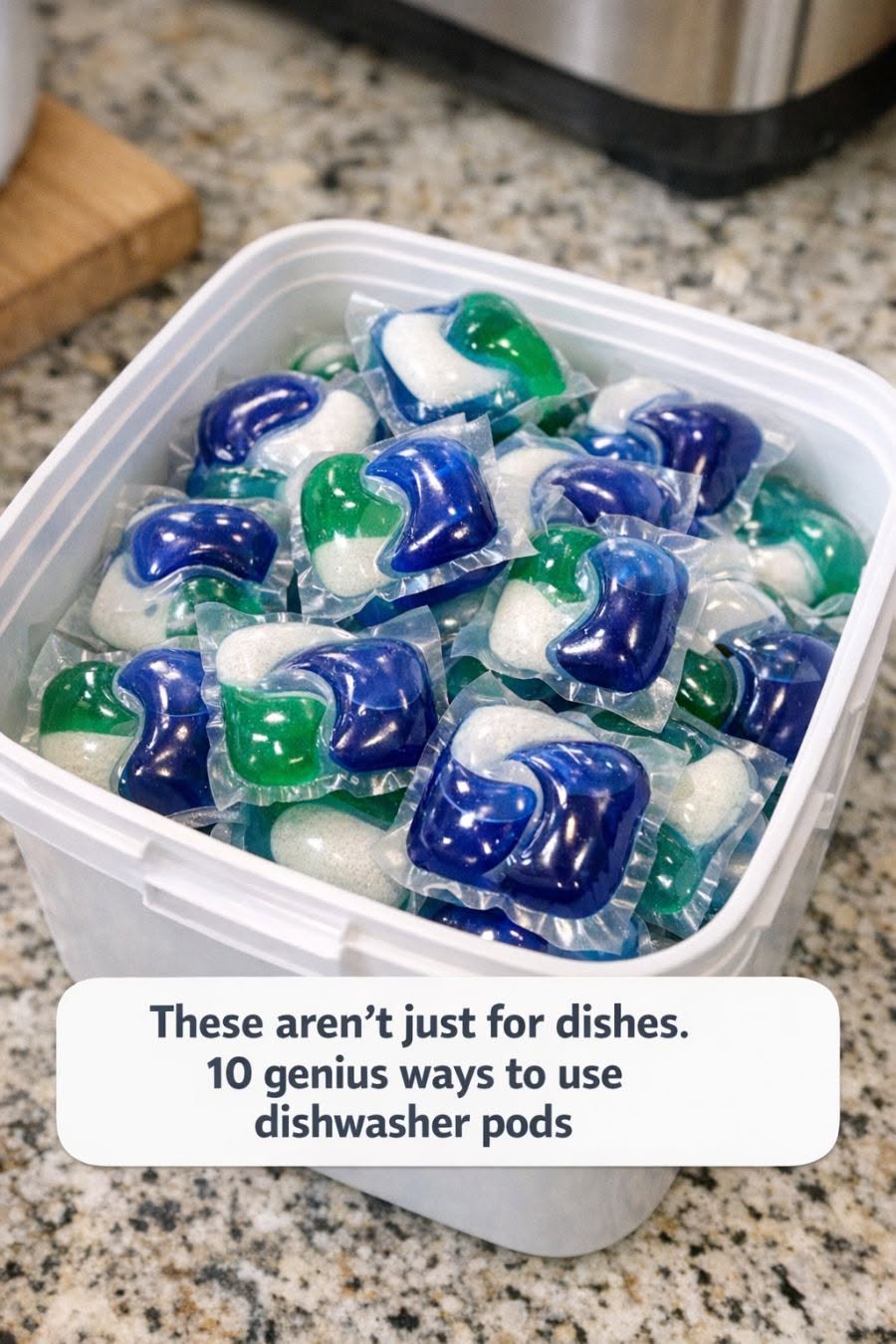
Dishwasher pods are widely recognized as convenient, powerful tools for cutting through grease and removing baked-on food from cookware. However, the unique chemical formulation that makes these compact pods so effective inside a appliance—a concentrated combination of degreasers, water softeners, surface-active agents, and enzymes—also makes them versatile household cleaning allies.
When dissolved in hot water, dishwasher pods can tackle tough stains, baked-on grime, and soap scum throughout your home. This complete guide breaks down the science behind dishwasher pods, explores ten smart alternative cleaning applications, and outlines essential safety precautions.
The Science: Why Dishwasher Pods Excel at Heavy Cleaning
Unlike standard hand soap or mild liquid detergent, dishwasher pods are formulated to break down stubborn organic matter without requiring manual scrubbing.
                  [ Active Cleaning Components ]
                                 |
     +---------------------------+---------------------------+
     |                                                       |
[ Concentrated Enzymes ]                            [ Alkalis & Surfactants ]
  - Target proteins & starches                        - Cut through hardened grease
  - Dissolve organic residue                          - Soften mineral water deposits
1. High-Performance Enzymes
Dishwasher pods contain targeted enzymes, such as amylase and protease. These enzymes act as biological catalysts, breaking complex protein and carbohydrate bonds found in baked-on food, grease, and organic stains.
2. Alkaline Agents and Surfactants
The alkaline chemical base lowers water surface tension, allowing cleaning agents to penetrate deeply into porous surfaces, lift grease, and dissolve tough mineral deposits.
10 Genius Ways to Use Dishwasher Pods Around the House
Here are ten effective ways to repurpose dishwasher tablets and pods for stubborn home cleaning tasks:
1. Stripping Burnt Pots and Pans
Fill a scorched stainless steel or enamel pot with hot water, drop in a dishwasher pod, and let it simmer on low heat for 10 to 15 minutes. The enzymes loosen burnt residue without requiring harsh abrasive scouring pads.
2. Cleaning Oven Glass Doors
Dissolve a pod in a bowl of warm water to create a thick paste, or dip a solid tablet lightly in warm water and use it directly as a gentle scrub block to break down baked-on grease on oven door glass.
3. De-Greasing Stove Racks and Grill Grates
Place greasy oven racks or outdoor grill grates in a bathtub lined with old towels (to prevent scratching). Fill with hot water, drop in two dishwasher pods, and let soak overnight. Wiping away grease the next morning requires minimal effort.
4. Refreshing the Kitchen Sink and Drain
Placing a pod over your garbage disposal or drain opening and running hot tap water over it melts away trapped oils, eliminates unpleasant odors, and brightens stainless steel or porcelain sink basins.
5. Removing Stubborn Coffee and Tea Stains
Fill stained ceramic mugs or glass carafes with hot water and half a dissolved pod. Let sit for 30 minutes to strip away deep tannin stains without scratching delicate surfaces.
6. Deep Cleaning the Washing Machine Drum
To eliminate soap scum, mold, and hard water buildup in your washing machine, place a pod directly into the drum and run a hot water cycle.
7. Scouring Trash Cans and Recycling Bins
Fill outdoor garbage cans or indoor wastebaskets with warm water, add a pod, and let it soak for an hour. Swish, rinse, and pour out to sanitize and deodorize bins effortlessly.
8. Lifting Patio Furniture Dirt
Dissolve one pod in a bucket of warm water to create a heavy-duty washing solution for plastic, resin, or metal outdoor patio furniture covered in pollen, sap, and bird droppings.
9. Scrubbing Bathroom Tile and Grout Lines
Mix a dissolved pod with warm water in a spray bottle to spray down shower walls, floor tiles, and grout lines. The degreasers cut through soap scum and body oils easily.
10. Brightening White Sneakers and Canvas Shoes
Soak discolored white canvas shoes in a bucket with a dissolved dishwasher pod for 30 minutes before running them through a gentle rinse cycle to lift ground-in dirt.
Safety and Usage Matrix
| Surface / Object | Safe to Use? | Best Method |
| Stainless Steel & Enamel | Safe | Soak with fully dissolved pod water |
| Cast Iron & Raw Aluminum | Avoid | Strong alkalis can strip seasoning and cause dark discoloration |
| Plastic Bins & Patio Chairs | Safe | Wipe down with diluted pod solution and rinse |
| Delicate Fabrics & Silk | Avoid | High pH levels can damage delicate natural fibers |
Important Safety Precautions
- Wear Rubber Gloves: Because dishwasher detergents are formulated with high alkalinity, direct contact with concentrated pod liquids can irritate sensitive skin.
- Avoid Mixing Chemicals: Never mix dishwasher pods with bleach, ammonia, or other household cleaners, as this can generate toxic fumes.
- Keep Out of Reach of Children and Pets: Always store dishwasher pods in their original child-resistant containers in a secure cabinet.
Frequently Asked Questions (FAQ)
Can I use dishwasher pods in a regular clothes washing machine?
While a pod can be used occasionally to clean the bare machine drum, you should avoid using dishwasher pods for regular laundry cycles. Their high alkalinity and concentrated degreasers can weaken delicate garment fabrics and cause colors to fade prematurely.
Are dishwasher pods safe for septic tanks?
Most modern dishwasher pods are phosphate-free and safe for standard septic systems when used in reasonable quantities.
Final Thoughts
Dishwasher pods are powerful cleaning tools capable of tackling far more than daily dinner dishes. By leveraging their grease-cutting enzymes and alkaline power, you can simplify tough cleaning chores all around your home, saving both time and elbow grease.
