
Introduction
Household chores often spark surprisingly passionate debates among family members. From how to properly load a dishwasher to the correct way to fold towels, small domestic habits can easily turn into heated discussions. One of the most common yet fiercely debated household dilemmas involves floor cleaning: once you finish mopping your floors, where should you actually dump the dirty bucket of water?
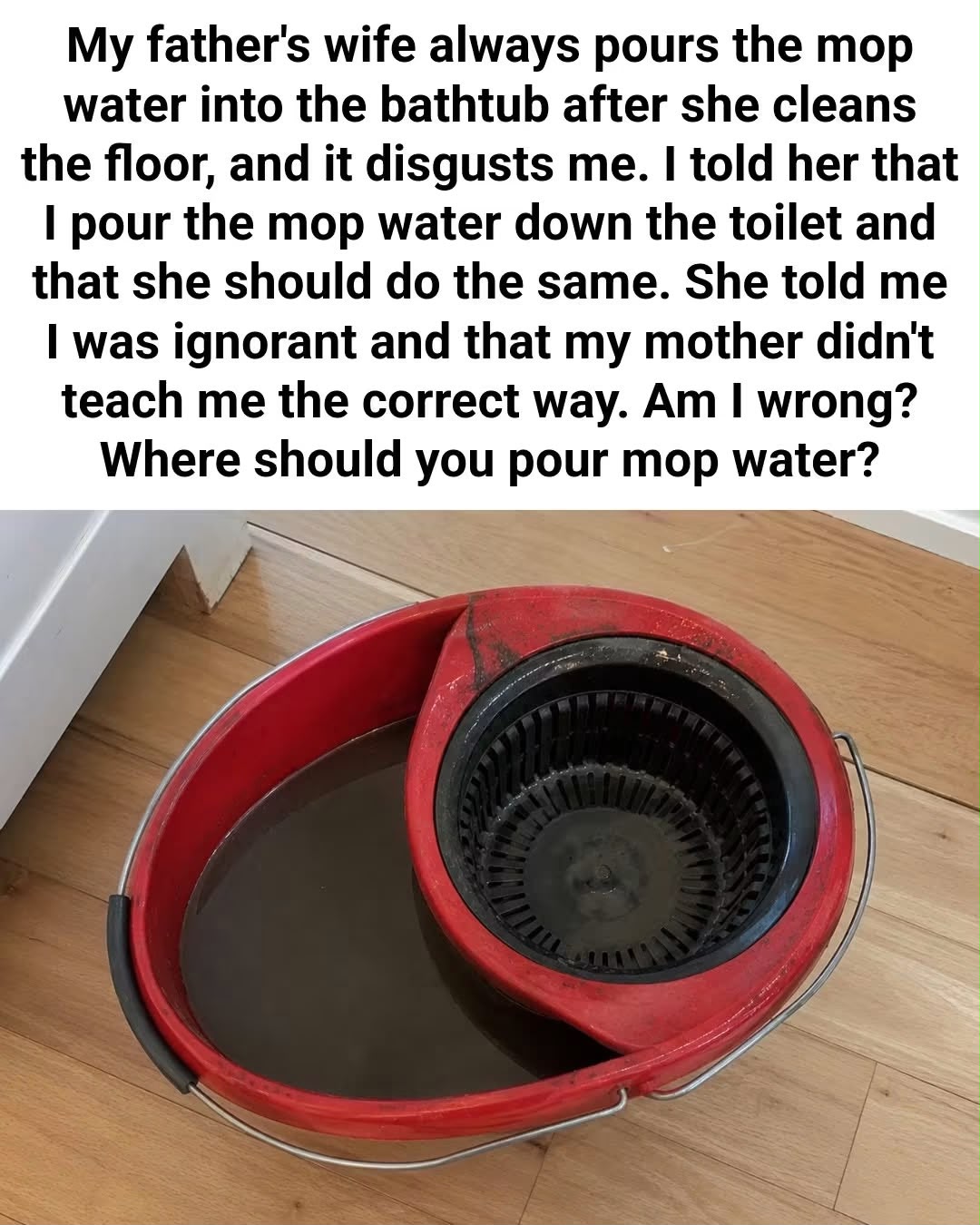
This exact scenario often leads to family arguments, such as whether dumping dirty water down the bathtub is unsanitary or if using the toilet is the proper method. To settle this debate once and for all, we need to examine modern plumbing systems, hygiene standards, sanitation practices, and practical home maintenance. In this comprehensive article, we will explore the pros and cons of different disposal methods, analyze plumbing infrastructure, discuss hygiene considerations, and provide actionable tips for keeping your home clean and sanitary.
The Core Conflict: Bathtub vs. Toilet Disposal
When examining the common household dispute shown in viral posts—where one person prefers the bathtub and another insists on the toilet—both methods have distinct arguments supporting them. Let’s break down the mechanics and hygiene considerations of each option.
Option 1: Dumping Mop Water Down the Toilet
- The Rationale: Proponents of using the toilet argue that toilets are directly connected to the main sewer line via a large-diameter waste pipe designed specifically to handle heavy waste, debris, and dirty water. Furthermore, toilets feature powerful flushing mechanisms that rinse the bowl immediately.
- Hygiene Perspective: Since toilets are already designated for human waste disposal, dumping gray water here keeps dirt, hair, and floor grime away from surfaces where family members bathe or relax.
Option 2: Dumping Mop Water Down the Bathtub
- The Rationale: Bathtubs offer a wide, low basin that makes pouring heavy, bulky mop buckets easier without splashing water over high rims. Many people use tubs because they have a showerhead nearby to rinse out the bucket immediately afterward.
- Hygiene Perspective: Critics argue that because people sit, soak, and wash their bodies in bathtubs, dumping dirty floor water—which may contain harsh chemical residues, pet hair, dirt, and bacteria—feels unhygienic unless the tub is thoroughly scrubbed and disinfected right away.
Plumbing and Sanitation Realities
From a residential plumbing perspective, both toilets and bathtubs eventually lead to the same domestic drainage or municipal sewage system. However, the physical structure of your plumbing fixtures creates important differences:
- Drain Size and Clogging: Toilets have wide drain traps designed to handle bulk waste. Bathtubs have smaller drain openings often covered by strainers meant to catch hair. Dumping mop water filled with heavy grit, large debris, or hair down a bathtub can lead to stubborn clogs in the P-trap or hair strainer.
- Chemical Residue Exposure: Floor cleaners often contain powerful detergents, disinfectants, or acidic formulas. If left sitting on acrylic or porcelain bathtub surfaces, these chemicals can sometimes dull the finish or stain the enamel if not rinsed thoroughly.
- P-Trap Function: Both fixtures utilize a curved pipe known as a P-trap, which holds standing water to block sewer gases from entering the home. Regular cleaning water flows through these easily, provided solid dirt or hair is strained out beforehand.
Practical Tips for Cleaning and Disposing of Mop Water
To maintain optimal home hygiene and protect your plumbing infrastructure, follow these practical best practices when finishing up floor-cleaning chores:
- Strain Debris First: Before dumping your bucket, remove large clumps of hair, dust bunnies, or debris and throw them in the trash rather than washing them down any household drain.
- Rinse Your Bucket Immediately: Whichever disposal method you choose, rinse your mop bucket with clean water and a disinfectant spray immediately afterward to prevent bacteria growth and foul odors.
- Sanitize the Fixture: If you use a bathtub to empty dirty water, always run the shower or use a cleaning sponge to sanitize the tub basin thoroughly so it remains clean for future bathing.
- Protect Your Plumbing: Avoid pouring boiling water down delicate ceramic fixtures or mixing incompatible chemical cleaners (such as bleach and ammonia), which creates dangerous toxic fumes.
Financial, Home Maintenance, and Insurance Considerations
Maintaining a clean, functional home involves protecting your plumbing system against costly repairs. Clogged drains, damaged enamel, and backed-up sewer lines can lead to unexpected plumbing bills.
Homeowners frequently utilize emergency savings, home maintenance budgets, or home warranty policies to cover unexpected plumbing issues. Consulting professional plumbers or home improvement contractors can provide tailored advice on maintaining residential drainage systems. Furthermore, keeping up with routine property maintenance ensures that your home retains its long-term value and provides a safe, healthy environment for your family.
Interesting Facts About Household Sanitation and Plumbing History
- The Evolution of Indoor Plumbing: The widespread adoption of indoor flush toilets and connected bathtubs in the 19th and 20th centuries revolutionized public health, dramatically reducing waterborne illnesses in urban populations.
- Gray Water vs. Black Water: In plumbing terminology, wastewater from sinks, showers, and washing machines is classified as “gray water,” while wastewater from toilets is classified as “black water.” Mop water technically falls closer to gray water due to its soap and dirt content.
- The Invention of the Mop Bucket Wringer: Modern wheeled mop buckets equipped with side-press wringers were patented in the 20th century to reduce physical strain and improve commercial cleaning efficiency.
Conclusion
The debate over whether to dump mop water into the bathtub or the toilet comes down to personal habits, convenience, and hygiene preferences. While toilets offer direct waste disposal into main sewer lines, bathtubs provide easier pouring access—provided you clean and sanitize the basin afterward. Ultimately, as long as you strain out solid debris, rinse your bucket, and maintain good hygiene practices, either method works. Clear communication and mutual respect for household preferences help keep family harmony intact during routine chores.
FAQ Section
1. Is it actually bad to pour mop water into the bathtub? It is not strictly forbidden, but it is considered unsanitary by many people because bathtubs are used for personal bathing. If you use the tub, you must rinse and disinfect the surface immediately afterward.
2. Can dumping mop water clog your toilet?
Normally no, because toilet drain pipes are wide. However, if your mop bucket contains large amounts of heavy mud, gravel, or thick debris, it can settle in the plumbing trap and cause a blockage.
3. What is the absolute best place to empty a mop bucket?
Many professional cleaners recommend a utility sink or laundry sink because they feature deep basins, wide drains, and strainers designed specifically for heavy-duty cleaning tasks.
