
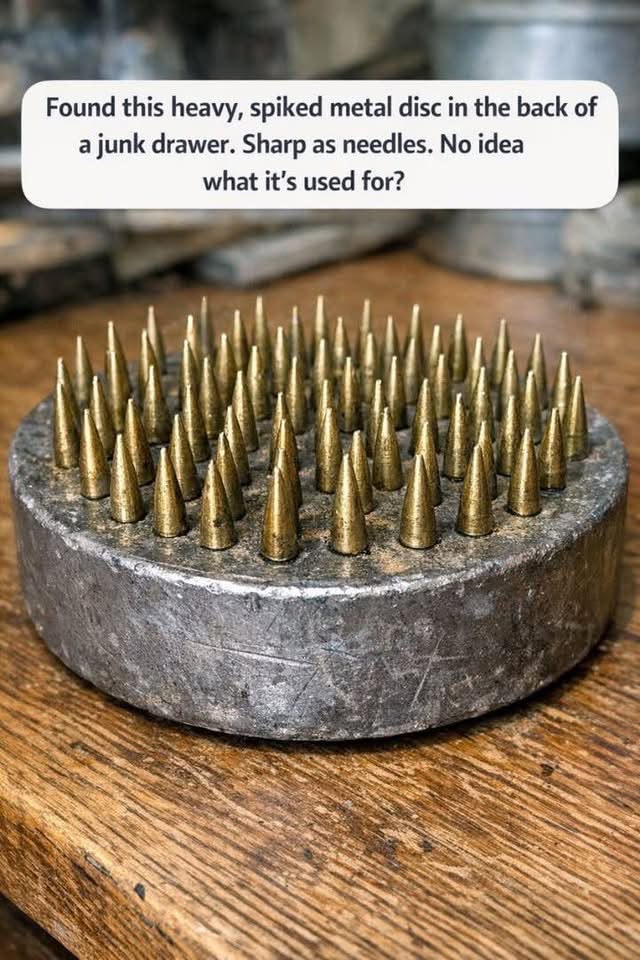
We have all been there: rummaging through an old kitchen drawer, a dusty workbench, or a forgotten toolbox, only to unearth a bizarre, heavy metal object with zero context. Among the most perplexing finds are heavy metallic discs studded with sharp, needle-like spikes. Looking at it, you might wonder if it is an antique weapon, a medieval torture device, or some bizarre piece of industrial machinery.
In reality, these curious objects often have surprisingly domestic, artistic, or specialized mechanical roots. This comprehensive guide explores the identity of mystery metal items found in household drawers, the fascinating world of material history, and how everyday tools intersect with safety, home organization, and personal asset management.
The Origin and Purpose of Spiked Metal Discs
When people encounter a heavy metal base embedded with vertical, needle-sharp pins, their imaginations tend to run wild. However, depending on the exact size, weight, and material composition, objects like this typically fall into a few distinct categories.
1. The Art of Flower Arranging: The Kenzan
One of the most common explanations for a heavy, spiked metal disc is a kenzan (also known as a spiky frog or floral frog).
- Function: Used primarily in traditional Japanese flower arranging (Ikebana), a kenzan is designed with a heavy lead or metal base that anchors stems in place. The brass or metal needles stand upright, allowing the arranger to impale flower stems and branches precisely at desired angles.
- Weight Matters: The disc must be exceptionally heavy to prevent heavy floral arrangements from tipping over in a shallow bowl or vase.
2. Specialized Industrial and Craft Tools
If the object is not a floral frog, it may belong to a niche workshop or culinary category.
- Meat Tenderizers and Scalers: Certain specialized kitchen tools use arrays of needles or spikes to puncture meat or scale fish, though these usually feature handles rather than flat disc bases.
- Leatherworking and Textile Tools: Heavy spiked plates have historically been used in various manufacturing, leather embossing, or fiber-processing applications to hold, texture, or pierce materials under pressure.
H2: The Broader Impact: Home Organization, Safety, and Asset Value
Discovering unknown items during a cleanout often sparks a broader reassessment of how we manage our living spaces, handle hazardous materials, and evaluate household goods.
H3: Safety Precautions for Sharp Household Finds
Whenever you pull an unfamiliar, needle-sharp object out of a drawer, safety should be your primary concern.
- Risk of Injury: Because these spikes are often engineered to pierce tough materials or stems, they can easily puncture human skin, carrying a risk of cuts or infection. Always handle unknown sharp tools with thick gloves or use tongs until their purpose is positively identified.
- Material Composition: Older metal items may contain lead (frequently used in heavy bases to add weight) or brass alloys. Washing your hands thoroughly after handling antique or unverified workshop items is a crucial health precaution.
H3: The Financial and Practical Side of Decluttering
Finding strange items during a household cleanout ties directly into business, estate liquidation, and asset evaluation.
- Appraising Antiques: Some vintage kenzans or specialized industrial tools hold collectible value among antique enthusiasts or artists. Before tossing an unusual heavy metal object into the scrap bin, checking online marketplaces or consulting an expert can determine if it has monetary value.
- Decluttering Efficiency: Streamlining your junk drawers not only frees up physical space in your home but also gives you a clear inventory of what tools and items you actually own, reducing unnecessary duplicate purchases.
H2: Practical Tips for Managing Mystery Household Items
If you are currently sorting through a cluttered garage, attic, or kitchen drawer, use this step-by-step approach to handle mystery finds safely and efficiently:
- Use Protective Gear: Wear thick work gloves when picking up heavy or sharp unknown items to prevent accidental lacerations.
- Inspect for Markings: Look closely at the base or sides of the metal object for maker’s marks, serial numbers, or country of origin stamps, which can provide instant clues for identification.
- Weigh and Measure: Documenting the weight and dimensions helps immensely when searching online databases or asking communities for identification assistance.
- Proper Storage or Disposal: If the item has no utility for you, decide whether to donate it to a local craft guild, sell it as a vintage collectible, or dispose of it safely at a local metal recycling facility.
H2: Interesting Facts About Household Metal Finds
- The Weight of Lead: Many vintage floral frogs and bases were cast using lead because it is dense, cheap, and easy to mold, allowing a small object to anchor significant weight.
- Ikebana History: The art of Ikebana dates back centuries in Japan, evolving from Buddhist floral offerings into a sophisticated discipline where structural balance and minimalism are paramount.
- Junk Drawer Archaeology: Sociologists note that household junk drawers often act as time capsules, holding small remnants of hobbies, tools, and office supplies accumulated over decades.
- Metal Corrosion: Items left in dark, unventilated drawers for years can develop patina or oxidation, changing the color of brass spikes from bright gold to a deep, weathered green.
Conclusion
Unearthing a heavy, needle-sharp spiked metal disc from the back of a drawer is a quintessential modern mystery. Whether it turns out to be a traditional Japanese floral frog, a vintage craft tool, or a piece of industrial hardware, solving the puzzle satisfies our natural curiosity.
Beyond the thrill of discovery, dealing with household mystery items encourages better organization, heightened safety awareness, and a greater appreciation for the objects of the past. The next time you clean out a forgotten drawer, take a closer look—you might just be holding a piece of history.
FAQ Section
Q1: Are these spiked metal discs dangerous to handle with bare hands?
A: Yes, if the spikes are sharp “as needles”, handling them carelessly can easily result in painful punctures or cuts. It is always best to handle unknown sharp objects with thick protective gloves or lift them by their sturdy outer rims.
Q2: What is the exact name of a flower arranging spiked disc?
A: It is called a kenzan, also frequently referred to as a floral frog or pin frog. They are widely used in Japanese floral design to hold stems securely in shallow containers.
Q3: Could a heavy metal base like this contain toxic metals?
A: It is possible. Older heavy bases were frequently cast using lead or heavy metal alloys to provide the necessary weight. Because of this, it is wise to wash your hands after handling old unverified metal objects and keep them away from small children.
Q4: How can I tell if my mystery metal object is valuable?
A: Check the item for any maker’s marks, engraved signatures, or brand stamps. You can also research similar items on antique and collectible online marketplaces to see if vintage floral frogs or specialized tools from that era carry collector demand.
Q5: What should I do with a mystery tool I no longer need?
A: If the item is functional, you can donate it to a local art school, garden club, or thrift store. If it is damaged or has no practical use, check local guidelines for recycling scrap metal responsibly
