
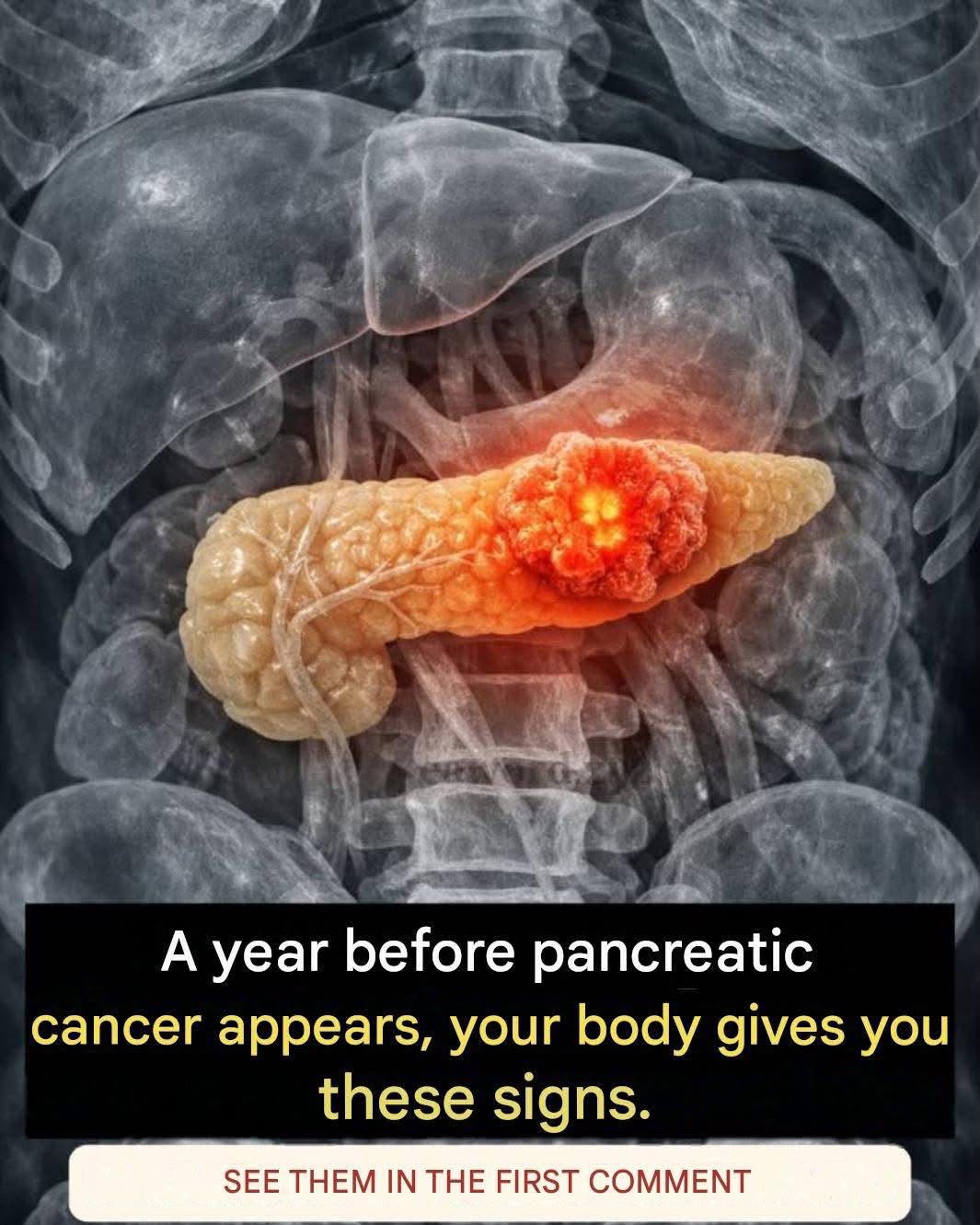
Pancreatic health plays a critical role in digestion, metabolic balance, and overall well-being. A viral health infographic featuring a anatomical diagram of the pancreas alongside the text “A year before pancreatic cancer appears, your body gives you these signs.” highlights growing public awareness around early health warning signals. Recognizing subtle changes in bodily functions and understanding potential risk factors allows individuals to take proactive steps toward proactive medical evaluation.
Exploring early potential indicators, understanding pancreatic function, and knowing when to consult a healthcare professional provides valuable insight into proactive wellness.
Recognizing Early Subtle Body Signals
While early pancreatic conditions can be difficult to detect due to the organ’s deep position within the abdomen, paying attention to lingering changes is essential.
1. Unexplained Digestive and Abdominal Changes
- Abdominal or Back Discomfort: A dull ache in the upper abdomen that radiates toward the back can occur when deep abdominal organs experience inflammation or pressure.
- Persistent Digestive Issues: Unexplained changes in digestion, including bloating, persistent nausea, or changes in stool appearance (such as pale or floating stools), may signal altered digestive enzyme production.
2. Metabolic and Weight Shifts
- Unexplained Weight Loss: Dropping weight without changes in diet or physical activity levels often serves as an early indicator for various internal health conditions.
- Sudden Onset Diabetes: A sudden onset of type 2 diabetes or unexpected difficulty managing previously stable blood sugar levels can sometimes stem from pancreatic metabolic changes.
Understanding Risk Factors and Preventive Health
Identifying personal risk factors helps individuals make informed decisions alongside medical professionals.
Primary Risk Factors
Certain lifestyle factors and genetics increase susceptibility to pancreatic issues, including chronic smoking, heavy alcohol consumption, obesity, chronic pancreatitis, and a family history of related conditions.
Importance of Professional Evaluation
Because many early symptoms overlap with common gastrointestinal issues, seeking evaluation from a certified healthcare provider ensures accurate diagnosis through blood tests, imaging, or specialized screenings.
Practical Tips for Supporting Pancreatic Health
- Maintain a Balanced Diet: Focus on lean proteins, whole grains, fruits, vegetables, and foods low in saturated fats to lessen digestive strain.
- Avoid Tobacco Products: Quitting smoking significantly reduces risks associated with pancreatic and overall cellular health.
- Schedule Regular Health Checkups: Discuss persistent digestive symptoms or family medical history with a primary care physician.
Frequently Asked Questions (FAQ)
What role does the pancreas play in the human body?
The pancreas produces essential digestive enzymes to break down food and regulates blood sugar levels by producing insulin.
Are all abdominal aches indicative of serious pancreatic conditions?
No. The vast majority of abdominal aches stem from common, benign issues like indigestion, gas, or muscle strain, but persistent symptoms warrant medical review.
When should you see a doctor for potential digestive issues?
Seek medical attention if you experience unexplained weight loss, persistent abdominal pain radiating to the back, or sudden yellowing of the skin or eyes (jaundice).
