
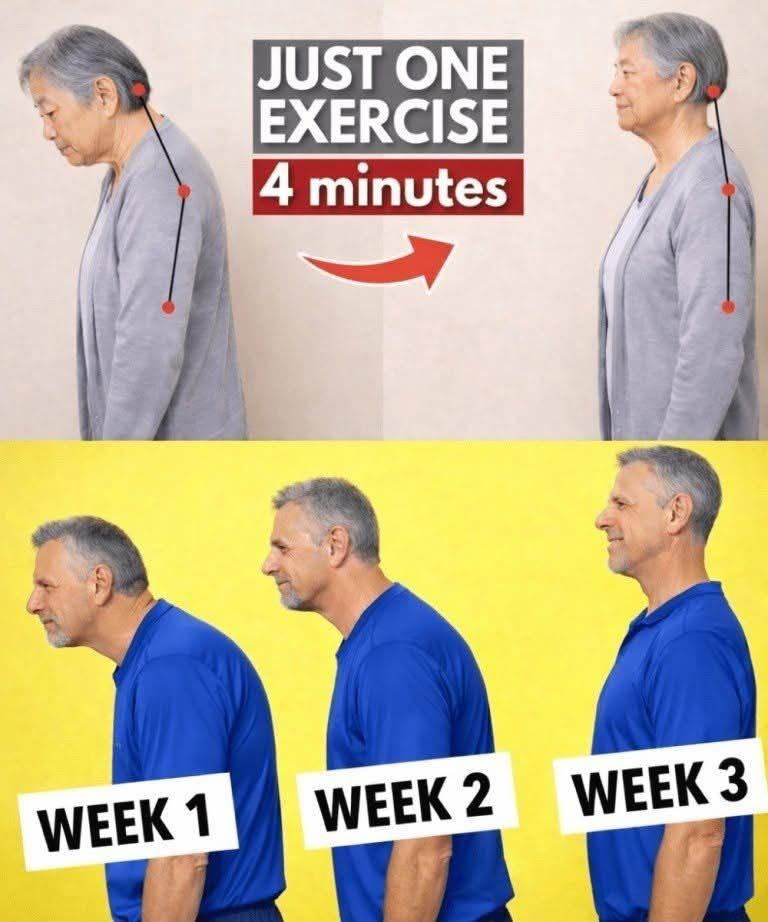
In today’s digital age, many of us spend hours hunched over smartphones, laptops, and tablets. This modern lifestyle has given rise to a very common postural distortion known as forward head posture, or text neck. Over time, this imbalance pulls the cervical spine out of alignment, causing chronic neck pain, shoulder tension, headaches, and a slouched appearance that can age a person prematurely.
Fortunately, you do not need hours in the gym or expensive equipment to start reversing these effects. With just four minutes a day and a single, highly effective movement, you can begin realigning your spine and reclaiming your confidence. This comprehensive guide explores the biomechanics of poor posture, how targeted daily exercises can transform your alignment over the course of a few weeks, and how maintaining physical health ties into your broader personal wellness, medical considerations, and long-term vitality.
The Mechanics of Forward Head Posture
To understand how a short daily routine can create such dramatic changes, we first need to look at how the human spine is designed to function.
Your head is remarkably heavy, typically weighing between 10 and 12 pounds when in a neutral position—balanced directly over your shoulders. However, for every inch your head shifts forward, the gravitational load experienced by your cervical spine multiplies dramatically. At a forward tilt of just a few inches, the muscles in your neck and upper back must work twice as hard to keep your head from dropping, supporting an effective weight equivalent to a heavy bowling ball.
- Muscle Imbalances: When you slouch forward day after day, the muscles in the front of your neck and chest (pectoralis muscles) become short and tight. Meanwhile, the upper back and deep cervical flexors become stretched, weak, and fatigued.
- Spinal Compression: Prolonged misalignment places uneven pressure on the vertebrae and discs of the neck, which can accelerate wear and tear, leading to stiffness and chronic discomfort.
Correcting this requires a dual approach: lengthening the tight structures in the front and strengthening the weakened stabilizers in the rear.
H2: The 4-Minute Daily Protocol: What Happens in 3 Weeks?
Consistency is the secret ingredient to any successful physical transformation. When you commit to a dedicated 4-minute movement routine every single day, your body begins to adapt through neuromuscular re-education and tissue remodeling.
H3: Week 1: Awakening Dormant Muscles
During the first week, the primary objective is awareness and activation.
- Breaking Bad Habits: Your body has spent years memorizing a slouched posture. In week one, simply bringing your head back into alignment will feel foreign and uncomfortable.
- Nerve-Muscle Connection: The 4-minute exercise acts as a wake-up call for your deep neck flexors and rhomboids. You may feel mild muscle soreness as dormant fibers are recruited for the first time.
- Initial Decompression: Even after seven days of consistent practice, you will likely notice a slight reduction in end-of-day tension headaches and shoulder tightness as you become more conscious of your resting alignment.
H3: Week 2: Building Endurance and Flexibility
By the second week, the movement pattern starts to feel more natural.
- Tissue Lengthening: The tight chest and neck muscles begin to yield, allowing your shoulders to naturally drop back and down into a more neutral socket.
- Increased Stamina: The postural muscles in your upper back are building the endurance required to hold your head upright without inducing immediate fatigue.
- Visual Adjustments: Friends and family might start noticing that you look taller and more alert, as your center of gravity shifts backward over your hips.
H3: Week 3: Locking in the New Alignment
By week three, cumulative progress creates a noticeable structural shift.
- Muscle Memory: The corrected posture transitions from a conscious effort to an unconscious habit. Your body’s default resting state begins to mirror a healthy, vertical alignment.
- Pain Relief: Chronic neck stiffness and upper back aching significantly diminish because the skeletal structure is once again sharing the load efficiently with gravity, rather than forcing your muscles to do all the heavy lifting.
- Enhanced Confidence: Physical posture is deeply linked to psychological well-being. Standing tall projects confidence, improves breathing capacity by opening up the chest cavity, and boosts daily energy levels.
H2: The Broader Impact: Health, Medical Insights, and Lifestyle
Investing just a few minutes a day into your physical alignment yields benefits that extend far beyond aesthetics. It intersects with several key aspects of your daily life, long-term health, and overall well-being.
H3: Preventive Care and Medical Considerations
Ignoring chronic postural issues can eventually lead to degenerative conditions, nerve impingements, or chronic pain syndromes that require professional medical intervention or specialized physical therapy.
- Early Intervention: Utilizing simple, low-impact corrective exercises early on acts as a form of preventive health care, minimizing the risk of severe spinal complications down the road.
- Consulting Professionals: If you experience sharp pain, numbness, or tingling radiating down your arms, it is essential to consult a physician or a licensed physical therapist to rule out underlying structural damage before starting any new routine.
H3: The Financial Value of Preventive Wellness
Taking charge of your physical health at home also smartens your personal budget.
- Reducing Healthcare Costs: Proactively managing minor postural discomfort through daily movement can significantly decrease the need for expensive medical treatments, massage therapy sessions, or corrective devices later in life.
- Optimizing Productivity: Chronic pain is a major drain on daily focus and professional output. By eliminating daily tension headaches and fatigue, you protect your career performance and long-term business efficiency.
H2: Practical Tips for Maintaining All-Day Alignment
A 4-minute daily routine is a fantastic catalyst, but how you treat your body during the remaining 23 hours and 56 minutes matters immensely. Incorporate these practical habits to safeguard your progress:
- Ergonomic Workstation Setup: Raise your computer monitor or laptop screen so the top third of the display is at eye level. This prevents you from constantly looking downward while working.
- The 90-Degree Rule: When sitting at a desk, ensure your elbows, hips, and knees are all bent at approximately 90-degree angles, with your feet flat on the floor.
- Frequent Movement Breaks: Set a timer to stand up, stretch your arms overhead, and gently retract your neck every 45 to 60 minutes.
- Conscious Check-ins: Periodically check in with your body throughout the day. Drop your shoulders away from your ears and gently draw your chin straight back as if making a “double chin” to reset your alignment.
H2: Interesting Facts About Posture and the Human Spine
- The Weight Multiplier: For every inch your head tilts forward, the weight felt by your cervical spine increases by roughly 10 pounds.
- Breathing and Posture: Slumping forward compresses your diaphragm and chest cavity, reducing your lung capacity by up to 30%. Standing tall literally helps you breathe deeper and take in more oxygen.
- The Mind-Body Connection: Studies in behavioral psychology show that sitting or standing upright can lower stress hormones like cortisol and boost feelings of self-assurance.
- Spinal Discs: Your spinal discs rely on movement and changing pressure to absorb nutrients, as they do not have a direct blood supply. Movement is literally food for your spine.
Conclusion
Transforming your posture does not require an exhaustive overhaul of your daily schedule. By dedicating just four minutes a day to targeted corrective exercises, you can systematically reverse weeks and years of forward head posture. Within three short weeks, you can experience less pain, improved breathing, increased confidence, and a healthier alignment that supports your body for decades to come.
Remember that small, consistent daily actions compound into massive long-term results. Take control of your physical health today, stand a little taller, and enjoy the profound benefits of a well-aligned spine.
FAQ Section
Q1: Can older adults safely do posture correction exercises?
A: Yes, absolutely. Gentle postural alignment exercises are beneficial for individuals of all ages. However, older adults or anyone with pre-existing spinal conditions should consult with a healthcare provider or a physical therapist to ensure the movements are tailored safely to their specific bone density and joint health.
Q2: What is the single best exercise for forward head posture?
A: While routines vary, the foundational movement is typically a “chin tuck.” This exercise involves keeping your eyes level and drawing your head straight backward, creating a gentle double-chin action. This isolates and strengthens the deep cervical flexors while stretching the overactive upper neck muscles.
Q3: How long will it take to permanently fix my posture?
A: Posture correction is an ongoing lifestyle adaptation rather than a one-time fix. While you can see visible improvements and strength gains in muscle tone within three weeks of daily practice, maintaining those results requires ongoing awareness, ergonomic adjustments, and consistent daily movement habits.
Q4: Can poor posture cause headaches?
A: Yes, forward head posture places immense strain on the suboccipital muscles at the base of the skull. When these muscles become chronically tight and overworked, they frequently trigger tension headaches that radiate up into the scalp and behind the eyes.
Q5: Do I need any special equipment for a 4-minute routine?
A: No equipment is required. Most effective postural correction routines rely entirely on body weight, gravity, and isometric muscle engagement, making them easy to perform anywhere—at home, in an office, or while traveling.
