
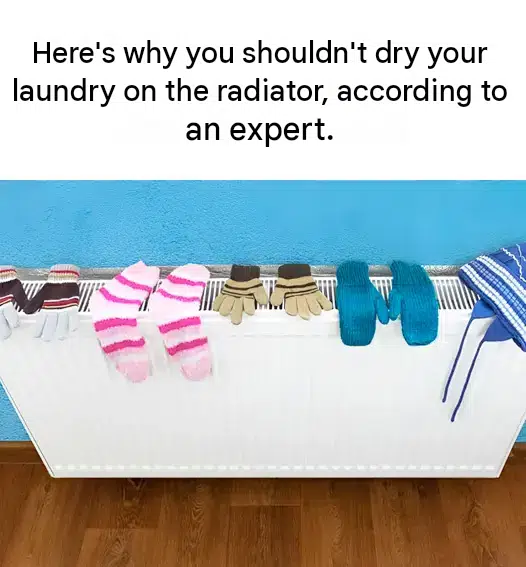
When winter approaches and cold weather sets in, drying laundry becomes a major household challenge. With freezing temperatures outside and high electricity bills making electric clothes dryers expensive to operate, millions of homeowners turn to a seemingly quick, convenient solution: draping wet clothes, socks, gloves, and towels directly over household radiators.
While hanging wet laundry on hot radiators dries garments rapidly, HVAC specialists, health professionals, and home safety experts strongly advise against this widespread habit. What appears to be a harmless time-saving shortcut actually introduces dangerous indoor humidity spikes, promotes toxic mold growth, damages home heating equipment, and drives up your monthly energy bills.
In this detailed home improvement guide, we will examine the hidden dangers of drying clothes on radiators, explore healthier drying alternatives, discuss smart home protection strategies, and look at how long-term financial management can make your domestic environment safer and more energy-efficient.
The Danger of Excessive Indoor Moisture and Mold Growth
When wet clothes are draped over a hot radiator, the heat causes water inside the fabric to evaporate rapidly into the surrounding indoor air. A single load of damp laundry contains approximately two to three liters of water, all of which is released directly into your home as water vapor in a matter of hours.
+---------------------------------------------------------------------------------+
|                       RADIATOR CLOTHES DRYING DOMINO EFFECT                      |
|                                                                                 |
|   [Wet Laundry on Radiator]  --->  [Massive Indoor Evaporation (2-3L of Water)]  |
|                                                  |                              |
|   [Mold Growth & Mold Spores] <--- [Condensation on Walls & Windows]             |
+---------------------------------------------------------------------------------+
High Humidity Levels and Respiratory Risks
Healthy indoor air quality requires relative humidity levels to remain between 30% and 50%. Drying wet laundry directly on radiators can instantly boost room humidity by up to 30%, creating an ideal breeding ground for airborne fungal spores.
- Aspergillus Fumigatus: This aggressive mold species thrives in damp indoor environments and produces microscopic spores that can trigger severe respiratory infections, asthma attacks, and allergic reactions in children, elderly individuals, and immune-compromised family members.
- Structural Condensation: Excess indoor moisture condenses on cold window panes, exterior walls, and behind furniture, causing wallpaper to peel, wood trim to rot, and unsightly black mold patches to form on plasterwork.
Increased Energy Consumption and Heating Costs
Many people dry clothes on radiators to save on electric dryer running costs. Paradoxically, covering your radiator with wet fabrics actually increases your home heating bill.
Radiators work by circulating warm air throughout a room via natural convection. Draping wet clothes over the unit blocks the air vents, trapping heat beneath the fabric and preventing the radiator from warming the living space efficiently. As a result, your home thermostat signals the boiler or heat pump to run longer and burn more fuel just to reach the desired temperature, causing overall energy expenses to surge.
Smarter, Safe Alternatives for Drying Laundry Indoors
You do not need to compromise indoor air quality or drive up heating bills to dry your laundry effectively during cold winter months. Implementing a few smart, low-cost drying techniques can keep your home safe and dry.
+---------------------------+-----------------------------------+-----------------------------------+
| Drying Method             | Energy Efficiency & Safety        | Best Usage Practice               |
+---------------------------+-----------------------------------+-----------------------------------+
| Heated Drying Rack        | High efficiency (Low wattage)     | Use with a dehumidifier nearby    |
+---------------------------+-----------------------------------+-----------------------------------+
| Standard Foldable Airer   | Zero energy cost                  | Place in well-ventilated space    |
+---------------------------+-----------------------------------+-----------------------------------+
| Radiator Drying (Direct)  | Extremely Poor (Presents risks)   | AVOID - Traps heat & raises mold  |
+---------------------------+-----------------------------------+-----------------------------------+
1. Utilize a Freestanding Drying Rack Near Ventilation
Instead of placing clothes directly on top of the heating unit, position a sturdy, foldable drying rack at least two to three feet away from the radiator. This arrangement allows hot air to circulate freely around the room while gently drying the garments without trapping moisture against wall surfaces.
2. Invest in an Energy-Efficient Dehumidifier
Pairing a laundry drying rack with a compact home dehumidifier is one of the most effective indoor drying strategies available. A dehumidifier actively extracts moisture directly out of the air, significantly speeding up clothes drying times while keeping relative humidity levels within a healthy range.
3. Maximize the Washing Machine Spin Cycle
Before removing laundry from your washing machine, run an extra high-speed spin cycle. Eliminating maximum excess water mechanically reduces drying time by up to 50%, minimizing the total volume of moisture released into your indoor atmosphere.
Home Protection, Insurance, and Property Investment
Neglecting indoor humidity issues can lead to hidden structural damage over time. Protecting your home involves both proper daily care and strategic financial planning.
Managing Property Insurance Claims for Mold and Moisture Damage
Severe moisture accumulation can lead to extensive structural dampness, drywall deterioration, and deep-seated mold infestations. Many standard home insurance policies exclude coverage for gradual water damage caused by improper indoor humidity management or lack of maintenance. Maintaining healthy indoor ventilation protects your property value and prevents costly, non-coverable insurance claims.
Strategic Personal Finance and Appliance Upgrades
Upgrading to modern, energy-efficient appliances—such as heat pump clothes dryers, smart thermostats, or high-efficiency HVAC systems—requires an upfront financial investment. Allocating savings toward energy-smart home improvements reduces monthly utility bills, increases property resale value, and contributes to long-term financial security and retirement readiness.
Fascinating Facts About Indoor Air and Heating
- Radiators Don’t Just Radiate: Despite their name, modern household radiators deliver up to 80% of their heat output through convection currents rather than direct thermal radiation.
- The Weight of Moisture: A wet bath towel can hold up to its own weight in water. Hanging four heavy bath towels on a radiator releases nearly a gallon of water directly into your bedroom or living room air.
- Indoor Air Pollution: Studies show that indoor air pollution can be two to five times higher than outdoor air pollution, with indoor mold spores and high humidity being major contributors to poor indoor environment scores.
- Heat Pump Efficiency: Modern heat pump clothes dryers use up to 50% less energy compared to traditional vented electric dryers by recycling hot air through a closed-loop condensation system.
Conclusion
While hanging wet laundry on hot radiators may seem like a convenient winter shortcut, the hidden costs far outweigh the temporary convenience. From dangerous mold growth and impaired indoor air quality to elevated heating bills and structural dampness, direct radiator drying creates significant long-term household problems.
By switching to freestanding drying racks, utilizing dehumidifiers, and maintaining proper home ventilation, you can protect your family’s health, safeguard your property investment, and keep your living space warm and comfortable all year round.
Frequently Asked Questions (FAQ)
1. Is it safe to dry small items like socks or gloves on a radiator?
Even small items like wet gloves or wool socks block radiator convection and release concentrated moisture into the room. It is always safer to place a drying rack nearby rather than putting items directly on the heating surface.
2. Can drying clothes on a radiator cause a fire hazard?
Electric space heaters carry a severe fire risk when covered. While water-filled hydronic central heating radiators rarely reach temperatures high enough to ignite fabric, placing synthetic materials directly on hot metal can scorch fabrics and create toxic chemical odors.
3. How can I tell if my indoor humidity level is too high?
Common signs of high indoor humidity include frequent condensation on window glass, persistent damp or musty odors, peeling paint or wallpaper, and visible black speckles forming on cold corners or bathroom ceilings.
4. How does a dehumidifier help with indoor clothes drying?
A dehumidifier pulls damp air over cold coils to condense moisture into water droplets, dropping room humidity. This rapid drying effect causes wet clothes on nearby drying racks to evaporate their water much faster without humidifying the room.
