
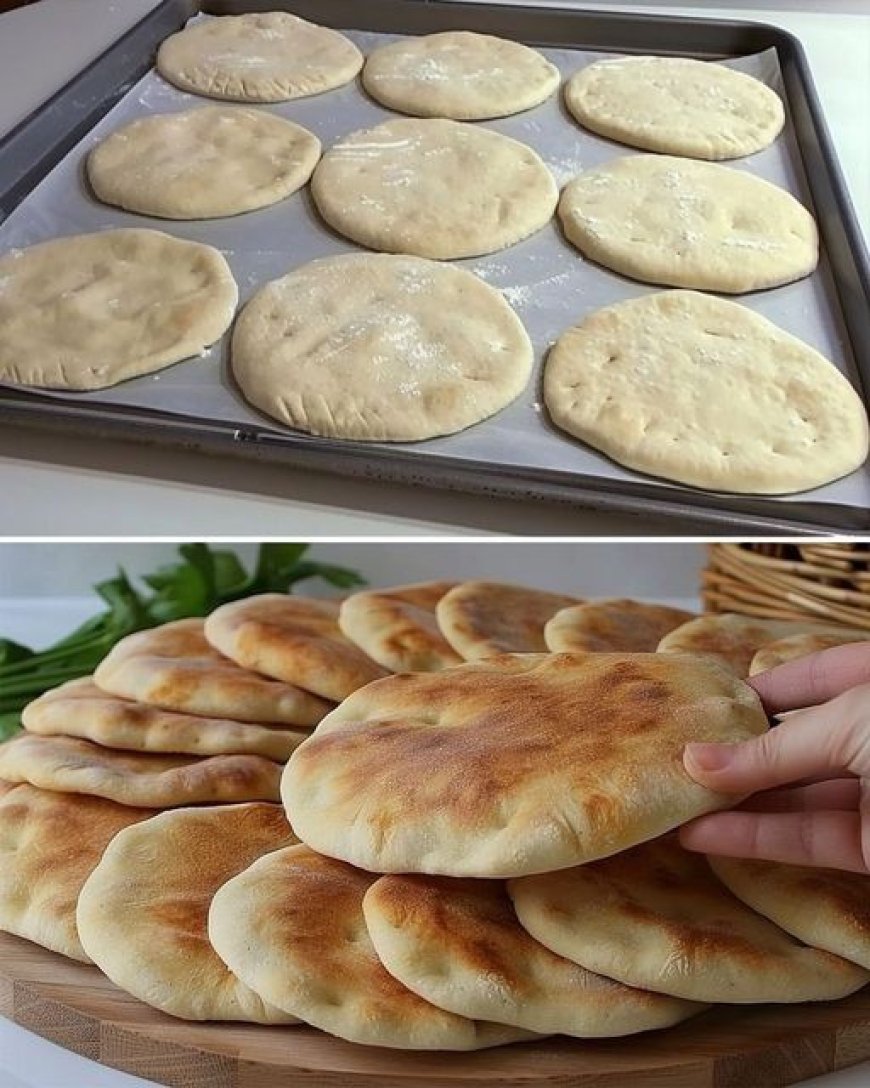
There is nothing quite like the aroma and soft texture of freshly baked flatbread straight from the kitchen stove or oven. A cooking comparison image showing raw round dough portions lined on a baking sheet above a stack of golden, freshly cooked flatbreads sparks interest among home bakers and food enthusiasts. Homemade flatbreads, pitas, and pita pockets rely on simple ingredients like flour, warm water, yeast, and a touch of olive oil, delivering versatile bread perfect for sandwiches, wraps, and dipping.
Understanding the secrets to achieving soft, pocket-filled flatbreads, exploring their nutritional benefits, and learning proper storage techniques makes home baking easy and rewarding.
The Secret to Perfect Soft Stovetop Flatbreads
Baking artisan-quality flatbread at home requires proper dough proofing, rolling technique, and high, direct heat.
1. High Heat and Moisture Activation
To achieve soft, fluffy flatbreads with natural interior pockets, cook dough rounds on a preheated heavy cast-iron skillet or baking stone. High heat vaporizes moisture inside the dough quickly, causing steam to expand rapid air pockets while creating beautiful golden-brown blistered spots on the exterior.
2. Dough Hydration and Resting
Allowing the kneaded dough to rest for at least 30 to 45 minutes relaxes gluten strands. Soft, pliable dough rolls smoothly without snapping back, ensuring uniform thickness across every round before it hits the hot cooking surface.
Nutritional Benefits, Dietary Choices, and Health Planning
Incorporating homemade whole-grain or unbleached flatbreads into daily meals offers clean nutrition without commercial preservatives.
Clean Ingredients and Whole Grains
Commercial store-bought breads often contain added dough conditioners, artificial preservatives, and excess sodium. Making flatbreads from scratch allows complete control over ingredients, making it easy to swap in whole wheat flour, oat flour, or seeds for added dietary fiber and sustained energy.
Meal Prep and Healthy Diets
Flatbreads serve as a nutritious foundation for Mediterranean and plant-based diets. Pairing homemade flatbreads with lean proteins, hummus, grilled vegetables, and fresh herbs supports balanced nutrition and healthy digestion.
Practical Tips for Baking and Storing Homemade Flatbreads
- Keep Skillet Very Hot: Cook flatbreads on medium-high to high heat for 1 to 2 minutes per side to prevent drying out.
- Wrap in a Clean Towel Immediately: Stack freshly cooked hot breads inside a clean cloth napkin or kitchen towel to lock in steam for maximum softness.
- Freeze for Easy Meal Prep: Store cooled flatbreads in airtight freezer bags separated by parchment paper for up to three months.
Frequently Asked Questions (FAQ)
Why didn’t my pita bread puff up in the pan?
Flatbreads require intense direct heat to generate steam rapidly; if the pan is not hot enough, the bread will bake flat rather than ballooning into pockets.
Can flatbread dough be made ahead of time?
Yes. Kneaded flatbread dough can be covered and refrigerated overnight for a slow fermentation that enhances flavor depth before rolling.
How do you reheat frozen flatbreads?
Warm frozen flatbreads directly in a hot dry skillet, microwave for 15 seconds wrapped in a damp paper towel, or toast in an oven for 2 minutes.
