
Pets hold a remarkably special place in our hearts. Whether you share your home with a playful kitten, an energetic puppy, a dignified senior dog, or a cozy cat, watching them grow is a wonderful journey. However, every pet owner has wondered at some point: how old is my furry companion truly in human years?
For generations, the old rule of thumb was simply multiplying a pet’s calendar years by seven. Modern veterinary science, however, shows that aging is far more complex and varies drastically depending on species, size, and weight.
In this comprehensive guide, we will explore how animals age compared to humans, examine official pet age conversion charts, and provide practical tips for keeping your companion healthy throughout every stage of life.
The Science of Pet Aging: Cats vs. Dogs
Pets age much faster than humans during their first couple of years of life. A one-year-old cat or dog is physically and reproductively mature, roughly equivalent to a human teenager or young adult in developmental terms.
Furthermore, unlike cats, dogs exhibit vastly different aging rates depending on their adult body size:
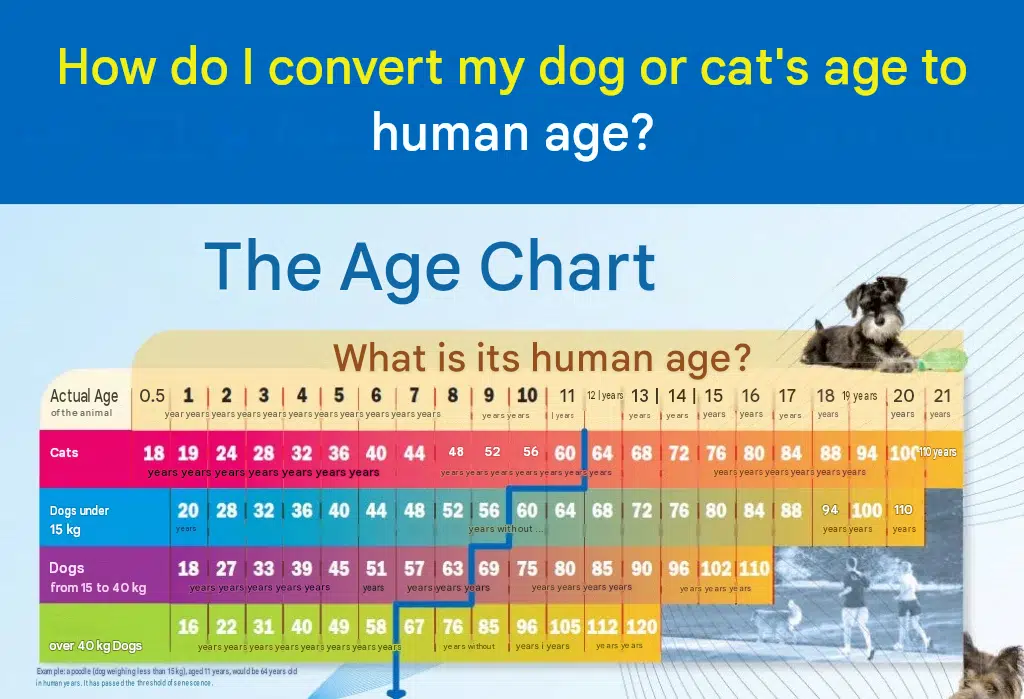
- Cats: Generally follow a steady aging progression after reaching maturity, averaging around 4 human years for each calendar year.
- Small Dogs (Under 15 kg): Mature rapidly at first, reaching an equivalent of 20 human years at age one, but age more slowly in later years compared to giant breeds.
- Medium to Large Dogs (15 to 40 kg): Experience steady physical maturation, reaching an equivalent of 27 human years at age one and around 69 human years by age ten.
- Giant Dogs (Over 40 kg): Age the fastest among canines, reaching an equivalent of 16 human years at age one and climbing past 100 human years by age nine.
10 Facts About Pet Aging and Senior Care
1. Rapid Development in the First Year
Both cats and dogs achieve the bulk of their physical growth and sexual maturity within their first twelve months of life.
2. The Myth of the 7-Year Rule
Multiplying a pet’s age by seven is a severe oversimplification that fails to account for early maturation and adult size variations.
3. Senior Thresholds
Cats typically cross into senior status around 11 years of age, while large and giant dog breeds reach senior status much earlier in life due to accelerated aging.
4. Size Matters in Canines
Smaller dog breeds generally enjoy longer lifespans, whereas large and giant dogs age at an accelerated rate as they grow older.
5. Veterinary Senior Checkups
Pets entering their senior years require bi-annual veterinary checkups to monitor joint health, organ function, and age-related conditions.
6. Nutritional Adjustments for Older Pets
Transitioning senior cats and dogs to specialized senior diets helps manage weight, support kidney function, and protect aging joints.
7. Dental Care and Longevity
Regular dental hygiene prevents periodontal disease, which can otherwise spread bacteria to vital organs like the heart and kidneys.
8. Monitoring Behavioral Changes
Noticing subtle changes in mobility, sleep patterns, or litter box/house training habits helps catch age-related cognitive decline early.
9. Reviewing Pet Insurance
Comprehensive pet insurance coverage safeguards your household savings against costly medical treatments as your companion ages.
10. Financial and Pet Care Planning
Understanding your pet’s life stage ensures you provide appropriate exercise, medical care, and comfort throughout their golden years.
Comparison: Pet Age Conversion Categories
To help evaluate how your pet’s age translates into human years, review the following conversion guide based on official age charts:
| Actual Pet Age | Cats (Human Years) | Dogs Under 15 kg (Human Years) | Dogs 15 to 40 kg (Human Years) | Dogs Over 40 kg (Human Years) |
| 1 Year | 19 | 20 | 27 | 22 |
| 2 Years | 24 | 28 | 33 | 31 |
| 5 Years | 36 | 40 | 45 | 49 |
| 10 Years | 56 | 60 | 69 | 85 |
| 15 Years | 72 | 76 | 90 | 112 |
       ┌────────────────────────────────────────────────────────┘
       │         Evaluating Your Pet's Actual Calendar Age      │
       └───────────────────────────┬────────────────────────────┘
                                   │
                                   ▼
       ┌────────────────────────────────────────────────────────┘
       │      Applying Species & Weight Conversion Factors      │
       └───────────────────────────┬────────────────────────────┘
                                   │
                    ┌──────────────┴──────────────┐
                    ▼                             ▼
       ┌────────────────────────┐    ┌────────────────────────┐
       │ Determining Human Age  │    │ Providing Tailored Care│
       │ Equivalent (Chart)     │    │ for Senior Pet Stages  │
       └────────────────────────┘    └────────────────────────┘
Practical Tips for Caring for Aging Pets
Adapting your home and routine to support an aging companion ensures a high quality of life:
- Provide Orthopedic Bedding: Older pets with arthritis benefit immensely from supportive memory foam beds that cushion aching joints.
- Make Food and Water Accessible: Raise food and water bowls slightly so older dogs and cats don’t have to strain their necks and spine while eating.
- Keep Exercise Gentle: Swap high-impact games for gentle, shorter walks and interactive play sessions tailored to your pet’s current energy levels.
Financial, Insurance, and Legal Considerations
Managing pet health as animals grow older involves practical financial awareness:
- Budgeting for Senior Veterinary Care: Older pets require more frequent blood panels, screenings, and medications, making proactive financial planning essential.
- Pet Insurance Policies: Enrolling pets in insurance early covers unexpected age-related illnesses, protecting you from difficult financial decisions.
- Ensuring Comfort and Quality of Life: Investing in proper senior care guarantees your beloved companion lives out their later years in comfort and dignity.
Fascinating Facts About Animal Aging
- The World Record Cat: The oldest recorded cat lived to an astonishing 38 years old, which translates to well over 160 human equivalent years!
- Metabolic Rate Theory: Scientists note that smaller animals often have higher resting metabolic rates, yet counterintuitively tend to live longer lives than giant dog breeds.
- Cognitive Canine Function: Dogs can experience canine cognitive dysfunction (similar to human Alzheimer’s), making mental enrichment toys valuable at any age.
Frequently Asked Questions (FAQ)
Is the rule of multiplying by 7 years accurate?
No. The old rule of multiplying a dog or cat’s age by 7 is largely a myth. Pets mature much faster during their first two years of life, and aging rates vary significantly based on weight and breed.
At what age is a dog or cat considered a senior?
Most cats reach senior status around 11 years of age. For dogs, small breeds usually enter senior status around 10–12 years, while giant breeds are considered seniors as early as 6–7 years old due to their faster aging curve.
Why do giant dogs age faster than small dogs?
Larger dogs experience faster cellular growth, higher physiological strain, and age-related metabolic factors that cause their bodies to wear down much quicker than smaller canine breeds.
Conclusion: Celebrate Every Stage of Your Pet’s Life
Understanding how to convert your cat or dog’s age into human years gives you valuable insight into their developmental and medical needs. By recognizing their life stage, providing tailored senior care, and showering them with love, you ensure a long, happy, and healthy life for your furry best friend!
