
Introduction
Remodeling a kitchen is one of the most rewarding home improvement projects a homeowner can undertake. However, with so many materials, textures, and color palettes available on the market today, selecting the right flooring option can quickly feel overwhelming. Kitchen cabinets often dictate the overall aesthetic of the space, making the floor tile selection a crucial design anchor. When you have uniquely painted cabinets—such as muted sage green, olive, or soft eucalyptus—matching them with the right tile pattern, color tone, and scale is essential for creating a cohesive, high-end interior.
Whether you are updating a cozy farmhouse kitchen or designing a sleek modern cooking space, your floor needs to balance visual appeal, durability, and practical everyday functionality. In this comprehensive guide, we will analyze four distinct kitchen tile styles paired with sage green cabinetry, evaluate the aesthetic and functional properties of each option, explore smart home renovation budgeting strategies, and provide expert tips to ensure your kitchen renovation boosts both your daily living experience and your property value.
Analyzing the Four Tile Options
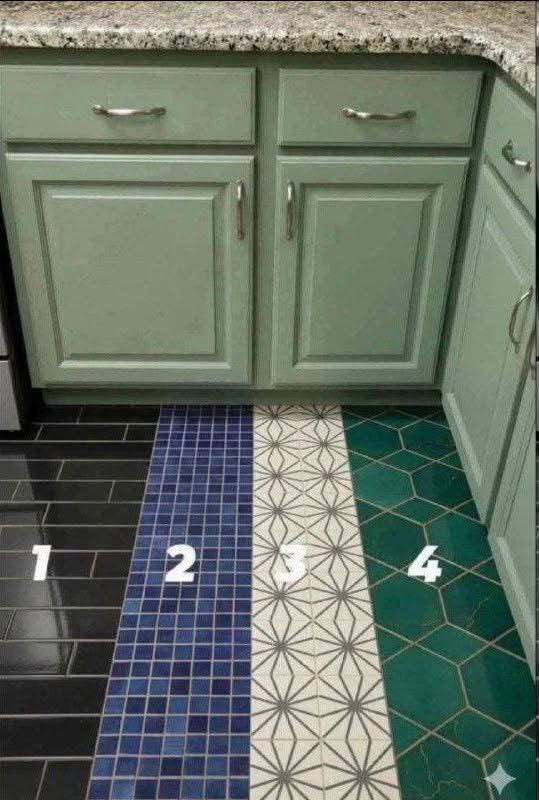
When pairing flooring with sage green kitchen cabinets and light granite countertops, design choices range from bold contrast to subtle harmony. Let’s break down each numbered option shown in the kitchen layout:
Option 1: Sleek Black Subway / Brick Tile
- Design Aesthetic: Deep contrast and modern sophistication.
- Visual Impact: Dark subway tiles laid in a running bond pattern create a strong anchor for the room. The contrast highlights the lighter tones of the cabinetry and countertops, creating a moody, upscale industrial or modern look.
- Maintenance & Considerations: Dark tiles can conceal certain spills well, but may show dust, light-colored pet hair, or water spots if not maintained with regular cleaning.
Option 2: Vibrant Blue Mosaic Square Tile
- Design Aesthetic: Eclectic, artistic, and coastal-inspired.
- Visual Impact: Small grid mosaic tiles in rich indigo and cobalt shades add texture and vibrant color. This combination introduces a cool tone that creates an energetic contrast against soft green cabinetry.
- Maintenance & Considerations: Small tiles require significantly more grout lines. Proper grout sealing is essential to prevent dirt and grime build-up in high-traffic kitchen areas.
Option 3: Neutral Geometric Starburst Encaustic Tile
- Design Aesthetic: Timeless, bright, and vintage-chic.
- Visual Impact: Featuring a cream or soft white base with delicate grey starburst geometric lines, this option maximizes light reflection and enhances visual spaciousness. It harmonizes effortlessly with green cabinets and light countertops without overpowering the room.
- Maintenance & Considerations: Light-colored tiles make small kitchens feel larger and brighter, though lighter grout requires periodic deep cleaning or anti-stain treatment.
Option 4: Emerald Green Hexagon Tile
- Design Aesthetic: Luxurious, monochromatic, and nature-inspired.
- Visual Impact: Deep emerald green geometric hexagons create a seamless botanical color palette when paired with sage cabinets. The geometric hex layout adds sophisticated structure while maintaining a soothing organic feel.
- Maintenance & Considerations: Large-format or medium hexagon tiles offer fewer grout lines than small mosaics, making them relatively easy to sweep and mop daily.
Core Principles of Kitchen Tile Selection
Selecting the ideal flooring goes beyond picking your favorite color pattern; it involves evaluating spatial dynamics, lighting conditions, and material durability.
1. Scale and Proportion
The size of your floor tile affects how spacious your kitchen feels. Large-format tiles or wide geometric patterns minimize grout lines, creating a clean, expansive visual field suitable for compact kitchens. Smaller mosaic tiles add intricate detail but work best in designated accent areas or smaller footprints.
2. Color Temperature and Balance
When working with green cabinetry—a cool-to-neutral tone—you can either lean into monochrome harmony or create striking contrast:
- Monochromatic: Combining different shades of green (such as sage with emerald) builds depth and a relaxing atmosphere.
- Neutral Complementary: Soft creams, warm whites, and warm greys maintain a bright, welcoming ambiance while highlighting cabinet craftsmanship.
- High Contrast: Charcoal black or rich navy creates dramatic grounding that draws immediate visual attention to flooring architecture.
Practical Tips for Kitchen Floor Installation and Maintenance
To ensure your newly tiled kitchen floor stands the test of time and preserves your home investment, follow these practical installation and upkeep recommendations:
- Select the Right Grout Color: For high-traffic kitchen spaces, choosing a mid-tone grey or beige grout rather than stark white prevents visible discoloration over time.
- Invest in Quality Waterproofing: Kitchen floors endure frequent spills, moisture, and heavy foot traffic. Ensure installers apply proper subfloor membranes and waterproof underlayments.
- Choose Slip-Resistant Finishes: Opt for matte or lightly textured tile surfaces over high-gloss finishes in cooking areas to minimize slipping hazards when floors are wet.
- Seal Grout Lines Regularly: Apply a high-quality penetrating grout sealer every 12 to 18 months to protect against food stains, grease splatters, and moisture absorption.
Financial and Real Estate Investment Perspectives
A kitchen renovation is one of the highest ROI (Return on Investment) projects in residential real estate. High-quality flooring paired with stylish cabinetry can significantly boost market appeal when selling a home.
Homeowners planning a remodel often utilize financial tools such as home equity lines of credit (HELOC), home renovation loans, or personal savings to fund kitchen updates. Consulting real estate professionals or interior design consultants can help determine which material finishes yield the best resale value in your local housing market. Furthermore, ensuring proper liability coverage through home insurance policies protects your property against unexpected plumbing leaks or accidental tile damage during major renovations.
Interesting Facts About Kitchen Tiles and Interior Design
- The History of Encaustic Patterns: Patterned geometric tiles, similar to Option 3, originated in medieval Europe using different colors of clay baked together, creating designs that never wore off even after centuries of foot traffic.
- Psychology of Color in Kitchens: Green is psychologically associated with freshness, nature, and tranquility, making it one of the most popular trend choices for modern residential kitchen cabinetry.
- Durability of Porcelain vs. Ceramic: Porcelain tiles are fired at higher temperatures and higher pressure than standard ceramic tiles, making them denser, less porous, and significantly more resistant to chips and moisture.
Conclusion
Choosing the right floor tile for green kitchen cabinets comes down to balancing your personal style with functional lifestyle requirements. Whether you prefer the dramatic contrast of dark brick tiles, the artistic personality of blue mosaics, the bright elegance of geometric neutrals, or the rich harmony of emerald hexagons, each option transforms the room’s overall energy. By considering tile scale, maintenance needs, lighting, and durable installation practices, you can create a stunning kitchen space that brings joy to everyday cooking and adds lasting value to your home.
FAQ Section
1. Which tile option makes a small kitchen look larger? Option 3 (light neutral geometric) reflects the most natural light and creates an open, airy visual effect that helps small kitchen spaces appear larger and brighter.
2. Are hexagon tiles harder to install than square or rectangular tiles? Yes. Hexagon tiles require more precise layout planning, measuring, and edge cuts along walls and cabinet bases compared to standard rectangular or square tiles. Hiring an experienced professional installer is recommended.
3. What is the most durable tile material for kitchen floors? Porcelain tile is widely considered the most durable option for kitchen floors due to its density, scratch resistance, and extremely low water absorption rate.
4. How do I match light granite countertops with patterned floor tiles? If your countertops have heavy veining or complex speckling, choose a simpler tile pattern or neutral palette to avoid visual clutter. If your countertops are uniform, feel free to choose bold patterned floor tiles as a focal point.
