
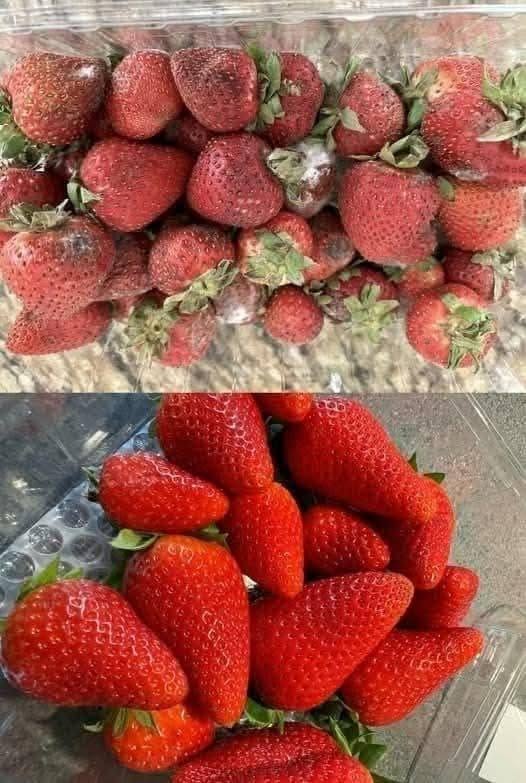
Few culinary disappointments compare to opening your refrigerator just two days after a grocery trip only to discover your expensive container of fresh strawberries covered in fuzzy grey mold. Berries are among the most delicate and perishable items in the produce aisle, often turning soft, bruised, and moldy before you even have the chance to enjoy them.
As demonstrated in the comparison image—where moldy, dull berries in a plastic clamshell contrast sharply with plump, vibrant red strawberries stored properly—how you treat your berries immediately after bringing them home makes all the difference.
Is there a proven, simple method to prevent mold spores from taking over your berries? How does a simple vinegar wash extend the shelf life of fresh fruit from days to weeks?
This step-by-step guide breaks down the science behind strawberry spoilage, the exact vinegar-to-water ratio for sanitizing produce, and the optimal storage methods to keep your fruit crisp, juicy, and delicious for up to three weeks.
Why Do Strawberries Spoil So Quickly?
Understanding the primary causes of fruit decay helps explain why traditional store packaging fails to keep berries fresh.
1. Invisible Mold Spores (Botrytis cinerea)
Strawberries are extremely susceptible to grey mold (Botrytis cinerea). Microscopic fungal spores naturally cling to the skin of berries while they grow in the field. Once picked, these spores wait for the right moisture and temperature conditions to bloom into visible white or grey fuzz.
2. Excess Moisture Retention
Moisture is the single biggest enemy of fresh berries. When strawberries are packaged in plastic clamshells, humidity gets trapped inside. Condensation settles on the delicate outer skin, creating a damp environment where fungal spores thrive. Washing berries under tap water and putting them straight into the fridge without thorough drying accelerates rot rapidly.
3. Ethylene Gas Sensitivity
Like many fruits, strawberries release small amounts of ethylene gas as they age. Trapped inside sealed plastic containers, this gas accelerates the ripening and softening process, causing berries to break down faster.
The Vinegar Solution: How a Simple Soak Works
The secret to extending strawberry shelf life lies in a quick, gentle vinegar soak.
+-----------------------------------------------------------------------------------+
|                        STRAWBERRY PRESERVATION METHODS                            |
+-------------------+----------------------------+----------------------------------+
| Storage Method    | Average Lifespan           | Primary Risk                     |
+-------------------+----------------------------+----------------------------------+
| Original Clamshell| 2 to 4 Days                | High Moisture & Mold Spores      |
| Vinegar Wash + Jar| 2 to 3 Weeks               | None (When Dried Properly)       |
| Freezing          | 6 to 12 Months             | Texture Loss (Best for Smoothies)|
+-------------------+----------------------------+----------------------------------+
The Science Behind the Soak
White distilled vinegar contains acetic acid, a natural antimicrobial agent. Soaking berries in a diluted vinegar bath lowers the pH surface environment, killing active mold spores, bacteria, and residual field grime without leaving behind any vinegar taste.
Step-By-Step Guide to the Ultimate Strawberry Soak
To achieve the crisp, vibrant results shown in the fresh berry comparison, follow this simple routine as soon as you bring berries home from the market:
Step 1: Prepare the Vinegar Bath
Mix 3 cups of cold water with 1/2 cup of white distilled vinegar (or apple cider vinegar) in a large bowl. The ideal ratio is approximately 1 part vinegar to 6 parts water.
Step 2: Soak the Berries
Place your unwashed strawberries into the vinegar bath and submerge them gently for 3 to 5 minutes. Avoid soaking them longer, as porous berries can absorb excess water if left submerged too long.
Step 3: Rinse Thoroughly
Pour the berries into a colander and rinse them under cool running tap water to wash away any remaining vinegar residue and loosened field dirt.
Step 4: Dry Completely (Most Critical Step)
Line a baking sheet or clean kitchen towel with paper towels. Spread the strawberries out in a single layer and let them air-dry completely. For best results, gently pat the tops with a paper towel. Do not store berries while they are still wet.
Step 5: Glass Jar or Paper-Lined Storage
- Glass Mason Jar Method: Place completely dry berries into a clean, airtight glass mason jar lined with a folded paper towel at the bottom. The glass airtight seal maintains steady humidity while preventing mold spores from entering.
- Paper Towel Container Method: Alternatively, line a breathable glass or plastic container with paper towels, lay the berries in a single layer, and place another paper towel on top to absorb ambient moisture. Store in the main body of the refrigerator, not the high-humidity crisper drawer.
Financial Impact: Stop Wasting Grocery Dollars
Fresh produce represents a significant portion of household food expenditure, with soft fruits ranking among the most frequently discarded items.
- Reducing Household Food Waste: The average household throws away up to 20% to 30% of purchased fresh fruit due to premature spoilage. Extending the lifespan of berry containers from 3 days to 14+ days allows families to consume every berry purchased, directly lowering monthly grocery costs.
- Bulk Purchase Savings: By mastering proper long-term storage, consumers can take advantage of seasonal sales and bulk discounts on fresh berries without worrying about rapid rot.
Fascinating Facts About Strawberries
- Not True Berries: Botanically speaking, strawberries are not true berries! They are “aggregate accessory fruits.” The actual botanical fruits are the tiny seed-like specks (achenes) on the outer skin.
- Vitamin C Powerhouse: Eight medium strawberries provide more Vitamin C than a single orange, along with high levels of antioxidants, manganese, and dietary fiber.
- Cold Storage Necessity: Strawberries do not continue to ripen after being harvested. Keeping them cold (around 32°F to 36°F / 0°C to 2°C) slows down cellular respiration and maintains crispness.
Conclusion: Crisp, Fresh Berries Every Time
Discovering moldy, soft berries in your refrigerator doesn’t have to be a routine grocery frustration. By understanding how moisture and mold spores interact with fresh fruit, you can take control of your kitchen storage.
A quick 5-minute diluted vinegar soak, thorough drying, and airtight glass jar storage will keep your strawberries firm, plump, and mold-free for up to three weeks. Investing a few minutes of care when returning from the market saves money, reduces food waste, and ensures delicious, fresh fruit is always ready to enjoy.
Frequently Asked Questions
Q1: Will my strawberries taste like vinegar after the soak?
A1: No. The diluted 1:6 ratio combined with a quick freshwater rinse removes all traces of acetic acid, leaving your berries tasting clean, sweet, and natural.
Q2: Should I remove the green stems before washing?
A2: No. Keep the green hull/stem intact while washing and storing. Removing the cap exposes the inner tissue, allowing water and mold spores to enter the fruit core.
Q3: Can I use this same vinegar soak for blueberries and raspberries?
A3: Yes! Blueberries, blackberries, and raspberries all benefit from a vinegar bath. However, handle fragile raspberries with extra care and dry them gently.
Q4: Is it better to store strawberries on the counter or in the fridge?
A4: Strawberries should always be refrigerated. Room temperature speeds up microbial growth and causes berries to spoil within 24 to 48 hours.
Q5: Can I freeze fresh strawberries if I can’t finish them in time?
A5: Absolutely. Wash, dry, hull, and slice the berries, then lay them flat on a baking sheet to freeze individually before transferring them into an airtight freezer bag. Frozen berries are ideal for smoothies, baking, and sauces.
