
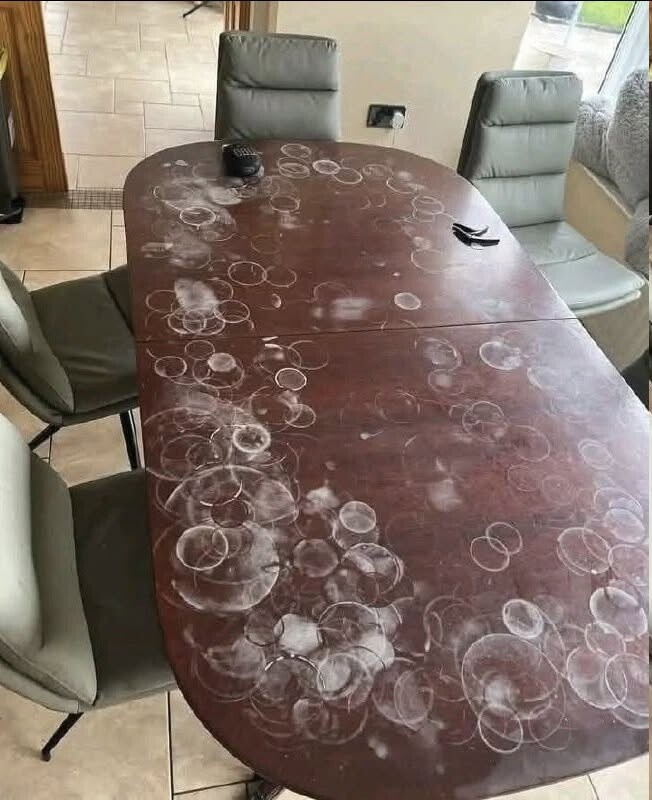
Wooden dining tables add warmth, elegance, and character to any home. However, placing hot coffee mugs, tea cups, or cold icy glasses directly onto a finished wooden surface without coasters can lead to an unsightly result: cloudy white heat rings and watermarks.
A dramatic photograph shows a large dark wooden dining table completely covered in dozens of overlapping, bright white heat and water rings, surrounded by grey dining chairs. While this specific table represents an extreme case of coaster neglect, even a single white ring can ruin the appearance of a prized piece of furniture.
The good news is that most white rings on wooden furniture are trapped moisture within the top finish—not permanent damage to the wood itself—and can be safely removed with quick DIY household remedies.
Here is a complete guide on why white water rings form and how to restore your wooden table step by step.
White Rings vs. Dark Stains: What Is the Difference?
Before attempting any restoration method, it is crucial to determine the type of stain you are dealing with:
+-----------------------------------------------------------------------------------+
|                        WOOD WATER STAIN IDENTIFICATION                            |
+-------------------+----------------------------+----------------------------------+
| Stain Color       | Depth of Damage            | Difficulty to Remove             |
+-------------------+----------------------------+----------------------------------+
| White / Cloudy    | Trapped in top finish layer| Easy (Gentle heat or moisture)   |
| Dark Brown / Black| Penetrated raw wood fibers | Hard (Requires sanding/refinish) |
+-------------------+----------------------------+----------------------------------+
- White / Cloudy Rings: Indicates that moisture from steam or condensation is trapped inside the wax, varnish, or lacquer topcoat. Because the wood itself remains unharmed, these marks are quick and inexpensive to lift.
- Dark Brown / Black Marks: Indicates that water has penetrated through the finish and soaked into the raw wood grain, creating mold or oxidation. Removing black stains typically requires stripping the finish, chemical treatment (like oxalic acid), and sanding.
4 Effective Ways to Remove White Rings from Wooden Tables
Method 1: The Iron and Towel Technique (Best for Fresh Rings)
Heat causes the wood finish to expand slightly, releasing the trapped moisture as steam.
- Lay a clean, dry cotton cloth or towel over the white ring.
- Turn your iron to the lowest heat setting with steam turned completely OFF.
- Move the iron in light, circular motions over the towel for 10 to 15 seconds.
- Lift the towel to check your progress. Repeat as necessary until the white mark evaporates completely.
Method 2: The Hairdryer Trick
If you don’t have an iron, a standard hairdryer works using the same thermal principle.
- Set your hairdryer to warm or medium heat.
- Hold it 3 to 5 inches away from the stain, moving it back and forth constantly so the finish doesn’t overheat.
- Watch as the white cloudiness slowly vanishes (usually within 5 to 10 minutes).
- Apply a fresh coat of wood polish or furniture oil to restore luster.
Method 3: Mayonnaise or Olive Oil & Baking Soda
Oils can penetrate lacquer layers to displace trapped moisture particles.
- Dab a small amount of full-fat mayonnaise directly onto the white ring.
- Let it sit for 1 to 2 hours (or overnight for tough rings).
- Wipe clean with a soft microfiber cloth and buff gently.
Method 4: Non-Gel Toothpaste and Baking Soda (Mild Abrasive)
For stubborn, older rings, a gentle abrasive can polish away damaged topcoat film.
- Mix equal parts white non-gel toothpaste and baking soda into a paste.
- Rub the paste gently along the wood grain using a soft cloth for 1 to 2 minutes.
- Wipe clean with a damp cloth and immediately dry with a towel.
Financial Impact: DIY Repair vs. Professional Refinishing
Understanding how to lift white rings saves hundreds of dollars in unnecessary restoration costs:
- Professional Refinishing Cost: Sanding down, staining, and re-sealing an entire wooden dining table professionally costs between $300 and $800 depending on size and finish complexity.
- DIY Cost: Using household items like an iron, hairdryer, or mayonnaise costs under $5 and resolves over 90% of white water ring issues in under 15 minutes.
Fascinating Facts About Wood Finishes and Coasters
- Why Coasters Matter: The porous nature of polyurethane and shellac means heat breaks down surface tension, allowing water molecules to embed inside the finish.
- The Origin of Coasters: Modern cardboard coasters (beermat) were invented in 1889 by Friedrich Horn in Germany to prevent beer foam from ruining pub tables!
Conclusion: Protect Your Furniture Investment
White cup rings can look alarming, but they rarely mean your wooden table is ruined.
By applying gentle heat or natural oil treatments early, you can effortlessly restore your wood finish to its original beauty—and remember to keep a box of coasters handy for your next cup of coffee!
Frequently Asked Questions
Q1: Why does hot tea or coffee create white rings on wood?
A1: The heat opens up microscopic pores in the protective clear varnish, allowing steam and condensation from the mug to get trapped underneath as the surface cools down.
Q2: Can I use steam from the iron to remove water rings?
A2: No! Never use steam. Adding steam will force more water into the finish and worsen the white stain. Always keep steam settings turned OFF.
Q3: Will olive oil damage my wooden table?
A3: No, pure olive oil or mineral oil nourishes dry wood. However, mineral oil or dedicated furniture oil is preferred for long-term care because vegetable oils can turn rancid over extended time if not wiped thoroughly.
Q4: How do I prevent white rings from forming in the future?
A4: Use felt-backed coasters, heat-resistant trivets, and placemats under hot dishes and beverage containers. Additionally, applying a coat of paste wax once or twice a year adds a protective moisture barrier.
Q5: What should I do if the white ring turns dark brown or black?
A5: A dark stain indicates wood rot or severe water penetration. You will need to remove the top finish, treat the wood fibers with wood bleach/oxalic acid, sand the area, and re-apply stain and varnish.
