
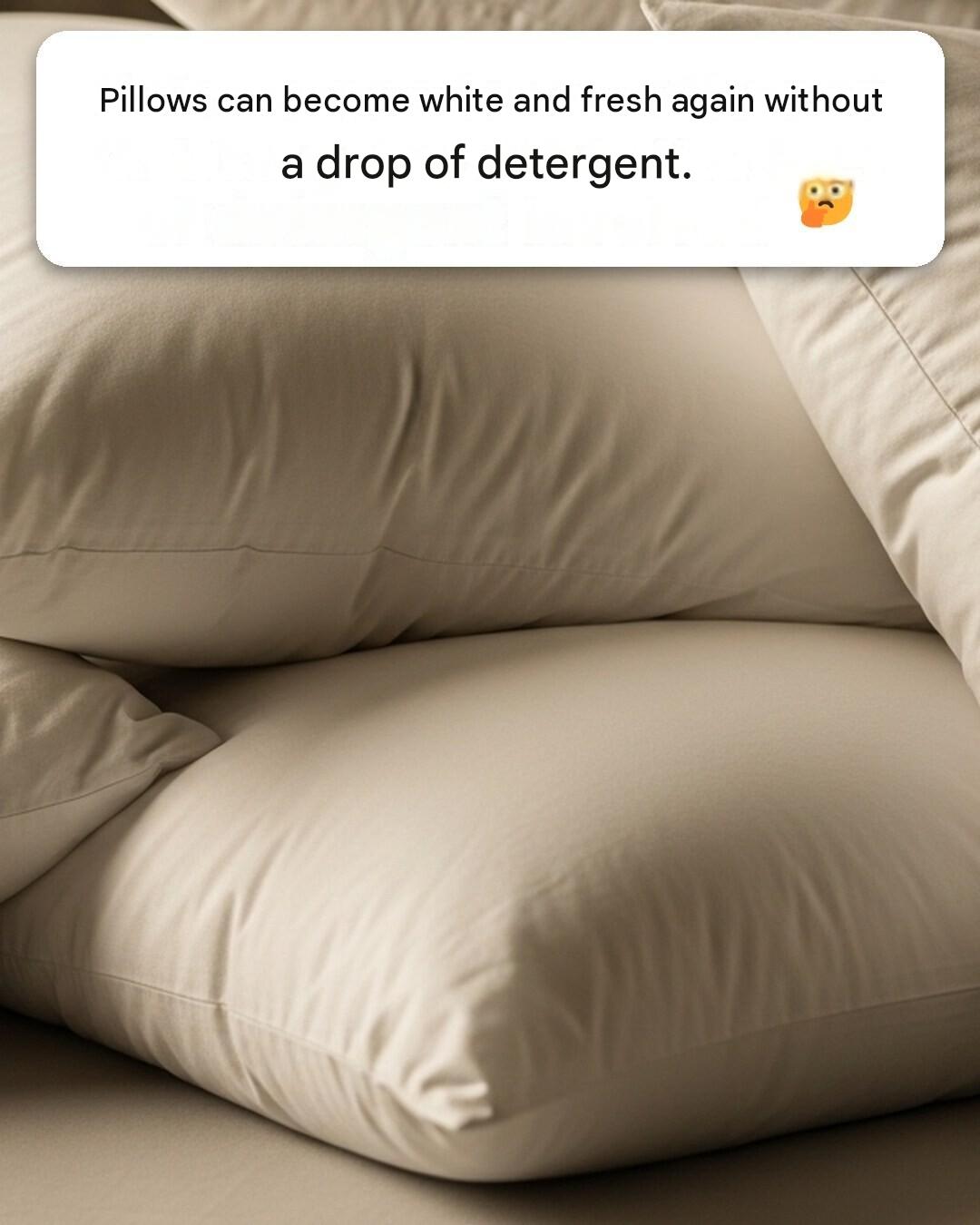
Over time, bed pillows naturally accumulate sweat, body oils, and moisture, leading to unsightly yellow stains and lingering odors. A popular viral image featuring stacked neutral pillows and the claim “Pillows can become white and fresh again without a drop of detergent” highlights the growing interest in eco-friendly laundry solutions. Restoring dingy pillows without commercial detergents or harsh bleach not only brightens bed linens but also protects sensitive skin from chemical irritants while extending the lifespan of bedding.
Understanding natural brightening ingredients, mastering gentle washing methods, and maintaining good laundry hygiene ensures a clean, comfortable night’s sleep.
Natural Detergent-Free Methods to Whiten Pillows
Several household staples effectively lift stains, break down body oils, and eliminate deep odors without traditional detergent.
1. Baking Soda and Distilled White Vinegar
Baking soda works as a natural deodorizer and mild abrasive, while white vinegar breaks down alkaline sweat residue and mineral deposits. Soaking pillows in warm water mixed with one cup of baking soda and one cup of white vinegar helps dissolve yellowing without chemical foaming agents.
2. Hydrogen Peroxide and Lemon Juice
Hydrogen peroxide is a mild, non-toxic oxygen booster that lifts organic stains. Combining one cup of 3% hydrogen peroxide with a half-cup of fresh lemon juice in a warm soak creates a natural bleaching reaction that brightens cotton covers without damaging fabric fibers.
3. Sunlight and UV Freshness
Sun drying acts as a natural sanitizer and whitener. Direct ultraviolet (UV) rays from sunlight help break down discoloration pigments while evaporating trapped humidity that causes musty odors.
Laundry Care, Home Maintenance, and Health Considerations
Keeping bed pillows clean is essential for personal health, allergen reduction, and overall household hygiene.
Reducing Allergens and Dust Mites
Unwashed pillows harbor dust mites, dead skin cells, and microscopic mold spores, which can trigger nighttime allergies or skin breakouts. Washing pillows every three to six months helps maintain a clean sleeping environment and supports respiratory wellness.
Protecting Mattress and Pillow Investments
Using protective pillow encasements shields inner fills from sweat absorption. Proper laundry care prevents premature flattening and clumping, protecting your investment in high-quality down, feather, or microfiber bedding.
Practical Tips for Detergent-Free Pillow Care
- Always Check Care Labels: Ensure pillows are machine-washable before soaking; memory foam and latex pillows should be spot-cleaned rather than submerged in water.
- Wash in Pairs for Balance: Balance your washing machine drum by washing two pillows simultaneously to prevent uneven spinning cycles.
- Ensure Complete Drying: Tumble dry on low heat with clean tennis balls or wool dryer balls to restore fluffiness and prevent mold growth from trapped inner moisture.
Frequently Asked Questions (FAQ)
What causes pillows to turn yellow over time?
Pillows turn yellow due to the natural absorption of body sweat, natural oils, moisture, and skincare products during sleep.
Can baking soda and vinegar replace laundry detergent?
Yes. Combined with warm water, baking soda neutralizes odors while vinegar lifts oil and grime, offering a effective, chemical-free alternative.
How often should bed pillows be washed?
Most standard pillows should be thoroughly washed every three to six months and replaced every one to two years for optimal support and hygiene.
