
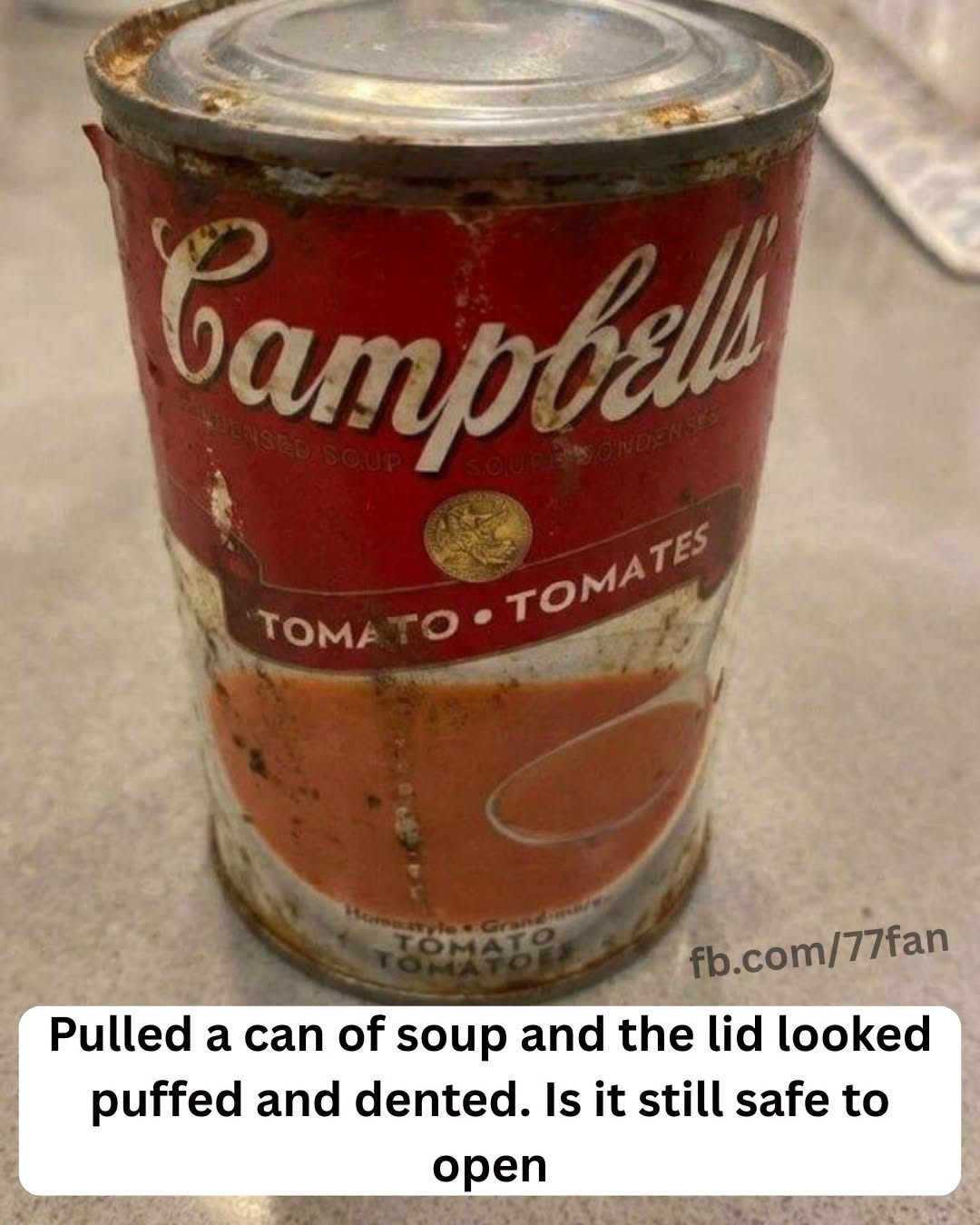
Finding an old can of soup hidden in the back of the pantry is a common household occurrence. However, before grabbing a can opener, evaluating the physical condition of the metal container is critical for food safety.
A viral social graphic shows an old, heavily oxidized Campbell’s tomato soup can with visible rust along the rim, peeling labels, and structural warping. The caption reads: “Pulled a can of soup and the lid looked puffed and dented. Is it still safe to open”
The short answer is no, it is absolutely not safe to open or eat. A swollen, bulging, or severely rusted can is a prime warning sign of bacterial gas buildup or compromised metal seals.
Here is a full breakdown of why bulging cans are dangerous, the risks of foodborne botulism, and how to safely inspect canned goods.
Why Swollen and Dented Cans Are Dangerous
+-----------------------------------------------------------------------------------+
|                        CANNED FOOD SAFETY INSPECTION GUIDE                        |
+-------------------+----------------------------+----------------------------------+
| Physical Defect   | Biological / Physical Cause| Action / Safety Recommendation   |
+-------------------+----------------------------+----------------------------------+
| Swollen / Bulging | Anaerobic bacterial growth | DISCARD IMMEDIATELY; do not open |
| Lid or Ends       | producing gas (Botulism)   | or sample contents               |
| Deep Dents along  | Cracked interior lining or | Discard if dent is sharp or along|
| Metal Seams       | micro-fractured seals      | top/side seam rim                |
| Heavy Rust or     | Metal corrosion causing    | Discard if rust leaves pits or   |
| Surface Pitting   | micro-punctures            | wipes off to reveal holes        |
+-------------------+----------------------------+----------------------------------+
1. Bacterial Gas Buildup (Clostridium botulinum)
When commercial canning processes fail or seals degrade over decades, anaerobic bacteria can grow inside the sealed oxygen-free environment. Clostridium botulinum bacteria produce dangerous neurotoxins along with gases like carbon dioxide and hydrogen. This trapped gas exerts pressure against the metal, causing the lid or ends of the can to bulge and puff outward.
2. Compromised Metal Seams and Micro-Leaks
Deep dents, especially those located along the top or side metal seams, create micro-fractures in the container’s protective seal. Even invisible microscopic cracks allow ambient air, moisture, and mold spores to enter, contaminating the contents without obvious external leaks.
3. Structural Rust and Metal Corrosion
Heavy rust along the top rim or seams weakens the structural integrity of the steel. As rust eats through the metal, it creates microscopic pinholes, exposing food inside to oxygen and bacteria while leaching metallic compounds into the soup.
What to Do If You Find a Swollen Can
If you discover a damaged or bulging can in your pantry, take these immediate safety steps:
- Do Not Open or Taste It: Never attempt to open, smell, or taste food from a swollen or heavily rusted can. Inhaling or ingesting microscopic amounts of botulinum toxin can be fatal.
- Handle with Care: Place the unopened can inside a heavy-duty plastic trash bag, tie it securely, and discard it in an outdoor trash receptacle out of reach of children or pets.
- Clean Surrounding Shelves: Wash nearby pantry shelves with warm soap and water to remove any potential dust, rust fragments, or residue.
Financial Impact: Preventing Pantry Waste
Maintaining a safe pantry setup helps avoid unexpected grocery losses and medical emergencies:
- Practicing “FIFO” (First In, First Out): Place newly purchased canned goods behind older ones on your shelves to ensure products are used long before their expiration dates.
- Avoiding Medical Hazards: Severe food poisoning or botulism requiring emergency care far outweighs the minor cost of replacing an inexpensive $1.50 can of soup.
Fascinating Facts About Canned Food Science
- Nicholas Appert’s Invention: Commercial food canning was invented in 1810 by French confectioner Nicholas Appert, who won a 12,000-franc prize offered by Napoleon Bonaparte to preserve food for military troops.
- Toxin Heat Sensitivity: While Clostridium botulinum bacterial spores survive high temperatures, the dangerous botulinum toxin itself can be inactivated by boiling liquid at 185°F (85°C) for at least 5 minutes—though contaminated food should still always be thrown out.
Conclusion: When in Doubt, Throw It Out
A bulging, dented, or rusted soup can is a clear sign that the seal has failed or bacterial activity has occurred inside. Protecting your health requires discarding compromised canned goods immediately without opening them.
Frequently Asked Questions
Q1: Is a dented can safe if it isn’t swollen?
A1: Minor superficial dents on the flat side of a can are generally safe. However, if the dent is deep, sharp, or located along a metal seam, the can should be thrown out.
Q2: What causes a soup can lid to puff outward?
A2: Gas produced by anaerobic bacterial growth inside the sealed can creates internal pressure that pushes the metal lid outward.
Q3: Can you get botulism from smelling spoiled canned soup?
A3: Yes. Inhaling aerosolized particles or touching spilled liquid from a contaminated can can transmit dangerous botulinum toxins.
Q4: How long do unopened canned goods last?
A4: High-acid canned foods (like tomato soup or canned fruit) maintain peak quality for 12 to 18 months, while low-acid foods (like meat or vegetable soup) can last 2 to 5 years when stored in a cool, dry place.
Q5: How should you safely dispose of a swollen can?
A5: Seal the unopened can in a plastic trash bag and dispose of it directly in an outdoor trash bin.
