
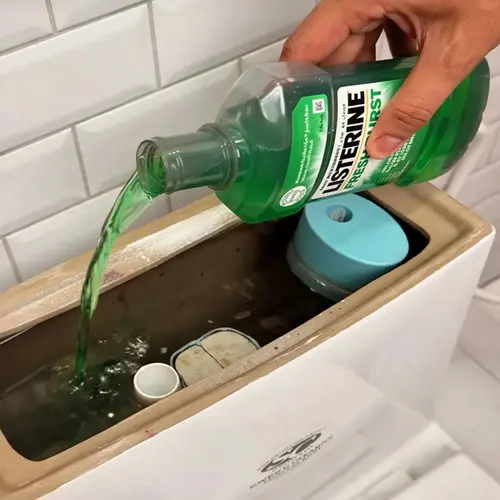
Social media video trends and viral home-hacks often promote pouring liquid mouthwash directly into toilet tanks as a quick, effortless way to keep the bathroom smelling fresh with every flush. Because mouthwash contains antibacterial agents and strong mint essential oils, it seems like a logical shortcut for toilet bowl maintenance.
However, while mouthwash provides temporary scent masking, understanding how chemical components interact with toilet tank hardware, plumbing components, and septic systems is crucial before making it a regular routine.
In this comprehensive home maintenance guide, we will analyze the effectiveness of mouthwash in toilet tanks, explore potential plumbing risks, review financial and budget considerations, and provide safe cleaning alternatives for a fresh bathroom.
The Claim vs. Reality: Does Mouthwash Clean Toilet Tanks?
Evaluating popular internet cleaning trends helps separate viral myth from effective sanitation.
1. Temporary Odor Masking
- The Claim: Flushing mouthwash releases fresh minty scents into the bowl during every flush cycle.
- The Reality: Mouthwash dilutes rapidly inside the 1.5 to 3 gallons of water held in a standard toilet tank, causing fragrance benefits to disappear after just one or two flushes.
2. Disinfecting and Bacteria Reduction
- The Claim: Alcohol-based mouthwashes sanitize the tank interior and kill odor-causing bacteria.
- The Reality: Standard mouthwash lacks the concentration required to effectively disinfect large volumes of standing water or remove hard water mineral deposits and grime buildup from tank walls.
Potential Risks to Toilet Components and Plumbing
Adding non-designated chemical liquids to your toilet tank can cause long-term material degradation.
- Damage to Rubber Seals and Flappers: Alcohol, essential oils, and flavor additives found in mouthwashes can deteriorate or warp rubber flappers, fill valve seals, and gaskets over time, leading to silent tank leaks and running toilets.
- Costly Water Waste: A degraded flapper seal causes continuous water leakage into the bowl, significantly raising monthly utility bills.
- Septic System Considerations: While small amounts of mouthwash rarely destroy septic bacteria completely, introducing non-essential chemical ingredients into septic tanks on a regular basis is generally discouraged by professional plumbers.
Financial and Budget Considerations for Bathroom Care
Using personal hygiene products for household cleaning is rarely cost-effective.
- High Product Cost: Premium brand mouthwash costs significantly more per ounce than targeted household cleaning agents like distilled white vinegar or specialized toilet bowl cleaners.
- Plumbing Repair Costs: Replacing worn-out flush valve seals, degraded flappers, or internal toilet mechanisms costs far more in parts and labor than using proper tank-safe cleaning products.
Safe and Effective Alternatives for a Fresh Toilet
Keep your toilet tank clean and your bathroom smelling fresh without risking plumbing damage:
- Distilled White Vinegar: Pour 1 to 2 cups of white vinegar into the tank occasionally, let it sit for 30 minutes, and scrub gently with a soft brush to dissolve hard water deposits safely.
- Baking Soda and Vinegar Bowl Treatment: Clean the toilet bowl directly with baking soda and vinegar for natural stain removal and deodorization.
- Tank-Safe Rim Hangers: Use cleaning blocks designed specifically to clip inside the bowl, avoiding direct chemical exposure to sensitive rubber seals inside the tank.
Conclusion
While pouring mouthwash into a toilet tank makes for an eye-catching viral video, it is an expensive and inefficient way to freshen your bathroom that risks damaging delicate internal rubber seals. Stick to proven, plumbing-safe cleaning practices to keep your bathroom hygienic and your fixtures in top working order.
Frequently Asked Questions (FAQ)
Can mouthwash damage plastic and rubber toilet parts?
Yes. Alcohol and concentrated oils in mouthwash can cause rubber gaskets, flappers, and plastic components inside the tank to warp, dry out, or degrade faster than normal.
What is the best way to clean inside a toilet tank?
Shut off the water supply valve, flush to drain the tank, pour in diluted white vinegar, scrub the interior walls gently with a soft-bristle brush, turn the water back on, and flush out the residue.
Is it safe to use bleach tablets in the toilet tank?
Concentrated bleach tablets left sitting inside a toilet tank can degrade rubber flappers and internal seals quickly. Plumbers generally recommend applying cleaners directly to the bowl rather than leaving chemical pucks inside the tank.
