
Introduction
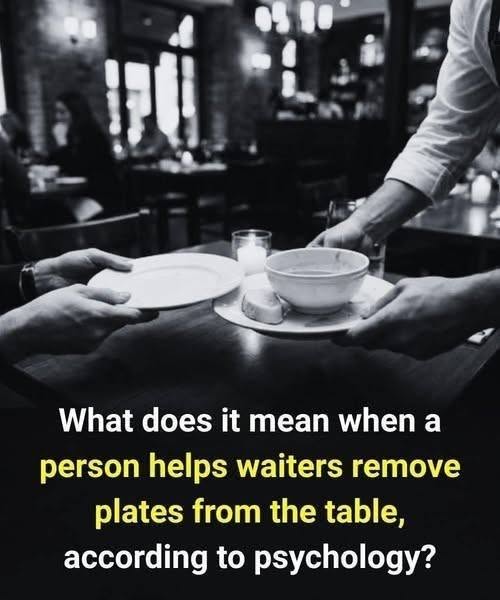
Sensational psychological quizzes and behavioral observations frequently circulate across social media, utilizing everyday habits to grab attention. A popular graphic shared online features a black-and-white restaurant scene with a customer helping a waiter clear plates, accompanied by the text: “What does it mean when a person helps waiters remove plates from the table, according to psychology?”. Exploring the actual behavioral science behind restaurant etiquette, empathy, and social habits helps separate internet myths from clinical facts.
The Psychological Reality of Helping Service Staff
Do everyday dining habits provide a definitive diagnostic window into a person’s inner psychological profile?
Psychologists and etiquette experts explain that while assisting restaurant staff by handing them a plate often reflects general politeness, empathy, prosocial behavior, or past experience working in the hospitality industry, it is a learned social courtesy rather than a clinical psychological indicator. Human behavior is influenced by context, culture, and personal background rather than a single gesture.
Breaking Down Etiquette and Prosocial Behavior
Recognizing Social Courtesy and Empathy
When evaluating interpersonal behavior, understanding why people naturally assist others in social settings is fascinating.
Key Behavioral Facts
- Empathy and Consideration: Prosocial actions often stem from high situational awareness and a desire to make service work smoother for staff.
- Hospitality Experience: Individuals who have worked in food service are significantly more likely to stack plates or help clear tables out of shared understanding.
- Professional Guidance: Always treat service staff with respect and kindness, regardless of whether you choose to help stack plates or leave them on the table.
Financial, Health, and Lifestyle Considerations
Navigating social interactions and dining etiquette benefits from mindfulness, respect, and clear communication.
Prioritizing Polite Etiquette and Consumer Awareness
For adults of all ages, practicing good manners and appreciating service workers fosters a positive dining culture. Consulting etiquette guides ensures graceful interactions in public spaces.
Practical Tips for Dining Etiquette and Mindfulness
- Be Respectful: Treat waitstaff and service workers with courtesy and patience during every dining experience.
- Allow Staff to Work: Keep in mind that some restaurants prefer servers to clear dishes using specific stacking techniques for safety and balance.
- Evaluate Online Psychology: Approach viral behavioral quizzes on social media as fun conversational topics rather than formal psychological assessments.
- Show Appreciation: Express gratitude verbally and leave appropriate tips for hardworking service staff.
- Keep Learning: Explore the nuances of cultural etiquette and social psychology to better understand human interactions.
Interesting Facts About Restaurant Culture
- Hospitality Norms: Restaurant clearing customs vary widely around the world; in some cultures stacking plates is considered helpful, while in others it can disrupt the server’s workflow.
- Viral Psychology Tactics: Relatable everyday questions about personality traits are among the most effective formats for driving social media engagement and comments.
- Behavioral Science: Psychologists study everyday habits through broad observational frameworks rather than isolated actions.
Conclusion
While viral graphics use intriguing behavioral questions to capture attention, understanding the genuine nature of etiquette and empathy highlights the value of everyday kindness. Always treat service staff with respect!
FAQ Section
What does helping a waiter remove plates actually mean?
It typically indicates politeness, empathy, prosocial habits, or personal familiarity with the challenges of working in the restaurant industry.
Is it considered proper etiquette to help stack plates at a restaurant?
Etiquette experts are divided; while it is usually done with good intentions, servers often have specific methods for clearing tables safely and efficiently.
Why do personality and etiquette posts spread so widely online?
Relatable everyday behaviors spark curiosity and friendly discussions, making them perfect for boosting social media engagement.
