
Maintaining clean, comfortable bed linens is essential for good sleep hygiene and home wellness. However, confusing laundry advice and viral graphics often oversimplify how temperature affects different fabrics.
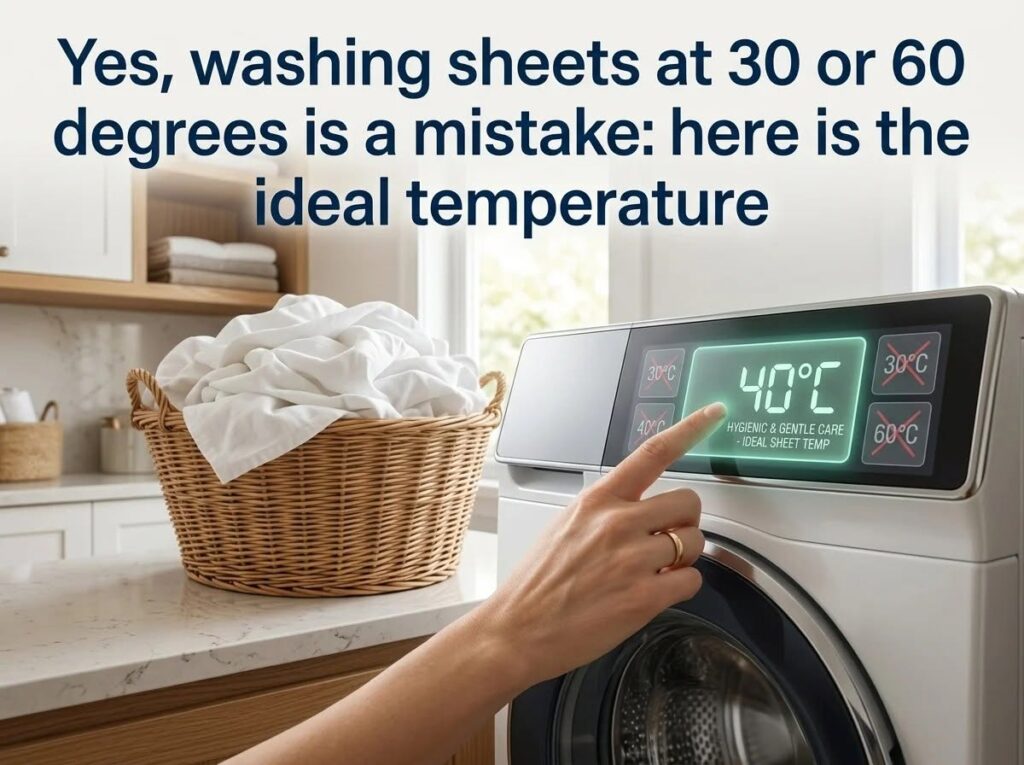
A viral social graphic displays a hand setting a washing machine digital display to 40°C under the title: “Yes, washing sheets at 30 or 60 degrees is a mistake: here is the ideal temperature”.
While 40°C is widely considered the standard sweet spot for everyday cotton sheets, claiming that 30°C or 60°C is a outright “mistake” is misleading. The ideal wash temperature actually depends on fabric material, level of soil, energy-saving goals, and allergen control.
Here is a full breakdown of bed sheet wash temperatures, fabric care guidelines, and practical laundry tips.
Comparing Wash Temperatures for Bed Sheets
+-----------------------------------------------------------------------------------+
|                        BED SHEET WASH TEMPERATURE COMPARISON                      |
+-------------------+----------------------------+----------------------------------+
| Wash Temperature  | Key Benefit                | Ideal Use Case & Fabric Types    |
+-------------------+----------------------------+----------------------------------+
| 30°C (86°F)       | Energy efficient, gentle   | Delicate fabrics (silk, bamboo,  |
|                   | on delicate fibers         | linen) & routine light freshening|
| 40°C (104°F)      | Optimal balance of stain   | Standard everyday cotton, percale|
|                   | removal & fabric longevity | microfiber, & poly-blend sheets  |
| 60°C (140°F)      | Thermal sanitization &     | Heavy soil, illness recovery,    |
|                   | dust mite elimination      | dust mite allergies & white cotton|
+-------------------+----------------------------+----------------------------------+
1. The 40°C Standard: The Balanced All-Rounder
For standard cotton, percale, and poly-blend bed sheets, 40°C (104°F) offers an effective balance. It provides sufficient heat to dissolve body oils, sweat, and mild stains while protecting cotton fibers from premature shrinkage and wear.
2. When 30°C is Best: Energy Savings and Delicate Fabrics
Washing at 30°C (86°F) uses significantly less electricity by reducing water-heating energy. It is ideal for delicate materials like silk, bamboo-derived viscose, fine linen, or brightly dyed fabrics prone to fading. Modern enzyme-based laundry detergents are formulated to clean effectively even at 30°C.
3. When 60°C is Necessary: Deep Hygiene and Dust Mite Removal
While 60°C (140°F) creates more fiber stress over time, it is far from a mistake when hygiene is paramount. Water temperatures of 60°C or higher are required to kill dust mites, eliminate stubborn bacteria, and sanitize bedding during sickness recovery or severe allergy flare-ups.
Step-by-Step Bed Sheet Laundry Guide
Follow this routine to extend the life of your bed sheets:
- Check Care Labels First: Always refer to manufacturer instructions before choosing temperature settings, especially for specialty weaves or natural silks.
- Pre-Treat Stains: Treat body oil, makeup, or food spots with a targeted stain remover before washing rather than turning up the wash temperature.
- Avoid Overloading the Drum: Wash sheets separately from heavy towels or jeans to prevent friction tearing and ensure even water circulation.
- Use Line Drying or Low-Heat Tumble: High dryer heat causes more fiber breakdown and shrinkage than hot water washes. Line dry outdoors or use low-heat dryer cycles.
Financial Impact: Energy Use vs. Linens Longevity
Managing your wash temperature delivers real home savings:
- Lower Electric Bills: Heating water accounts for up to 75% to 90% of the energy consumed by a washing machine cycle. Dropping routine washes from 60°C down to 40°C or 30°C noticeably lowers monthly energy costs.
- Extending Fabric Lifespan: Excessive high-heat washing degrades fabric fibers, causing premature thinning and pilling. Using moderate temperatures protects your bedding investment.
Fascinating Facts About Laundry Physics
- Enzyme Activation Temperatures: Most modern biological laundry detergents contain enzymes (proteases and lipases) engineered to work optimally between 30°C and 40°C, breaking down protein and fat stains without requiring boiling water.
- The Dust Mite Threshold: Scientific studies demonstrate that water must reach at least 55°C to 60°C to destroy 100% of house dust mites (Dermatophagoides pteronyssinus) during a wash cycle.
Conclusion: Matching Temperature to Your Needs
There is no single “magic” wash temperature for all bed sheets. While 40°C serves as a great default for everyday cotton, switching to 30°C saves energy on delicates, and opting for 60°C delivers thermal sanitization when needed.
Frequently Asked Questions
Q1: Is 40°C the ideal temperature for washing bed sheets?
A1: For most standard cotton and microfiber sheets, 40°C is an optimal balance between removing body oils and preserving fabric fibers.
Q2: Does washing sheets at 30°C actually get them clean?
A2: Yes. Modern biological detergents are formulated to effectively break down dirt and oils at 30°C while consuming far less energy.
Q3: What temperature kills dust mites in bedding?
A3: Water temperatures of 60°C (140°F) or higher are required to effectively kill dust mites and remove their allergens.
Q4: Can high water temperatures shrink bed sheets?
A4: Yes. Natural fibers like 100% cotton and linen can shrink when exposed to excessive water temperatures above 60°C or high dryer heat.
Q5: How often should you wash your bed sheets?
A5: It is generally recommended to wash bed sheets once every 1 to 2 weeks to remove accumulated skin cells, sweat, and dust.
