
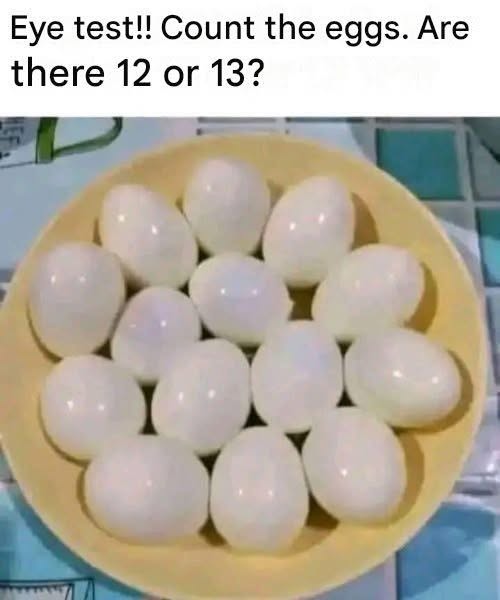
Visual puzzles, brain teasers, and optical illusions have captivated human attention for generations. From classic “find the hidden object” challenges to tricky counting tests featuring everyday items, these visual phenomena provide both entertainment and a fascinating glimpse into how our brains process information.
When presented with a simple image—such as a plate of hard-boiled eggs—our visual cortex immediately goes to work organizing shapes, shadows, and contours. However, overlapping objects, lighting reflections, and complex arrangements can easily trick our perception, leading to differing counts and lively debates among friends and family.
This comprehensive guide explores the neuroscience of visual perception, the popularity of online brain teasers, the cognitive benefits of puzzles, and practical tips for keeping your mind sharp.
The Neuroscience of Visual Perception
How the human brain interprets visual data is a complex and instantaneous process. When light hits our eyes, the retina converts it into electrical signals that travel to the visual cortex in the brain.
Gestalt Principles and Pattern Recognition
The human brain naturally relies on Gestalt principles—psychological rules that explain how we group individual elements into unified wholes:
- The Law of Proximity: We tend to group objects that are close to one another into a single set or pattern.
- The Law of Continuity: The brain prefers smooth, continuous contours, which can sometimes cause us to misjudge where one object ends and another begins when items overlap.
In crowded arrangements like a plate of eggs, overlapping boundaries and uniform colors can create visual ambiguity, causing people to either double-count or miss an item entirely.
The Cognitive Benefits of Brain Teasers and Puzzles
Engaging regularly with visual puzzles, riddles, and optical illusions offers several mental advantages:
- Enhancing Attention to Detail: Puzzles train the brain to notice subtle variations in shape, texture, and spacing.
- Stimulating Cognitive Agility: Working through tricky problems encourages flexible thinking and enhances problem-solving speed.
- Providing Stress Relief: Focusing on a fun, low-stakes visual challenge offers a mental break from daily routines and digital overload.
Practical Tips for Keeping Your Mind Sharp
Just like physical exercise strengthens muscles, mental stimulation supports cognitive health as you age. Consider these daily habits:
- Mix Up Your Puzzles: Alternate between different types of challenges, such as crosswords, Sudoku, math riddles, and visual illusions.
- Take Screen Breaks: Give your eyes and brain regular rests during long periods of digital work to prevent mental fatigue.
- Get Adequate Sleep: High-quality sleep is essential for memory consolidation and cognitive recovery.
- Maintain Social Connections: Discussing puzzles and riddles with friends fosters social engagement and shared enjoyment.
Interesting Facts About Optical Illusions and Brain Teasers
- Ancient Origins: Visual puzzles are far from modern inventions; historical artifacts from ancient Greece and China include intricate riddles and visual trickery designed to test wits.
- Processing Speed: The human brain can process entire visual scenes in as little as 13 milliseconds, which is why our first impression of an optical illusion is often so difficult to override.
- Viral Internet Culture: Visual counting tests and hidden-object images are among the most shareable forms of online content, frequently sparking massive viral debates across social media platforms.
Conclusion
Visual puzzles like counting tests do more than just pass the time—they remind us of the incredible complexity of human perception. By challenging our eyes and brains, these fun tests encourage curiosity, mindfulness, and playful interaction. Whether you counted 12 or 13 eggs in the challenge, engaging with visual riddles is a delightful way to keep your mind active.
FAQ Section
Q: Why do people get different answers when counting items in an image? A: Overlapping objects, uniform lighting, and shadows can obscure boundaries, causing individuals to overlook an item or count a reflection twice.
Q: Are visual puzzles beneficial for cognitive health? A: Yes. Regularly engaging in brain teasers and visual puzzles helps stimulate problem-solving pathways and supports mental agility.
Q: What part of the brain processes visual illusions? A: Visual processing primarily occurs in the occipital lobe at the back of the brain, though interpretation involves higher-level cognitive areas like the frontal lobe.
Q: How can I improve my visual attention to detail? A: Practicing mindful observation, engaging in detail-oriented hobbies like drawing or sorting, and solving regular visual puzzles can help improve focus.
Q: Why are optical illusions so popular on social media? A: They invite immediate participation, spark friendly debates in the comments, and offer a quick, entertaining mental break for users.
Q: Do brain teasers help prevent cognitive decline? A: While they cannot stop neurological aging entirely, maintaining an active, cognitively stimulated lifestyle contributes to overall brain health and cognitive reserve.
