
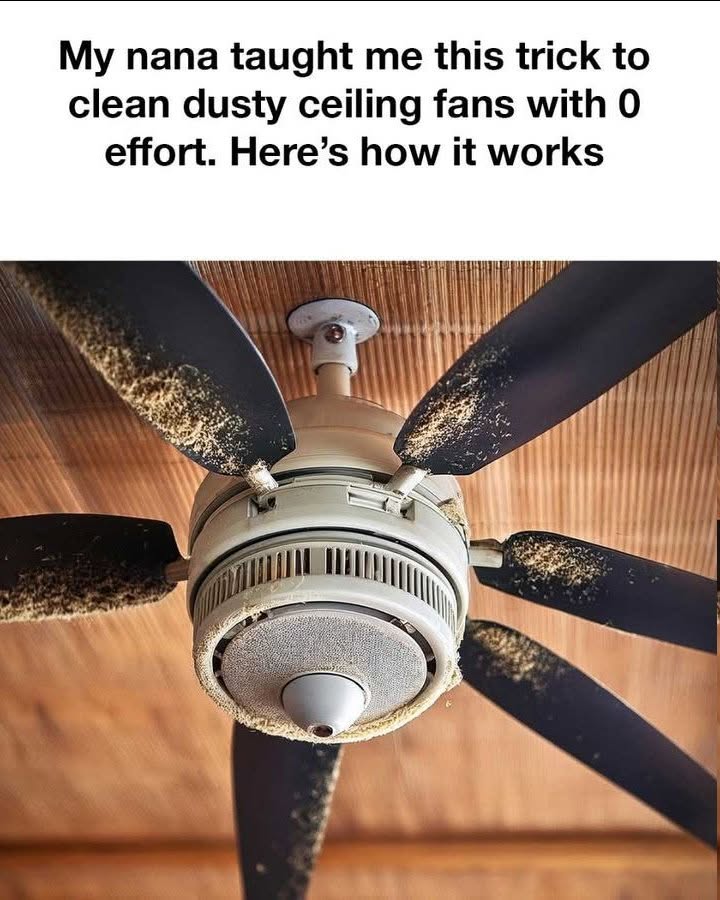
Cleaning ceiling fans is one of those household chores everyone loves to avoid. As fan blades spin month after month, they collect thick layers of dust, pet hair, and allergens. When it comes time to clean them, traditional dusters or rags usually end up knocking a cloud of grime directly onto your face, furniture, rugs, and clean floors below.
A simple, old-school cleaning hack recently resurfaced online, featuring a dusty ceiling fan with the caption: “My nana taught me this trick to clean dusty ceiling fans with 0 effort. Here’s how it works.”
The secret behind this viral trick? An ordinary pillowcase.
By using a pillowcase instead of a standard feather duster or cloth, you can trap 100% of the dust and debris inside the fabric casing without letting a single speck fall to the room below.
Here is a complete breakdown of why this simple hack works, how to do it step-by-step, additional deep-cleaning tips for ceiling fans, and how to keep dust from sticking to your fan blades in the future.
The Science of Ceiling Fan Dust and Why Traditional Methods Fail
To understand why the pillowcase hack is so revolutionary, it helps to examine how dust collects on fan blades in the first place.
1. Static Electricity and Friction
As fan blades rotate through the air at high speeds, friction between the blades and air molecules generates a static electrical charge. This static charge acts as a magnet for fine airborne dust particles, pollen, micro-plastics, and pet dander.
2. Moisture and Grease Bonding
In living rooms and bedrooms, ambient humidity causes dust to stick to blade edges. In kitchens or open-concept spaces, microscopic airborne cooking grease coats the fan, forming a stubborn, sticky crust over time that dry dusters only end up smearing or knocking loose.
3. The Flaw of Feather Dusters
Using a feather duster or dry microfiber cloth on an overhead fan blade creates a “dust shower.” As you scrape the top of the blade, gravity pulls the loosened debris straight down onto your head, bedsheets, or living room carpet, turning a quick task into an annoying multi-step room cleaning process.
Step-By-Step Guide: The Pillowcase Cleaning Method
Using an old or spare pillowcase eliminates the mess entirely by enveloping the fan blade before wiping.
+-----------------------------------------------------------------------------------+
|                        CEILING FAN CLEANING METHOD COMPARISON                     |
+-------------------+----------------------------+----------------------------------+
| Cleaning Method   | Dust Containment           | Mess Level                       |
+-------------------+----------------------------+----------------------------------+
| Pillowcase Hack   | 100% Trapped Inside Fabric | Zero Floor / Furniture Fallout   |
| Feather Duster    | Very Low                   | High (Dust Falls Everywhere)     |
| Damp Microfiber   | Moderate                   | Medium (Requires Floor Coverings)|
+-------------------+----------------------------+----------------------------------+
Step 1: Turn Off the Power
Always switch off the ceiling fan at the wall switch or remote control. For safety, allow the blades to come to a complete stop before setting up a sturdy step stool or ladder.
Step 2: Prepare Your Pillowcase Solution
Take an old pillowcase (cotton or flannel works best) and lightly spray the inside of the case with water, a mild multi-surface cleaner, or a 50/50 mixture of water and white vinegar. A light dampness helps the fabric grip the dust without leaving liquid drips behind.
Step 3: Slide the Pillowcase Over the Blade
Reach up and slide the open end of the pillowcase completely over one fan blade, slipping it on like a sock until the entire length of the blade is enclosed inside the case.
Step 4: Press and Pull
Grasp the top and bottom of the fan blade through the pillowcase fabric with both hands. Press down firmly against the blade surface and slowly drag the pillowcase outward toward the tip.
As you pull, the inside lining wipes both the top and bottom of the blade simultaneously, sweeping all accumulated dust, hair, and grime directly into the sealed bottom of the pillowcase.
Step 5: Repeat for All Blades
Slide the pillowcase over the remaining blades one by one. Once finished, take the pillowcase outside, shake it out inside a trash bag or outdoor bin, and toss it straight into your washing machine.
How to Prevent Dust From Sticking to Fan Blades
Once your ceiling fan blades are completely clean, taking a few extra preventive measures will dramatically slow down future dust accumulation:
- The Fabric Softener Trick: Mix 1 part liquid fabric softener with 4 parts water in a spray bottle. Wipe down the cleaned blades with a microfiber cloth dipped in this solution. Liquid fabric softener contains anti-static agents that reduce static charge buildup on the blades, preventing dust from clinging for months.
- Apply Car Wax: Applying a thin coat of paste car wax to smooth wooden or plastic fan blades seals microscopic pores on the surface. The slick, polished finish prevents dust from grabbing hold and makes future dusting a quick, effortless wipe.
- Reverse Fan Direction Seasonally: Running your fan clockwise on low during winter pushes warm air down, while running it counterclockwise on medium/high during summer creates a cooling breeze. Changing fan direction regularly prevents static buildup in a single direction.
Financial and Indoor Health Benefits
Maintaining clean ceiling fan blades does more than improve visual aesthetics—it directly impacts indoor air quality and household finances:
Improving Indoor Air Quality
When a dusty fan turns on, it acts as a room-wide allergen distributor, flinging dust mites, pet dander, and mold spores across living spaces. Keeping blades clean reduces respiratory irritation, seasonal allergy symptoms, and asthma triggers.
Preserving Fan Motor Life
Heavy, uneven dust buildup on fan blades causes slight weight imbalances during rotation. Over time, this imbalance strains the motor bearings, leading to annoying wobbling, squeaking noises, and premature motor burnout. Regular cleaning extends the lifespan of your light fixtures and ceiling fans.
Fascinating Facts About Dust and Ceiling Fans
- Skin Composition: Up to 50% to 80% of typical bedroom dust consists of dead human skin cells shed naturally during sleep.
- The Static Magnet Effect: The faster a fan spins, the stronger the static field it creates, which is why high-speed fans often collect thick ridges of dust along the leading edges of their blades despite constant movement!
- The First Electric Ceiling Fan: Invented by Philip Diehl in 1887 during the early electrification era, early ceiling fans used brass blades, which required frequent polishing to prevent tarnish and grease accumulation.
Conclusion: A Effortless Household Secret
Nana’s pillowcase trick is a testament to simple, brilliant domestic wisdom. By trapping dust inside a fabric enclosure as you wipe, you eliminate messy cleanups, protect your furniture and floors from falling debris, and keep your home’s indoor air fresh and clean.
Pairing this effortless pillowcase method with an anti-static fabric softener wipe ensures your ceiling fans stay spotless and running smoothly all year long.
Frequently Asked Questions
Q1: Can I use this pillowcase method on high vaulted ceiling fans?
A1: Yes, provided you use a safe, sturdy ladder to reach the blades comfortably. If the fan is too high to reach safely by hand, an extendable microfiber fan duster with a curved blade attachment is a safer alternative.
Q2: What is the best way to clean the central motor housing of a ceiling fan?
A2: Use a vacuum cleaner hose with a soft brush attachment to gently pull dust out of the motor vents. Avoid spraying liquid cleaner directly into the motor housing to prevent electrical short circuits.
Q3: How often should I clean my ceiling fans?
A3: Cleaning your ceiling fans every 1 to 2 months prevents thick dust crusts from forming. If you live with pets or in a high-dust area, monthly cleaning is recommended.
Q4: Will dampening the pillowcase ruin wood fan blades?
A4: No. As long as the pillowcase is lightly damp (not dripping wet), it is completely safe for sealed wood, laminate, plastic, or painted fan blades. Always dry the blades with a towel if any excess moisture remains.
Q5: What should I do if my ceiling fan wobbles after cleaning?
A5: Ensure all blade mounting screws are tightened securely to the motor housing. If wobbling persists, use a low-cost ceiling fan balancing kit (available at home improvement stores) to adjust blade weight distribution.
