
Introduction
Every day, millions of people around the world use everyday household items without ever giving a second thought to their precise design features. From the tiny hole at the end of a pot handle to the small metal rivets on blue jeans, modern manufacturing is filled with clever design elements created to improve functionality, convenience, and safety. Among these ubiquitous personal care tools, the humble standard nail clipper is perhaps one of the most widely used yet least understood everyday gadgets in our homes.
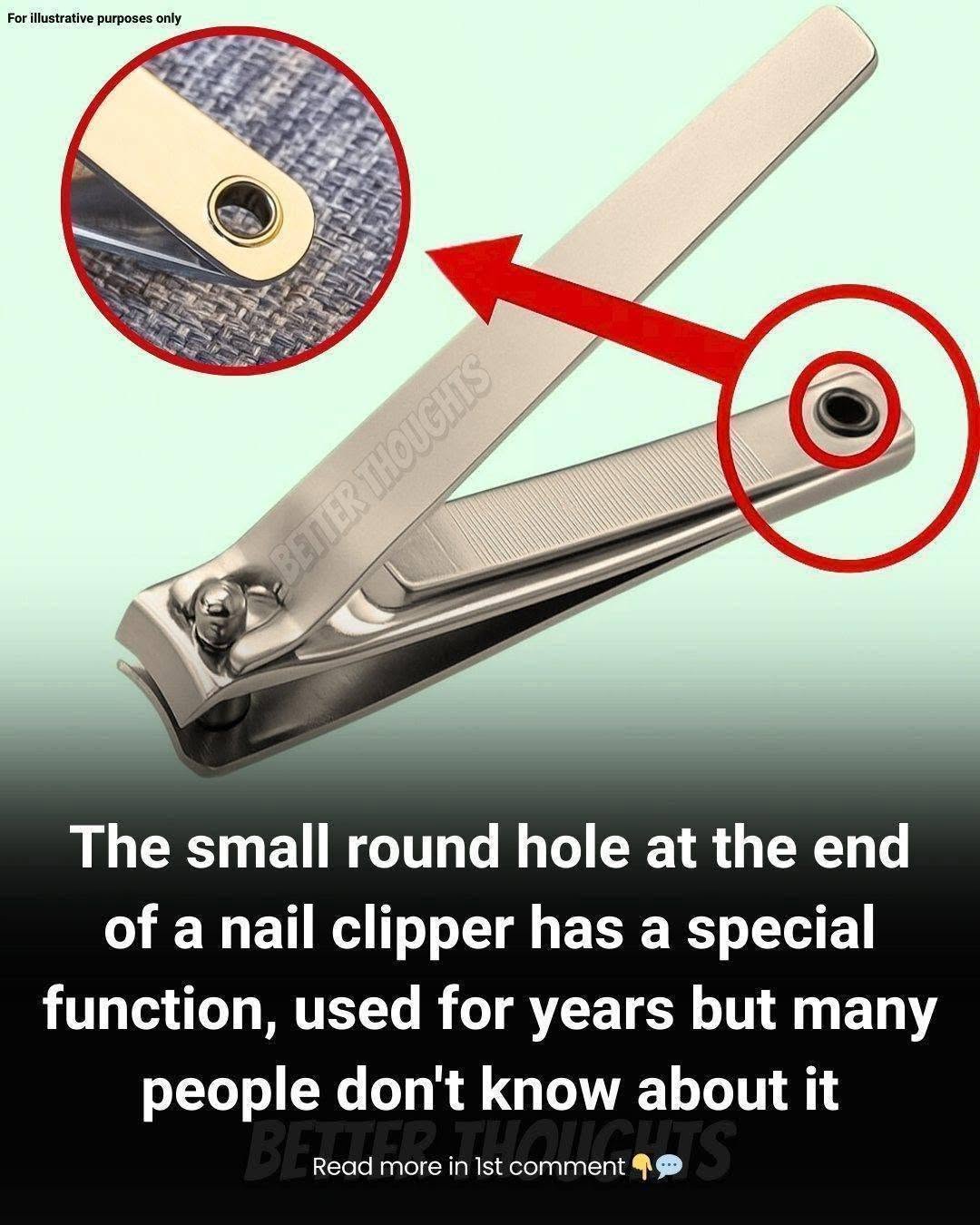
If you look closely at the tail end of almost any standard pair of nail clippers, you will notice a small, circular hole drilled into the metal body. While most individuals assume it is merely a decorative feature or a cosmetic artifact of mass production, this small opening actually serves several very practical, ingenious functions. Understanding the hidden features, design engineering, and practical hacks behind everyday tools can change how you organize your home, streamline your personal hygiene routine, and make everyday tasks far more efficient.
The Engineering Behind the Everyday Nail Clipper
To truly appreciate the purpose of the hole at the end of a nail clipper, it helps to first understand the mechanical design of the tool itself. Standard nail clippers operate using a compound lever system. When you swing the top handle around and press down, it amplifies force onto two curved, sharpened blades at the front, creating a clean, precise cut.
Standard Components of a Nail Clipper
- The Lower Base Frame: The main metal chassis that houses the cutting edges and supports the central rivet.
- The Swivel Lever: The top handle that rotates 180 degrees to create mechanical leverage.
- The Central Pin/Rivet: The small vertical post near the blades that holds the lever and base together under tension.
- The Attachment Hole: The smooth, circular hole stamped directly into the back end of the handle or base frame.
While manufacturing processes have evolved over decades, the basic anatomy of nail clippers has remained remarkably consistent due to its simplicity and cost efficiency.
The Real Functions of the Small Round Hole
So, why do manufacturers consistently include this specific hole on nail clippers? Rather than having just a single purpose, the hole was designed to offer multiple practical advantages, ranging from everyday portability to manufacturing assembly.
1. Keyring Attachment and Portability
The primary intended consumer feature of the small round hole is to allow the nail clipper to be attached to a keychain, lanyard, or carabiner.
- On-the-Go Convenience: Many people keep a compact pair of clippers on their keyring for quick emergency fixes, such as trimming a hangnail, cutting loose threads on clothing, or opening plastic packaging while traveling.
- Preventing Loss: Because nail clippers are relatively small, they frequently get lost in drawers, gym bags, or luggage. Threading them onto a key ring or hook keeps them visible and easily accessible.
2. Hanging and Storage Organization
For bathroom organization, the end hole allows users to hang their clippers on small metal hooks inside medicine cabinets, on pegboards, or near vanity mirrors. Hanging personal care items off countertops helps keep surfaces clean, organized, and free from moisture buildup that can lead to corrosion over time.
3. Manufacturing and Electroplating Efficiency
From a manufacturing perspective, the small hole serves an essential role during mass production:
- Dip Coating and Plating: During manufacturing, metal components are submerged into chemical solutions for cleaning, polishing, or electroplating (such as nickel or chrome plating).
- Hanging on Racks: The small hole acts as an attachment point for tiny metal hooks on factory conveyor lines, allowing thousands of clipper bodies to be suspended, dipped, and air-dried simultaneously without marring the exterior metal finish.
Unexpected Uses and Everyday Hacks for Nail Clippers
Beyond their primary task of trimming fingernails and toenails, nail clippers—along with their distinct features—can be repurposed in surprising ways around the home, workplace, or camping trips.
1. Opening Sealed Plastic Packaging and Cable Ties
When scissors or knives are not within reach, the sharp, curved blades of a nail clipper provide precise control for snipping tough zip ties, cutting plastic blister packs, or trimming loose fishing lines safely.
2. Stripping Small Electrical Wires
In a pinch, DIY hobbyists and technicians have used nail clippers as an emergency wire stripper. By gently applying pressure to the plastic coating of a small wire without cutting through the copper core, you can score and slide off the insulation effortlessly.
3. Bending Thin Wire with the Attachment Hole
The small round hole at the end of the handle can actually act as a leverage point for bending light gauge wire, paperclips, or jewelry pins. Inserting a wire through the hole gives you firm mechanical leverage to make neat, 90-degree bends without hurting your fingers.
Practical Tips for Maintaining Your Personal Care Tools
Maintaining household tools ensures long-lasting functionality and hygienic safety. Investing time in routine tool care protects your health and saves money on frequent replacements.
- Keep Tools Dry: Moisture is the primary cause of rust on metal tools. Always dry your clippers thoroughly after using them in a damp bathroom environment.
- Sanitize Regularly: Clean the cutting edges with rubbing alcohol before and after each use to prevent bacterial transfer, especially when sharing tools among family members.
- Store in a Protective Case: Utilizing the end hole to hang clippers inside a dry cabinet prevents them from coming into contact with other metallic items that could dull the blades.
- Consider Quality Materials: When buying new personal care items, look for stainless steel construction to avoid cheap plating that eventually peels or corrodes.
Interesting Facts About Nail Clippers and Manufacturing History
- Patented Innovation: The modern compound-lever nail clipper design was patented in the United States in the late 19th century by inventor Chapel S. Carter.
- Universal Standard: Almost 90% of portable nail clippers produced globally include the rear attachment hole as a standardized manufacturing template.
- Space-Saving Design: Nail clippers are widely regarded by industrial designers as one of the most efficient examples of foldable, dual-lever engineering in human history.
Conclusion
The small round hole at the end of a nail clipper is far more than a casual design choice—it represents a clever combination of consumer convenience, hanging storage utility, and industrial manufacturing efficiency. Small details in everyday objects often hold rich engineering logic designed to make daily living simpler and more organized. The next time you pick up a pair of clippers, you will view that simple metal tool with a brand-new perspective!
FAQ Section
Is the hole at the end of a nail clipper designed for a specific tool?
While primarily meant for keyrings, lanyards, or manufacturing hooks, the hole can also accommodate small chain attachments or act as a wire-bending guide.
Why do some nail clippers come without a hole?
Heavier-duty or professional podiatry clippers often omit the hole because they are designed for clinical sanitization trays rather than portable hanging or keychain use.
How can I stop my nail clippers from rusting?
Store your clippers in a dry location, clean them with alcohol rather than water alone, and occasionally apply a microscopic drop of mineral oil to the central rivet.
Can nail clippers be taken on airplanes in carry-on luggage?
Yes, according to standard TSA guidelines, standard nail clippers are permitted in both carry-on and checked luggage because their cutting blades are short and non-hazardous.
