
Introduction: When Wildlife Meets Human Living Spaces
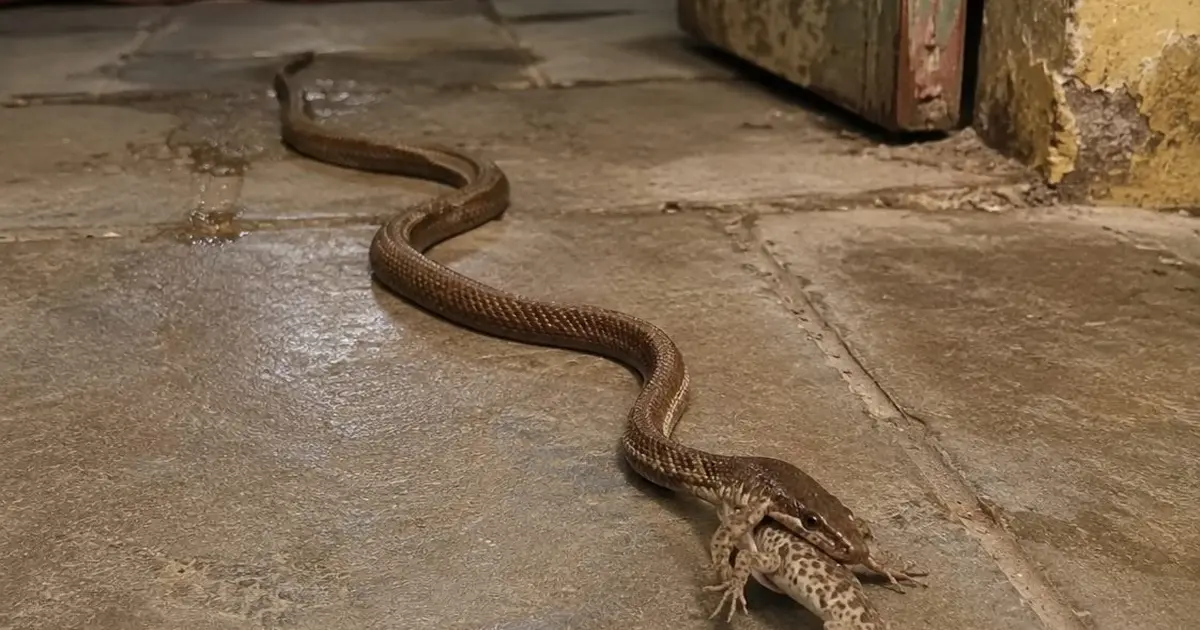
Encountering wild animals inside a home is an experience that can instantly evoke shock, curiosity, and caution. While most homeowners expect to occasionally deal with insects or rodents, discovering a reptile inside living quarters—such as a snake capturing prey on a tiled floor—is an unforgettable event. The image accompanying this article vividly captures this exact wild moment: a long snake gliding across an indoor floor with a captured gecko firmly in its jaws.
For many people, finding a snake indoors raises immediate concerns regarding safety, home health, and property security. However, understanding the behavior of these creatures can help homeowners navigate unexpected wildlife encounters calmly and effectively. Whether you live in a rural area or an urban environment, knowing how local wildlife interacts with residential spaces is an important part of home maintenance.
This comprehensive guide will explore the fascinating interactions between snakes and small reptiles like geckos, examine why these animals enter homes, and discuss practical prevention strategies. By blending wildlife awareness with common-sense property management, you can keep your home secure and peaceful.
Why Do Snakes Enter Residential Buildings?
Snakes are ectothermic (cold-blooded) animals that rely on their external environment to regulate their body temperature. Consequently, their movements are driven largely by basic survival needs: shelter, temperature control, and the pursuit of food.
1. The Search for Prey
Snakes do not enter homes to torment humans; they follow their food sources. As seen in the image, snakes frequently hunt lizards, geckos, mice, and insects. If your home has a population of geckos or rodents, it can inadvertently become an attractive hunting ground for predatory snakes.
2. Seeking Shelter and Microclimates
During extreme weather—whether scorching summer heat waves or freezing winter cold snaps—snakes look for stable microclimates. Basements, crawl spaces, gaps under doors, and cluttered garages provide dark, protected environments where snakes can hide safely.
3. Accidental Entry
Sometimes, a snake enters a home simply because an open door, a torn window screen, or a gap in the foundation provided an accidental pathway.
Managing Property Security and Wildlife
Protecting your home from unwanted wildlife requires a proactive approach that balances property maintenance with safety precautions. Just as you would review an insurance policy or consult legal services for property damage, managing home intrusions involves understanding liabilities and preventative steps.
Practical Prevention Tips
- Seal Entry Points: Inspect the exterior of your home. Use caulk, weather stripping, and fine mesh screens to seal gaps around doors, windows, and foundation vents.
- Control Pest Populations: Since snakes follow food, managing mice, rats, and geckos is the most effective way to deter snakes. Keep food stored securely and clear away brush or woodpiles near the house exterior.
- Clear Vegetation: Trim tall grass, bushes, and tree branches away from your exterior walls to eliminate natural hiding spots close to entryways.
Interesting Facts and Ecological Context
- Natural Pest Control: Many non-venomous snakes perform a valuable ecological service by naturally controlling rodent and insect populations around agricultural and residential areas.
- Gecko Adaptations: Geckos, frequently hunted by snakes, possess specialized toe pads covered in microscopic hairs that allow them to climb smooth vertical walls and ceilings with ease.
- Shedding and Growth: Snakes regularly shed their skin (ecdysis) as they grow, and homeowners occasionally find these translucent shed skins in dark corners, serving as an early indicator of wildlife presence.
Conclusion: Keeping a Balanced Perspective
An unexpected encounter with a snake indoors can be startling, but understanding the natural behaviors driving these animals helps replace fear with informed action. By maintaining your property, controlling underlying pest populations, and sealing entry points, you can ensure your living space remains secure.
Whether you are focusing on home investment, family health, or general property upkeep, staying informed about your local environment is always a smart strategy.
FAQ Section
Q: Are most snakes found inside homes venomous?
A: In most residential regions, the vast majority of snakes encountered indoors are non-venomous species (such as rat snakes, garter snakes, or corn snakes) looking for rodents or shelter. However, it is always best to maintain a safe distance and consult local animal control if you cannot positively identify the species.
Q: How can I safely remove a snake if I find one inside my house?
A: If you find a snake indoors, keep children and pets away from the area. Do not attempt to handle or corner it unless you are certain it is harmless. You can gently place a large plastic bucket or trash can over the snake and slide a sturdy piece of cardboard underneath, then release it outdoors far from your home, or call local wildlife removal professionals.
Q: Do repellents actually work to keep snakes away?
A: Commercial chemical snake repellents offer mixed results. The most reliable way to deter snakes is environmental modification: removing tall grass, eliminating debris piles, and sealing up gaps where they can enter.
Q: Why do geckos enter homes in the first place?
A: Geckos are attracted to indoor environments because they feed on household insects like flies, mosquitoes, and spiders, and they seek out the stable temperatures found inside residential buildings.
Q: Could a snake in the house be a sign of a larger infestation?
A: It can be. Because snakes follow their food sources, a snake indoors often indicates an active population of mice, rats, or geckos living within the walls, crawl spaces, or basement. Addressing the underlying pest issue will naturally make your home less inviting to predators.
