
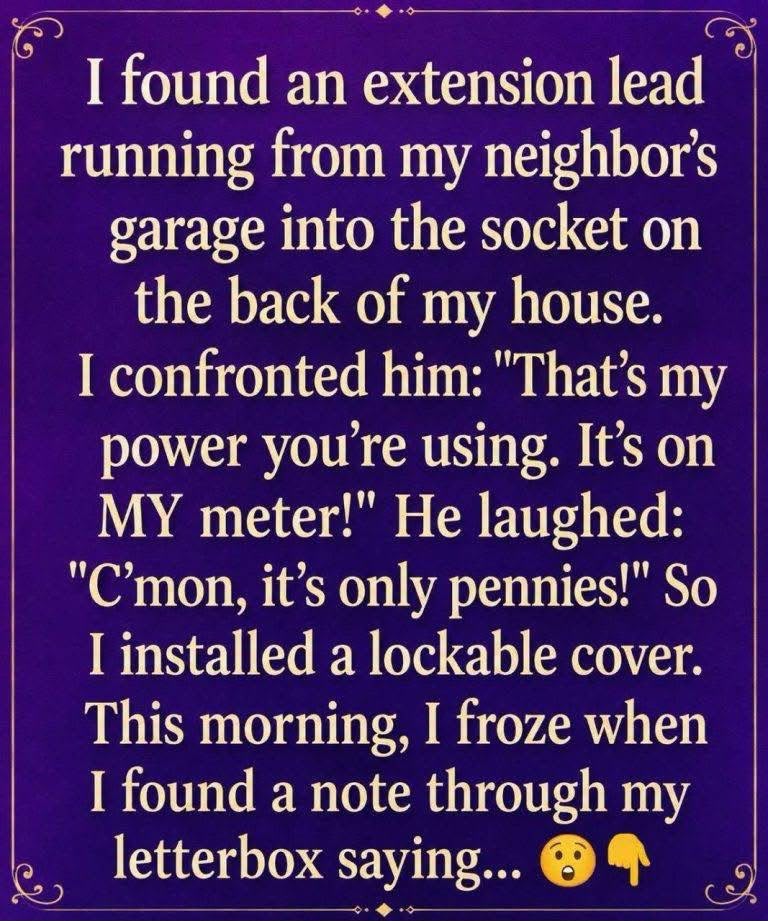
Imagine coming home to find a strange extension cord snaking across your property line, plugging into your outdoor outlet, and disappearing into your neighbor’s garage. This isn’t a scene from a far-fetched sitcom; it’s a real-world scenario that can escalate from a minor annoyance to a serious legal matter. The story of the neighbor who dismissed electricity theft as “only pennies” touches upon fundamental issues of property rights, financial responsibility, and the complexities of modern community living. When the situation involves utility meters, security measures, and retaliatory notes, it becomes a case study in how seemingly small disputes can spiral into significant legal and financial headaches. Let’s unravel this complex web of neighbor disputes, property law, and the true cost of stolen power.
When Charity Becomes Theft: Understanding the Scope of Power Usage
The core of this conflict lies in the unauthorized consumption of electricity, a utility that, while sometimes metered in “pennies” per hour for a single device, adds up significantly over days, weeks, and months. A single extension lead powering a freezer, a string of workshop tools, or even just an always-on light can consume a surprising amount of energy. Utility companies charge for electricity based on kilowatt-hours (kWh). While one kWh might cost a relatively small amount (often ranging from 10 to 30 cents depending on location and provider), a continuous draw can easily amount to dozens of kWh per month, translating to a monthly bill increase that is far from negligible.
The neighbor’s minimization of the issue—”C’mon, it’s only pennies!”—reveals a fundamental disconnect. It minimizes the financial impact on the victim and ignores the principle of consent. Even if the financial cost was trivial, the act of unilaterally connecting to another person’s metered service is a violation of property rights and constitutes theft. It’s not about the money; it’s about the unauthorized use of one’s property and the potential for further encroachment.
Financial Strain and Meter Tampering
For many households, an unexpected increase in their electricity bill can create genuine financial strain. When budgets are tight, even an extra $20 or $30 a month can disrupt financial planning and savings goals. Furthermore, the act of plugging into an existing outdoor socket bypasses the neighbor’s own electrical panel and meter. This direct connection is not only theft but also a form of meter tampering, albeit an indirect one. While the homeowner’s meter is still accurately recording the total consumption, the source of that consumption is unauthorized. This can sometimes lead to confusion when reviewing bills and can complicate matters if the utility company suspects any irregularities.
The “Pennies” Myth vs. Reality: A Cost Breakdown
Let’s put the “pennies” claim to the test with a realistic example. A standard 100-watt incandescent light bulb left on 24/7 consumes 0.1 kWh per hour. Over a 30-day month, that’s 72 kWh. If the electricity rate is $0.20 per kWh, that’s $14.40 of stolen electricity. A small refrigerator in a garage might use 1-2 kWh per day, or 30-60 kWh per month, costing $6.00 to $12.00. While these figures might not break the bank individually, they are certainly more than “pennies,” and they represent a real, recurring financial loss for the homeowner. The cumulative effect over a year can be hundreds of dollars, which is a significant sum for most families.
Property Lines, Easements, and Legal Boundaries
The situation described also highlights the importance of understanding property lines and easements. Your property rights typically extend to the outermost walls of your house and the land described in your deed. An extension cord running from your neighbor’s garage to your house means that your neighbor has physically trespassed onto your property. The cord itself is an encroachment.
Easements are another critical factor. An easement grants someone other than the owner a legal right to use a specific portion of another person’s property for a limited purpose (e.g., a utility company needing access to a power pole on your land). Unless there’s a specific, recorded easement that would allow your neighbor to run electrical lines across your property (which is extremely unlikely for a standard residential setup), their actions are illegal. Even if there were an easement, it would likely be for a utility company, not a private individual.
The Legality of Utility Theft
Utility theft, including electricity theft, is a criminal offense in most jurisdictions. It’s often classified as larceny, fraud, or a specific statute related to utility tampering. Law enforcement takes these crimes seriously, as they not only represent a financial loss to the victim but can also be dangerous. The person stealing the power may be using unsafe wiring practices, creating fire hazards that put both properties at risk. The victim, upon discovering the theft, has a right to involve the police and press charges.
Proving the Case and Documenting the Evidence
If you find yourself in this situation, documentation is key. Before confronting the neighbor, it’s wise to gather evidence:
- Photographs and Video: Clearly document the connection point, the extension cord, and its path from your socket to your neighbor’s property. Time-stamped photos are ideal.
- Witness Statements: If anyone else saw the connection, get their statement.
- Utility Bills: Keep records of your electricity bills to show the increase in consumption during the period of the theft. A sudden, unexplained spike can serve as supporting evidence.
- Log of Events: Maintain a detailed timeline of when you discovered the cord, when you confronted your neighbor, and any subsequent interactions or incidents.
The Role of Legal Services
Resolving such a dispute may require legal intervention. Consulting with an attorney who specializes in real estate or property law can provide clarity on your rights and legal options. They can advise you on sending a formal cease-and-desist letter, pursuing a civil lawsuit for damages, or assisting with the criminal complaint process. Legal services, while an initial cost, can be invaluable in protecting your property and preventing future issues.
The Neighbor’s Retaliation: A Concerning Escalation
The story takes a sinister turn when the homeowner, having secured their property with a lockable cover, discovers a note through their letterbox. While the content of the note is not explicitly stated, the implication of the cliffhanger (“…🤔👇”) is that it is not a pleasant or apologetic message. This escalation signifies a breakdown in neighborly communication and a shift from a simple misunderstanding to something more malicious.
A note in this context could range from passive-aggressive complaints about the homeowner’s actions to outright threats. This is a serious red flag. It suggests that the neighbor feels entitled to the power and views the homeowner’s perfectly reasonable action of securing their own property as an affront. This type of behavior can create a hostile living environment and may require involving law enforcement, especially if the note contains any threats of harm or vandalism.
Managing Neighbor Disputes: From Mediation to Legal Action
When communication breaks down, resolving a neighbor dispute can become challenging. Options include:
- Mediation: A neutral third-party mediator can facilitate a conversation and help both parties find a mutually agreeable solution. This is often a cost-effective way to resolve conflicts before they escalate to legal action.
- Homeowners Association (HOA): If you live in an HOA, they may have bylaws and procedures for handling neighbor disputes. Contacting the HOA board or management company can be a first step.
- Police Report: If there are threats, harassment, or evidence of criminal activity (like the utility theft itself), filing a police report is essential. This creates an official record and can be used as evidence if further legal action is needed.
- Restraining Order: In extreme cases where threats of violence are involved, a restraining order may be necessary to ensure the homeowner’s safety.
Property Security and Prevention
The homeowner’s action of installing a lockable cover is a proactive and effective measure to prevent future power theft from that specific outlet. However, this may not solve the underlying problem or prevent the neighbor from trying to access electricity from another source, such as a different outdoor socket or even a main panel if it’s accessible.
Investing in overall property security can be a wise investment. This includes:
- Motion-Activated Lighting: Deters trespassers and illuminates potential entry points.
- Security Cameras: Provides continuous monitoring of your property and can capture evidence of any wrongdoing.
- High-Quality Locks: Ensures all doors and gates are secure.
- Fencing: Creates a physical barrier that defines your property line and discourages unauthorized access.
Broader Considerations: Beyond the Power Cord
While the immediate issue is electricity theft, this situation touches upon several broader life considerations:
Financial Planning and Asset Protection
Utility theft is a direct hit to your personal finances. Protecting your assets means not only securing your bank accounts but also safeguarding your property from unauthorized use that can lead to unexpected bills and potential liability. It underscores the importance of regular financial check-ins and an awareness of your household expenses. An unexplained increase in a utility bill should always be investigated.
Risk Management and Insurance
The unauthorized connection of an extension lead creates a fire hazard. If that faulty connection or the overloaded circuit were to cause a fire that damaged both properties, the homeowner could face serious legal and insurance ramifications. It’s crucial to understand your homeowner’s insurance policy and what it covers in terms of liability for events that occur on your property, even if caused by a third party. Risk management involves identifying potential hazards and taking steps to mitigate them.
Personal Safety and Well-being
A threatening note from a neighbor is a direct challenge to your personal safety and peace of mind. Feeling unsafe in your own home can have a significant impact on your mental and emotional well-being. It’s important to take any threats seriously and to prioritize your safety above all else. This may involve taking steps to document the harassment and, if necessary, involving law enforcement to ensure your protection.
Long-Term Business and Investment Planning
For many people, their home is their single largest investment. A persistent, unresolved dispute with a neighbor can devalue your property and make it more difficult to sell in the future. Long-term investment planning should therefore include maintaining positive (or at least neutral and respectful) relationships with neighbors and promptly addressing any issues that could negatively impact your property’s value or your ability to enjoy it.
Conclusion: Securing Your Home, Your Power, and Your Peace
The tale of the extension lead is more than just an anecdote about a cheeky neighbor; it’s a valuable lesson in property rights, the importance of documentation, and the necessity of taking decisive action when faced with theft and intimidation. By understanding the legal ramifications of utility theft, documenting the evidence, and considering legal counsel, homeowners can protect themselves from financial loss and further encroachment.
Furthermore, this story highlights the critical importance of personal safety and well-being. When a neighbor dispute escalates to threats or harassment, it’s no longer just a matter of property; it’s a matter of your personal security. Taking proactive steps to secure your property, both physically and legally, is essential for maintaining a safe and peaceful home environment.
Ultimately, the neighbor’s dismissal of power theft as “only pennies” reveals a fundamental disregard for the law and for the rights of others. It’s a reminder that you are your own best advocate when it comes to protecting your home, your finances, and your peace. Don’t let anyone steal your power—literally or figuratively. Be vigilant, know your rights, and don’t hesitate to take the necessary steps to ensure your security and well-being.
FAQ Section
Q: Can my neighbor legally run an extension cord onto my property? A: No. Unless there is a specific, recorded easement (which is highly unlikely for this type of situation), running an extension cord onto your property constitutes trespassing and is illegal. It also likely violates local electrical codes.
Q: What should I do if I suspect my neighbor is stealing electricity? A: First, document everything with photos, video, and time stamps. Then, confront your neighbor politely but firmly and ask them to remove the cord. If they refuse or become aggressive, do not escalate the situation further. Immediately contact your local law enforcement non-emergency line to report the theft and any threatening behavior. You may also want to contact your utility company to report a potential safety hazard and meter tampering.
Q: Is it worth calling the police over “only pennies” of electricity? A: Yes. Utility theft is a crime, and the financial loss can be more significant than your neighbor claims. More importantly, their actions demonstrate a disregard for your property rights and safety. Involving the police creates an official record and provides a legal pathway to resolve the issue and prevent future incidents.
Q: What are the legal ramifications for my neighbor? A: Your neighbor could face criminal charges for theft of services, trespassing, and potentially meter tampering. They could also face civil liability for any damages caused (e.g., increased electric bills, fire damage). The specific penalties vary by jurisdiction but can include fines, restitution, and even jail time.
Q: How can I prevent my neighbors from using my outdoor outlets? A: The most effective and simplest solution is to install lockable covers over your outdoor electrical outlets. These covers prevent anyone from plugging in a cord without a key. You can also improve your overall property security with motion-activated lighting and security cameras.
Q: Can my landlord help with a dispute over electricity theft in a rental property? A: Yes. If you are renting, you should immediately report the issue to your landlord or property manager in writing. They have a responsibility to address any illegal activity on the property and ensure that your leased space is safe and secure. They can take steps to confront the other tenant or involve the authorities.
Q: What if the note was a threat? A: If the note contains any threats of harm, violence, or property damage, it should be treated very seriously. Keep the note as evidence and immediately file a police report for harassment and making threats. You may need to pursue a restraining order to protect yourself.
