
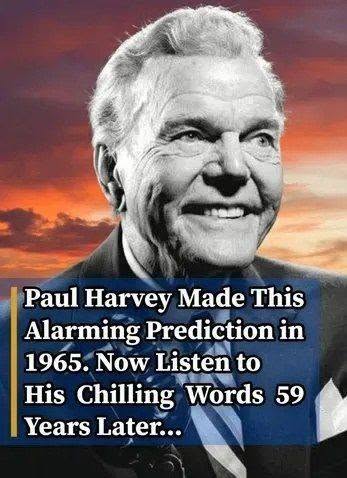
History often repeats itself in unexpected ways, leaving modern society to wonder whether past visionaries possessed a crystal ball. Radio broadcasting legends like Paul Harvey captured the attention of millions with his iconic broadcasts, captivating delivery style, and signature phrase, “Page Two.” Decades ago, Harvey delivered broadcasts that warned of cultural shifts, political changes, and technological transformations that sound remarkably descriptive of the world we navigate today.
When examining long-term cultural evolution, media influence, and societal trends, drawing parallels to historical commentary provides valuable perspective. Just as wise individuals consult an attorney or legal services for protection, evaluate a mortgage or loan contract, manage health insurance policies, or build a robust investment and retirement portfolio, understanding the historical context of our current society requires careful analysis. This complete story explores Paul Harvey’s famous 1965 predictions, the accuracy of his foresight, and why his words continue to resonate chillingly decades later.
The Context of 1965: A Rapidly Changing World
To understand why Paul Harvey’s mid-1960s broadcasts struck such a powerful chord, one must examine the era. The 1960s was a decade of intense transformation characterized by rapid technological advancement, shifting social norms, cultural rebellion, and political tension.
During this period, mass media was expanding rapidly through television and nationwide radio syndication. Broadcasters held immense influence over public discourse. Paul Harvey utilized this platform not just to report the daily news, but to deliver deeply philosophical, cautionary tales about where modern civilization was heading if it lost its traditional anchors.
Key Themes of Mid-Century Broadcasts
Harvey’s commentaries frequently centered around several core pillars of American society:
- Moral and Cultural Shifts: Warning against the erosion of traditional community values and personal accountability.
- Technological Dependence: Questioning whether rapid automation and convenience would ultimately isolate human beings from one another.
- Media and Information Overload: Highlighting the dangers of a society constantly saturated with sensationalized headlines and fast-paced media narratives.
Deconstructing the “Chilling” Words
When modern listeners revisit archival recordings of mid-century broadcasts, certain passages stand out for their uncanny accuracy regarding contemporary struggles. Whether discussing the breakdown of civic dialogue, the complexities of modern business and investment, or the changing landscape of education and technology, the predictive commentary often feels less like history and more like current headlines.
When a public figure forecasts cultural trajectories with striking precision, it triggers a powerful psychological reaction among listeners. It forces people to reflect on how choices made decades ago shaped today’s economic, legal, and social environment.
Practical Tips for Navigating Modern Societal Shifts
Living in a fast-paced, digitally connected world filled with constant information streams requires deliberate mental grounding. Here are practical strategies to stay balanced amidst modern cultural and technological changes:
- Practice Digital Mindfulness: Limit your daily exposure to sensationalized news cycles and social media feeds to protect your mental health and clarity.
- Focus on Foundational Values: Prioritize strong community connections, family relationships, and personal integrity regardless of external cultural shifts.
- Secure Your Financial and Legal Future: Just as cultural trends fluctuate, ensure your personal security by maintaining up-to-date health insurance, legal documents, and retirement investments.
- Evaluate Information Critically: Always verify sources and look past emotional headlines to understand the deeper context of modern media narratives.
- Engage in Lifelong Learning: Adapt to technological and economic changes by continuously updating your skills, financial literacy, and professional knowledge.
Interesting Facts About Radio Broadcasting History
The golden age of radio broadcasting and iconic commentators like Paul Harvey left an indelible mark on media history:
- A Historic Broadcasting Career: Paul Harvey broadcasted nationally for over fifty years, reaching tens of millions of loyal listeners weekly through ABC Radio Networks with his distinctive cadence and dramatic pauses.
- The Power of Audio Storytelling: Before 24-hour cable news and internet streaming, syndicated radio commentators were the primary source of daily national reflection and editorial storytelling.
- Archival Longevity: Today, digital platforms and social media have given classic historical broadcasts a second life, introducing legendary voices to entirely new generations of listeners decades later.
Conclusion
Whether viewed through the lens of prophecy, keen sociological observation, or nostalgic reflection, Paul Harvey’s 1965 broadcasts remain a fascinating artifact of American media history. His ability to look at the emerging trends of his time and extrapolate their long-term consequences demonstrates the value of critical thinking and historical awareness. By examining how past warnings align with our present-day realities, we gain a deeper appreciation for the choices we make today and their impact on the generations to come.
Frequently Asked Questions (FAQ)
Who was Paul Harvey?
Paul Harvey was one of the most famous and influential American radio broadcasters and commentators of the 20th century, known for his syndicated news programs and dramatic storytelling style.
Why do historical predictions capture so much attention online?
Historical predictions often resonate because they highlight universal human patterns, technological anxieties, and cultural shifts that span across generations, making past commentary feel remarkably relevant to modern life.
How can I find archival recordings of classic broadcasts?
Many historical speeches, radio broadcasts, and editorial recordings are preserved in digital archives, educational repositories, and streaming podcast platforms dedicated to media history.
