
Introduction
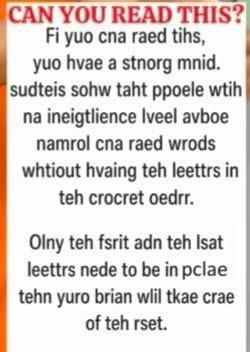
Deceptively simple linguistic puzzles and scrambled text challenges possess an undeniable magnetism across social media platforms. When an image appears featuring jumbled words where only the first and last letters remain in place—such as a cognitive test asking users if they can read the text—it instantly triggers widespread curiosity, debate, and engagement. Users eagerly decode the message, rush to the comment sections to share their thoughts, and compare their reading speed with friends.
Exploring why these text-based teasers go viral provides a fascinating look into human cognitive processing, language perception, and digital culture. By examining how the brain decodes jumbled patterns and contextual clues, we can better understand how perception, memory, and cognitive shortcuts shape our everyday problem-solving skills.
The Mechanics of Typoglycemia and Cognitive Processing
Human thinking relies heavily on gestalt psychology and mental shortcuts (heuristics) to process language quickly. When reading a sentence where internal letters are mixed up (a phenomenon often called typoglycemia), the human brain doesn’t read every single letter individually; instead, it recognizes whole words based on context, word length, and anchor letters.
However, scrambled text puzzles are specifically designed to highlight these automatic cognitive patterns. Recognizing the message requires shifting from a quick glance to active linguistic decoding, which is why these challenges frequently captivate users and spark passionate comment discussions.
Practical Tips for Enhancing Analytical and Problem-Solving Skills
Sharpening your cognitive agility and observational abilities can improve both your mental sharpness and everyday verbal focus. Here are several practical strategies to boost your attention to detail:
- Scan Contextually: Rely on surrounding words and sentence structure to decode unfamiliar or jumbled letter sequences quickly.
- Focus on Anchor Letters: Look closely at the first and last letters of words to anchor your visual processing.
- Take Visual Breaks: Avoid eye strain and mental fatigue by resting your eyes and stepping away briefly during extended puzzle tasks.
- Engage in Brain Training: Regularly solve word puzzles, anagrams, and reading challenges to keep your cognitive pathways agile.
- Prioritize Restful Sleep: Quality sleep is essential for maintaining optimal focus, working memory, and cognitive endurance.
Interesting Facts About Human Logic and Brain Teasers
The psychology of visual and text puzzles is filled with astonishing insights. Consider these fascinating facts:
- Whole-Word Recognition: Skilled readers process words as visual shapes rather than sounding out every letter, which is why scrambled sentences remain legible.
- The Power of Curiosity Gaps: Puzzles that prompt readers to test their reading skills naturally trigger high social media engagement because people love validating their perception or sharing results.
- Universal Appeal: Text challenges cross cultural and language barriers effortlessly, serving as global icebreakers and interactive community tests.
- Digital Shareability: Content that invites users to participate directly—such as challenging them to read a jumbled message—consistently achieves high comment and share rates online.
The Broader Impact: Education, Technology, and Design
While text puzzles serve primarily as lighthearted entertainment for social media users, the principles behind pattern recognition and visual processing are vital in many professional fields. In user interface design, optical character recognition (OCR), and linguistic education, understanding how the human brain parses imperfect visual data ensures better communication outcomes.
Conclusion
Viral text puzzles remind us of how easily our brains rely on contextual shortcuts rather than letter-by-letter reading. Whether you decoded the scrambled message instantly on your first try or needed a moment to look closer, these engaging challenges offer a fun way to test our cognitive limits. By understanding the science behind language processing and keeping our minds active with playful puzzles, we can continue to sharpen our analytical skills every day.
Frequently Asked Questions (FAQ)
1. Why do scrambled text puzzles go viral so easily on social media?
Text puzzles create an interactive curiosity gap, prompting users to test their reading speed, compare answers with friends, and debate solutions in the comment sections.
2. Why are we able to read sentences with jumbled letters?
The brain relies on whole-word recognition, context, and anchor letters (the first and last letters of a word) rather than reading every individual letter sequentially.
3. Can practicing word puzzles improve cognitive function?
Yes, regularly engaging in language-based puzzles that require pattern recognition helps train the brain’s cognitive pathways and improves mental agility.
4. Why do people often experience different reading speeds for scrambled text?
Reading speed varies based on individual visual processing skills, familiarity with English vocabulary, and overall concentration levels.
