
Introduction
In the fast-paced ecosystem of modern social media, few posts capture public attention quite like visual puzzles. Whether scrolling through a Facebook feed during a lunch break or taking a quick break from a demanding workday, millions of internet users routinely stop to examine images featuring missing puzzle pieces, optical illusions, or shape-matching challenges. These engaging visual riddles often look straightforward at first glance, yet they instantly ignite vibrant comment sections filled with users debating the correct answer, comparing notes, and challenging their friends.
Why do these visual puzzles hold such magnetic appeal? Beyond serving as lighthearted entertainment, shape-matching games tap into foundational principles of human visual processing, spatial reasoning, and pattern recognition. They challenge our brains to shift from passive scrolling to active investigation, delivering a rewarding sense of satisfaction when we finally uncover the correct match.
However, the cognitive benefits of engaging with visual puzzles extend far beyond casual amusement. In professional environments spanning education, technology, legal services, risk management, and finance, sharp spatial awareness and attention to detail are critical. Whether an analyst is reviewing complex data structures, an attorney is examining fine print in a contract, or an investor is analyzing market indicators, the ability to notice subtle geometric and contextual nuances can mean the difference between success and error. In this comprehensive guide, we will explore the neuroscience behind visual perception, examine why puzzle challenges go viral, and discuss how cultivating keen observational skills enhances our personal and professional lives.
The Science of Spatial Reasoning and Visual Perception
Human vision is a complex masterpiece of biological engineering. When we look at an image containing a missing cutout, our eyes do not simply capture a static photograph. Instead, our visual cortex rapidly analyzes edges, contours, and textures, comparing the negative space against multiple potential options through a process known as shape constancy.
How Our Brains Process Jigsaw Puzzles
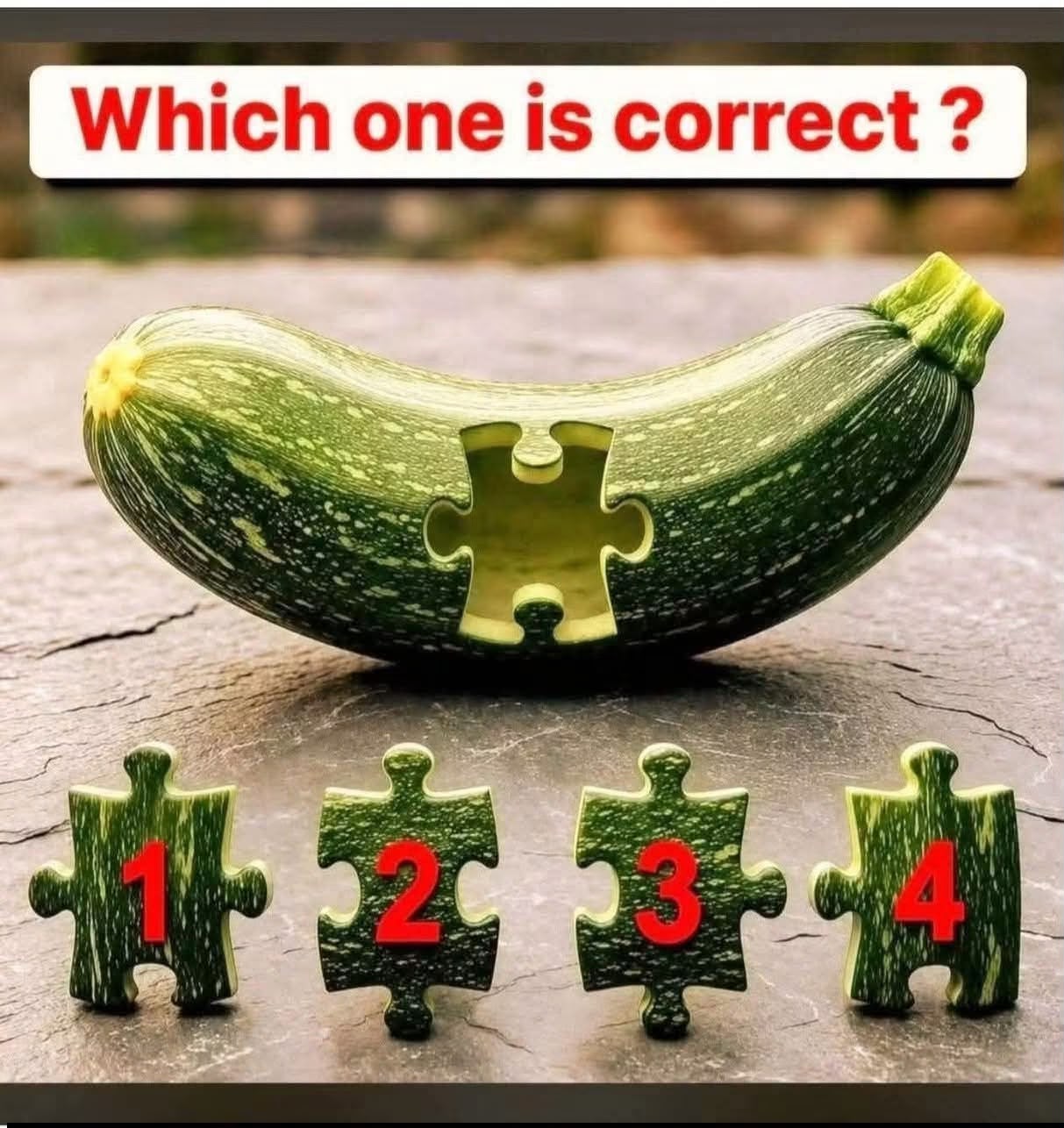
When creators design missing-piece challenges—such as matching a cutout on a vegetable or object with numbered pieces—they test the brain’s ability to mentally rotate and scale geometric forms.
- Contour Analysis: The viewer’s eyes immediately scan the indentations and protrusions of the empty gap, noting whether tabs point inward or outward.
- Mental Rotation: The brain mentally rotates each numbered option to test alignment against the negative space.
- Texture and Grain Matching: Beyond shape alone, subtle details like surface patterns, color gradients, and striping must align perfectly for a piece to be correct.
The Role of Dopamine in Puzzle Solving
Every time a person successfully identifies the matching piece that fits a complex gap, the brain releases a small burst of dopamine—the neurotransmitter responsible for pleasure and reward. This chemical reward loop explains why visual puzzles are so addictive and why users feel compelled to share them with others, driving massive organic engagement across social media platforms.
Professional Applications of Spatial and Observational Sharpness
While matching puzzle pieces in an internet meme is fun, the underlying cognitive skills required to parse complex visual fields translate directly into high-stakes professional fields.
Finance, Investment, and Risk Management
In the financial sector, professionals must sift through vast amounts of data to identify trends, discrepancies, or hidden risks. Whether evaluating investment portfolios, auditing corporate accounts, or assessing a mortgage loan application, meticulous attention to detail prevents costly miscalculations and safeguards financial assets.
Legal Services and Regulatory Compliance
Attorneys, paralegals, and compliance officers review dense legal documents, contracts, and regulatory frameworks where a single overlooked clause can alter the outcome of a case. Developing strong visual and textual scanning skills ensures thoroughness and accuracy in legal services.
Technology, Healthcare, and Education
In technology and engineering, software developers and quality assurance specialists scan lines of code for subtle syntax errors or structural misalignments. Similarly, medical professionals rely heavily on visual diagnostics to spot anomalies in scans and imagery. Cultivating observational focus through puzzles and continuous learning strengthens these vital neural pathways.
Practical Tips to Sharpen Your Visual and Mental Agility
If you want to improve your observation skills, spatial reasoning, and cognitive processing speed, incorporating a few daily habits can make a dramatic difference:
- Practice Spatial Puzzles Regularly: Engage with jigsaw puzzles, tangrams, and shape-matching exercises to keep your visual cortex agile.
- Minimize Multitasking: When performing tasks that require deep concentration, eliminate digital distractions to allow your brain to focus fully on the details.
- Take Strategic Breaks: Brief pauses during demanding work sessions help reduce mental fatigue and restore visual sensitivity.
- Prioritize Restful Sleep: Adequate sleep is essential for consolidating memories and maintaining sharp cognitive performance throughout the week.
Interesting Facts About Spatial Reasoning and the Brain
- Evolutionary Roots: Our ability to recognize shapes, contours, and fitting objects evolved over millions of years as a crucial survival mechanism for tool-making and navigation.
- Viral Algorithms: Social media algorithms heavily favor content that drives high comment volume. Because visual puzzles naturally lead people to debate which numbered option is correct (“It’s definitely 3, look at the tabs!”), they achieve massive viral distribution.
- Cognitive Flexibility: Regularly challenging your spatial intelligence helps maintain mental plasticity, slowing age-related cognitive decline and improving everyday problem-solving.
Conclusion
Visual puzzles and shape-matching challenges are much more than passing internet fads; they are engaging reflections of how our brains process the physical world. By slowing down, analyzing contours methodically, and training our observational skills, we overcome the limitations of quick assumptions and discover the exact right fit. Whether you are balancing a budget, reviewing a complex document, or simply enjoying a brain teaser with friends online, sharpening your attention to detail enriches every aspect of life. Keep challenging your mind, stay curious, and enjoy the journey of discovery!
FAQ Section
Why are some visual matching puzzles so difficult to solve quickly?
Difficult puzzles often use distractor pieces with very similar tab configurations, forcing the viewer to look closely at subtle differences in angles, proportions, and surface textures.
How do spatial puzzles benefit cognitive health?
Regularly solving shape and jigsaw puzzles stimulates neuroplasticity, improves working memory, enhances concentration, and strengthens spatial reasoning skills.
What is the best way to improve spatial intelligence?
Consistent practice with physical or digital puzzles, studying geometric relationships, and training yourself to analyze component parts methodically rather than relying on quick guesses are proven ways to boost spatial skills.
