
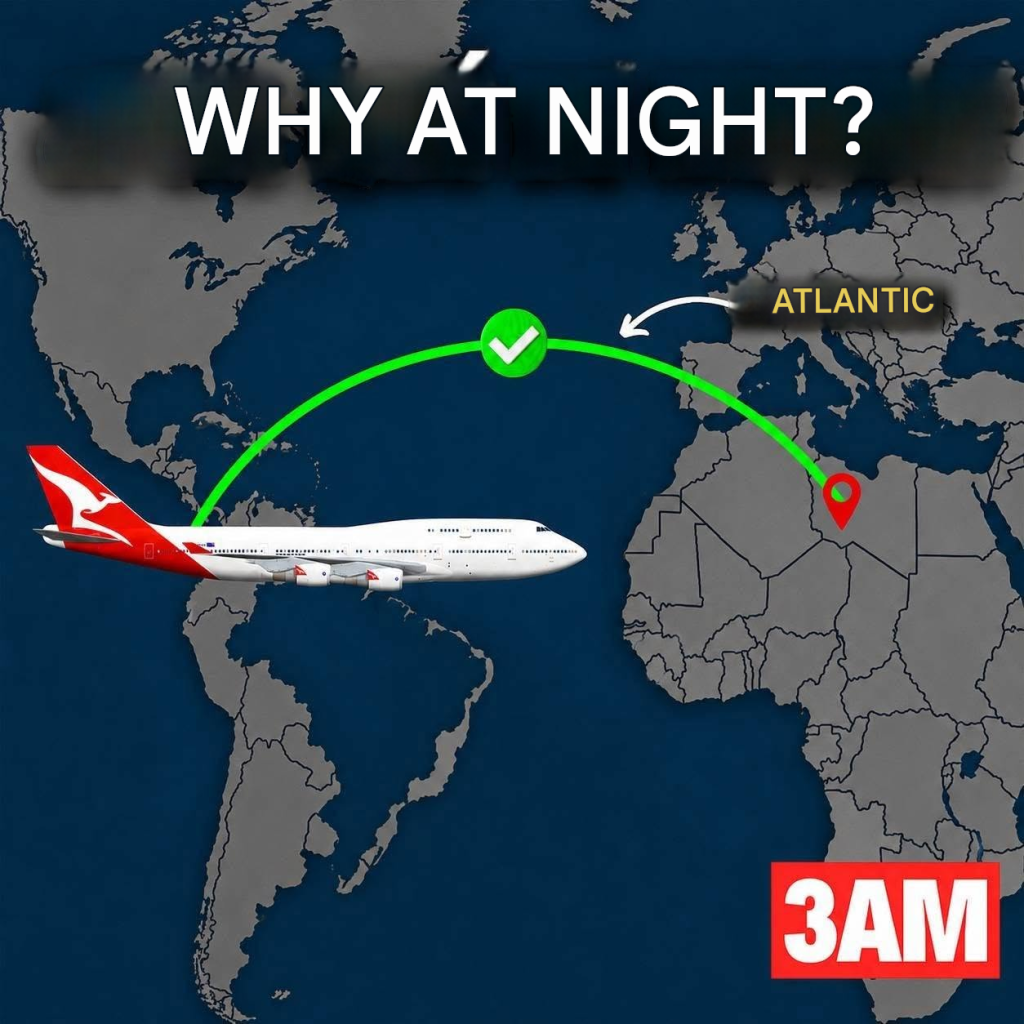
You’ve booked your dream vacation. You’re excited about exploring new cultures, sampling exotic cuisine, and maybe even networking for your business or investment portfolio in a foreign market. Everything is perfect, except for one tiny detail: your flight. You see the departure time: 11:45 PM, landing at 3:00 AM local time. A wave of fatigue hits you instantly. “Why,” you groan, “would anyone choose to fly at this ungodly hour? Surely there’s a better option for my health and sanity?”
It turns out, the airline industry’s preference for these “red-eye” flights, particularly the long-haul transatlantic routes, is not a conspiracy to torture you. It is a meticulously calculated decision driven by complex financial modeling, operational efficiency, and believe it or not, enhanced safety. While it may not be the most comfortable way to travel, the 3 AM arrival—often preceded by a midnight departure—is a cornerstone of modern global aviation.
Understanding the reasons behind this scheduling requires us to look beyond the passenger experience and into the nuts and bolts of the airline business, a sector deeply intertwined with global finance, insurance, and technology. This article will dissect the multifaceted logic of the overnight flight, exploring why these routes exist, how they are managed, and what they mean for you, the frequent traveler.
Maximizing Asset Utilization: The Billion-Dollar Machine
At the heart of the airline industry lies a simple, brutal truth: an aircraft is only making money when it is in the air. A grounded plane, whether for maintenance or simply sitting at a gate, is a liability. It represents millions of dollars in capital investment, insurance premiums, and financing costs that are not generating revenue. Therefore, airlines strive to keep their fleets active for the maximum number of hours each day.
For a major carrier, a wide-body aircraft like the Boeing 777 or Airbus A350 used for transatlantic routes costs upwards of $300 million. If this asset sits idle for eight hours overnight, it is a massive, wasted opportunity. By scheduling a departure just before midnight and an arrival just after 3 AM, the airline can achieve two critical things:
- Capitalizing on the Late Evening Rush: Airlines operate “banks” of flights at their major hubs. The late evening bank brings passengers from all over the United States (or Europe) into major gateway cities like New York, Chicago, or London. These passengers are then consolidated onto the long-haul flight departing for the opposite continent. This maximizes the passenger load factor, which is crucial for profitability.
- Positioning the Aircraft for the Morning Rush: This is the key. The plane lands at its European destination (e.g., London, Paris, Frankfurt) at 3:00 AM or 4:00 AM. It then sits at an off-peak, inexpensive gate for a few hours. By 7:00 AM or 8:00 AM, it is perfectly positioned to be cleaned, restocked, and refueled to fly back to the US as a morning departure. This allows the aircraft to complete one transatlantic round-trip per day, effectively doubling its revenue-generating potential compared to a schedule where it only flew in one direction per day.
If the airline were to schedule a daytime flight departing the US at 10:00 AM and landing in Europe at 10:00 PM, the aircraft would be stuck in Europe overnight, unable to return until the next day. The 3 AM arrival is, therefore, a masterclass in asset utilization.
The Financial Engine: How Overnight Flights Drive Revenue
The economics of these routes go beyond just keeping the plane moving. They are deeply integrated with the overall financial health of the airline.
Lower Operational Costs and Fees
Airports are complex businesses themselves. Landing fees, gate usage charges, and other operational costs are significantly higher during the day when demand is at its peak. European airports, in particular, are often slot-constrained. Landing a large aircraft at Heathrow at 8:00 AM is exponentially more expensive than landing it at 4:00 AM.
By arriving in the pre-dawn hours, airlines often negotiate lower landing and handling fees. While there may be a skeleton crew of ground staff, their services are cheaper, and the overall terminal operations are less congested. This cost reduction, multiplied over hundreds of flights, contributes significantly to the bottom line, supporting the airline’s investment in new aircraft and technology.
Enabling Seamless Business Connections
The 3 AM arrival is often the unsung hero of the business world. For a corporate executive, a consultant, or an entrepreneur, arriving at 3 AM offers a unique advantage. They can check into a hotel, grab a few hours of sleep, and be ready for a full day of meetings by 9:00 AM.
This efficiency makes these flights highly attractive to the lucrative business-class traveler, who pays a premium for flexibility and time-saving. In fact, many transatlantic flights are heavily subsidized by the revenue generated from business and first-class tickets. Airlines, therefore, design their schedules to cater to this demographic. An overnight flight is often seen as a “day saved,” which, for a high-level professional, is a significant return on investment.
Facilitating Global Cargo Operations
Passenger planes do not just carry people; they also carry a substantial amount of high-value cargo in their bellies. The transatlantic corridor is a major artery for international trade. Goods that require expedited shipping—such as sensitive medical supplies, high-tech components, legal documents, or time-sensitive financial data—are often transported in the cargo holds of passenger jets.
The overnight flight schedule fits perfectly with the logistics of air freight. Goods can be loaded in the US evening, flown overnight, and be ready for customs clearance and distribution in Europe by the start of the business day. This integrated revenue stream (passengers plus cargo) makes these routes even more profitable and resilient, much like a diversified investment portfolio.
The Surprising Safety Case for “Unsocial Hours”
Counterintuitively, the 3 AM arrival can be a safer option, both for the flight crew and the ATC (Air Traffic Control) system.
Optimizing Air Traffic Control (ATC) and Airport Congestion
During the day, major airports are scenes of organized chaos. Runways are operating at maximum capacity, and ATC controllers are managing hundreds of movements per hour. This high-tempo environment, while efficiently managed, inherently carries a greater risk of operational errors, such as runway incursions or communication mix-ups.
In contrast, the overnight airspace is relatively empty. When the transatlantic flight is cruising over the Atlantic at 2:00 AM, there are fewer aircraft to coordinate with. Similarly, when the plane descends into a major European hub at 3:00 AM or 4:00 AM, it has the runway and taxiways largely to itself. This reduced traffic load allows ATC controllers to provide more focused attention to each flight, and it gives pilots a less stressful approach and landing phase. The lack of ground congestion also minimizes the risk of ground accidents.
Managing Pilot Fatigue and Performance
The human body is not designed to be awake and performing complex tasks at 3 AM. This is why pilot scheduling is one of the most regulated and carefully managed aspects of aviation. Airlines and regulators, often in consultation with medical experts, design schedules that account for circadian rhythms.
Pilots flying a “red-eye” from west to east are typically scheduled for a period of rest in the crew bunk during the flight. This strategic napping ensures they are well-rested for the critical approach and landing phase, which often happens when they would naturally be at the lowest point of their alertness. Furthermore, such flights are always operated by an augmented crew (more than the standard two pilots) to ensure continuous vigilance.
In fact, some pilots prefer these overnight routes precisely because they avoid the peak-hour congestion. The landing phase is often described as “less frenetic,” allowing for a smoother, more controlled arrival.
The Passenger Experience: Balancing Discomfort with Efficiency
For all the financial and operational benefits, the passenger experience on an overnight flight is the primary point of friction. It is a trade-off of time and money for comfort. Let’s explore the realities of the 3 AM arrival for the traveler.
The “Day Saved” vs. The “Zombie Day”
The core proposition of the overnight flight is maximizing time at the destination. A departure at midnight and an arrival at 3 AM means you haven’t “wasted” a travel day. You can land, sleep for a few hours, and start your vacation or business trip fresh.
However, this ideal scenario requires the ability to sleep on a plane. For many, this is a challenge. The resulting lack of sleep can lead to a “zombie day,” where you are fatigued, irritable, and less able to enjoy or focus on your activities. The key to surviving this is preparation:
- Book a Premium Seat: If your budget allows, an investment in premium economy, business class, or—on some airlines—”lie-flat” seats is not just about luxury; it is a health and well-being decision. It significantly increases the chance of getting quality rest.
- Master the Art of In-Flight Sleep: Bring a high-quality neck pillow, noise-canceling headphones, an eye mask, and comfortable clothing. Consider over-the-counter sleep aids (after consulting with your doctor, of course) and stay hydrated with water, not alcohol, which disrupts sleep quality.
- Adjust to Local Time Immediately: As soon as you board, set your watch and phone to the destination’s time zone. Try to sleep when it’s night at your destination and stay awake when it’s day. This helps to reset your body’s internal clock more quickly.
Hotel and Ground Transportation Logistics
Arriving at 3 AM presents a unique logistical hurdle: you can’t just walk into a hotel and check in. Standard hotel check-in times are in the afternoon. To solve this, travelers have two options:
- Book the Night Before: This is the most common solution for business travelers. By booking the room for the night before your arrival, you ensure that a room is ready for you the moment you land. It’s an added cost, but it guarantees a smooth transition and a proper night’s sleep. It’s a smart travel investment.
- Use Airport Lounges: Many major airports have arrival lounges with showers, comfortable seating, and light refreshments. This allows you to freshen up and relax for a few hours before your hotel room is ready. It’s a cost-effective way to bridge the gap.
- Early Check-In Option: Some hotels, especially those catering to business clientele, offer a “day-use” or “early check-in” rate for a nominal fee, provided they have availability.
For ground transportation, the good news is that there is no traffic at 3 AM. A taxi, Uber, or ride-share will get you to your hotel or Airbnb in record time, often for a lower fare than during peak hours.
Practical Tips for the 3 AM Flyer
To make the most of your overnight transatlantic journey, follow these practical tips, which are a distillation of advice from frequent flyers, travel agents, and aviation experts:
- Choose Your Airline Wisely: Research which airlines offer the best long-haul economy product. Look for carriers with a reputation for more legroom, better in-flight entertainment, and superior meal service. A little extra comfort can make a big difference on a long night.
- Strategic Seat Selection: Avoid seats near the lavatories or galley (kitchen) as they are high-traffic areas. Use seat selection tools to find a window seat for a place to rest your head against the fuselage, or an aisle seat if you need to get up frequently. An exit row seat offers extra legroom but cannot be used to rest your feet on, and you must be able and willing to assist in an emergency.
- Pack a Smart “Sleep Kit”: Your personal item bag should contain an inflatable or memory foam neck pillow, a weighted eye mask, noise-canceling earbuds or headphones, and a small blanket or a large, soft scarf. This kit is your insurance policy against a sleepless night.
- Skip the In-Flight Alcohol: While a glass of wine might seem like a good way to unwind, alcohol dehydrates you at altitude and disrupts the restorative REM phase of sleep, leading to a more groggy feeling upon arrival. Stick to water and herbal tea.
- Eat a Light Meal: In-flight meals can be heavy and hard to digest, which is not conducive to sleep. Opt for a light meal before you board or bring a healthy snack with you.
- Stay Hydrated: The cabin air is extremely dry. Drink plenty of water throughout the flight. This helps to combat jet lag and makes you feel better upon landing.
- Freshen Up Before Landing: About an hour before landing, go to the lavatory to brush your teeth, wash your face, and change into a fresh shirt. This simple ritual can make a huge psychological difference, making you feel more awake and presentable for your 3 AM arrival.
Interesting Facts About Overnight Flights
To add a bit of trivia to your travel knowledge, here are some interesting facts about red-eye flights:
- Origin Story: The term “red-eye” originated in the United States in the 1950s, describing flights that departed from the West Coast in the evening and arrived on the East Coast in the early morning, often leaving passengers with bloodshot or “red” eyes from lack of sleep.
- Record-Breakers: The shortest transatlantic flights are from St. John’s, Canada, to London, which can be under 5 hours. The longest regular commercial flight is from Singapore to New York, which takes nearly 19 hours, often involving an “overnight” period somewhere over the Pacific.
- Human Circadian Rhythms: Research has shown that it takes approximately one day to recover for every time zone crossed when traveling eastward (e.g., New York to London). This makes the 3 AM arrival even more challenging for your body clock.
- Airline Scheduling Software: Airlines use highly sophisticated software that considers hundreds of variables, including crew availability, maintenance schedules, gate availability, and even historical weather patterns, to create these complex schedules. It’s a multi-million dollar investment in operational efficiency.
- The “Jet Stream”: Eastbound transatlantic flights often benefit from the jet stream, a powerful high-altitude wind that can push the plane along, significantly reducing flight time and fuel consumption. This tailwind is a key factor that makes the overnight eastbound flight both fast and economical.
Conclusion
The 3 AM arrival from a midnight departure is not an arbitrary quirk of scheduling; it is a calculated, sophisticated solution to the core challenges of the global airline industry. It is a testament to the relentless pursuit of asset utilization, a key driver of corporate travel efficiency, and a contributor to the overall safety and robustness of the aviation system.
While it may demand a level of resilience from the passenger, understanding the “why” behind it can transform the experience from a simple annoyance into an appreciation for the complex machinery of global travel. By being prepared, you can mitigate the discomfort and leverage the unique advantages of these flights, ensuring that your arrival, however early, is the start of a successful and productive journey.
FAQ Section
To answer some of the most common questions travelers have about these flights, we’ve compiled this FAQ:
Q: Are 3 AM arrivals cheaper than daytime flights? A: Sometimes, but not always. Pricing is dynamic and depends on many factors, including demand, competition, and how far in advance you book. Often, these flights are in high demand from business travelers, which can keep prices high. However, you may occasionally find “saver” fares on less popular days of the week.
Q: How do I get through customs at 3 AM? A: Even at that hour, airports are staffed. Immigration and customs will be open, though there may be fewer agents on duty. However, because there are fewer flights arriving at that time, the lines are often much shorter than during the busy morning bank, allowing for a faster process.
Q: What is the best way to get to my hotel at 3 AM? A: Ride-sharing apps like Uber and Lyft are generally the most convenient and reliable, as you can track the car and avoid dealing with foreign currency or language barriers. Airport taxis are also readily available in the official taxi queue.
Q: Can I pre-board my room for a 3 AM arrival? A: Yes, this is the most common and recommended approach for business travelers. You book the hotel for the previous night, ensuring you can go straight to your room and get a full night’s sleep. Contact the hotel in advance to let them know you will be a late arrival so they don’t mark you as a “no-show.”
Q: Will I get jet lag from a 3 AM arrival? A: Yes, almost certainly. Traveling eastward across multiple time zones disrupts your circadian rhythm. To minimize the impact, try to adjust to local time as soon as you board, stay hydrated, and expose yourself to natural sunlight upon arrival. A short nap (20-30 minutes) upon arrival can help, but avoid a long sleep that will prevent you from sleeping at night.
Q: How do I ensure I can sleep on the plane? A: Preparation is key. Invest in a comfortable neck pillow, noise-canceling headphones, and an eye mask. Book a premium seat if your budget allows. Avoid alcohol and caffeine, and try to relax with a book or some calming music before attempting to sleep.
