
Introduction
Modern washing machines are designed to make laundry effortless, yet millions of homeowners struggle with clothes that come out smelling musty, stale, or covered in tiny specks of gray debris. If you have ever wondered why your fresh wash cycle fails to produce that crisp, clean laundry scent, the culprit might be hiding right inside your machine.
Most people know about clearing the dryer lint filter, but few realize that washing machines—especially top-loading and high-efficiency models—contain hidden compartments, lint traps, and drain pump filters designed to catch debris, hair, and sludge. When neglected, these small compartments transform into breeding grounds for mold, bacteria, and stagnant grime. Learning how to locate, open, and clean this secret compartment once a month is an essential home maintenance routine that preserves your garments, protects your appliance, and saves you thousands of dollars in potential appliance repair, home warranty claims, and premature replacement costs.
Understanding Your Washing Machine’s Hidden Filter System
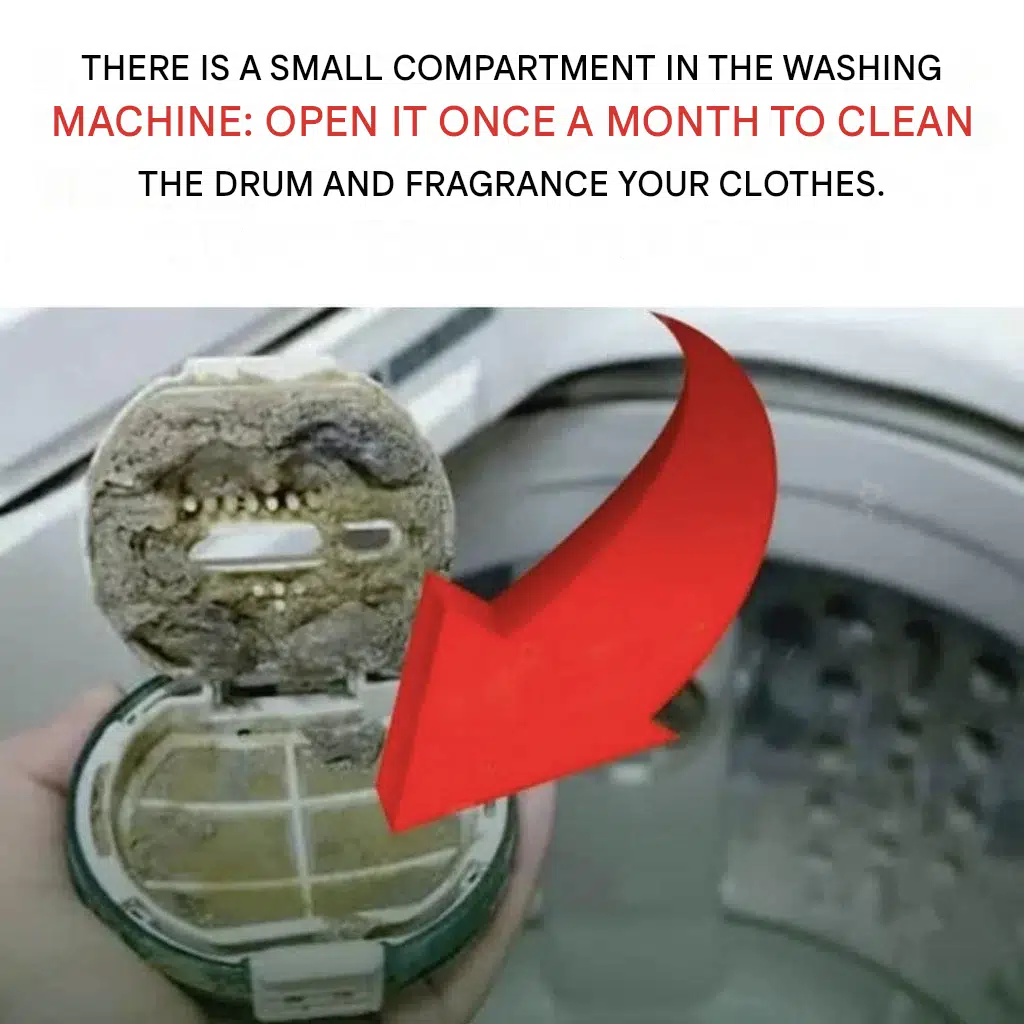
The image above highlights a removable mesh lint filter commonly found inside the drum of many top-loading washing machines. As water circulates through the cycle, it passes through this internal compartment to trap lint, pet hair, and loose particles before they can redeposit onto your clothes. In front-load washers, a similar function is served by a drain pump filter located behind a small door near the base of the machine.
Over time, detergent residue, fabric softener, mineral buildup from hard water, and organic grime collect in these filters. When left uncleaned, wet lint becomes trapped in an airtight, damp environment. This combination triggers mold growth, producing anaerobic bacteria that generate severe musty odors. Every time you run a load of laundry, water passes directly through this clogged compartment, transferring bacteria and unpleasant odors back onto your garments.
Step-by-Step Guide: How to Clean the Secret Compartment
Whether your machine utilizes an in-drum mesh filter like the one pictured or an exterior drain pump filter, performing this monthly maintenance takes less than ten minutes.
Step 1: Locate the Compartment
- In-Drum Mesh Filters (Top Loaders): Look inside the stainless steel drum. You will usually find one or two plastic housings clipped onto the side wall or built into the center agitator column. Press the release tab to pop the compartment open.
- Drain Pump Filters (Front Loaders & High-Efficiency Units): Look at the bottom front panel of your machine. There is typically a small access door or flap that can be opened using a coin or flathead screwdriver.
Step 2: Safely Remove and Drain Residual Water
If you are opening an exterior drain pump filter, place a shallow pan and a towel underneath the access door. Pull out the small emergency drain hose (if equipped) to drain trapped standing water into your container before unscrewing the main filter cap counter-clockwise.
Step 3: Remove Built-Up Lint and Sludge
Open the plastic filter casing to expose the inner mesh screen. Manually peel away thick layers of wet lint, hair, and debris. Dispose of this solid waste directly into the trash rather than washing it down your sink drain to prevent plumbing clogs.
Step 4: Scrub and Sanitize
Rinse the filter components under warm running water. Use an old toothbrush and a mixture of warm water and white vinegar or mild dish soap to scrub away sticky detergent residue and black mold spots. Wipe down the fixed housing inside the washer drum or pump cavity to ensure no hidden debris remains.
Step 5: Reassemble and Lock in Place
Ensure the mesh filter is completely dry and securely snapped back into its plastic frame. Reinsert the filter assembly back into your washing machine drum or pump housing, making sure it clicks firmly into position to prevent it from coming loose during a wash cycle.
Protecting Your Household Investment and Financial Health
Taking ten minutes a month to maintain your home appliances is more than just a cleaning habit—it is a vital financial strategy. Major home appliances represent a significant household investment. When a drain pump or internal filter becomes fully obstructed with debris, the motor experiences excessive strain, leading to premature mechanical failures.
Unexpected machine breakdowns often result in expensive emergency service calls from attorney-backed service networks or high out-of-pocket costs for replacement parts. If you rely on a home warranty or personal insurance policy, failing to perform standard manufacturer-recommended maintenance can sometimes invalidate your coverage.
Practicing preventative maintenance helps you avoid taking out high-interest loan agreements or using high-rate credit lines to buy unexpected replacement appliances. By keeping your current equipment operating efficiently, you preserve your monthly finance budget and protect long-term retirement and investment funds from preventable domestic emergencies.
Beyond the Filter: Complete Washing Machine Maintenance Tips
While cleaning the secret compartment removes the primary source of trapped sludge, achieving truly fresh and fragrant clothes requires a complete appliance hygiene routine:
- Eliminate Heavy Fabric Softeners: Liquid fabric softeners leave a silicone coating inside machine drums and filter mesh screens, accelerating grime accumulation. Replace liquid softeners with a quarter cup of distilled white vinegar added to the rinse compartment.
- Leave the Door open After Wash Cycles: Trapped moisture inside an airtight washer drum guarantees mold proliferation. Keep the washer lid or door slightly cracked between loads to promote air circulation.
- Run a Monthly Hot Cleaning Cycle: Once a month, run an empty hot water wash cycle using a specialized washing machine cleaner tablet or two cups of white vinegar to descale internal pipes and the outer tub.
- Measure Detergent Accurately: Overusing high-efficiency (HE) detergent creates excess suds that trap soil and coat internal components in sticky film. Use only the recommended amount based on load size.
Interesting Technological and Historical Facts
- Early Washing Methods: Before the invention of modern electric agitators and internal lint filters, clothes were washed manually against washboards, relying on friction and open river currents to flush away debris.
- The Evolution of Lint Traps: Early automatic washers from the mid-20th century featured top-mounted recirculating lint filters that sat directly under the water inlet. Modern HE machines rely on high-speed rotational forces and submerged filter compartments to catch micro-debris.
- Cold Water Wash Benefits: Modern washing detergents are chemically engineered with active enzymes that perform exceptionally well in cold water. Washing in cold water reduces household energy bills, prevents fabric shrinking, and prolongs garment life.
Conclusion
The hidden compartment in your washing machine plays a crucial role in maintaining fabric freshness and preventing operational breakdowns. By taking a few minutes each month to snap open this filter, remove trapped lint, and sanitize the mesh frame, you eliminate musty smells at the source, protect your clothing investment, and extend the operational life of your appliance. Integrating simple preventative steps into your routine ensures optimal performance, preserves your domestic health, and keeps your home running smoothly without unnecessary repair expenses.
FAQ Section
1. Where is this compartment located on my specific washing machine? On top-loading machines, look directly inside the washing drum along the side walls or built into the central agitator stem. On front-loading machines, it is usually located behind a small access panel door at the bottom front corner of the unit.
2. How often should I clean the washing machine filter? It is recommended to inspect and clean the filter at least once a month. If you have pets that shed heavily or regularly wash dirty work clothes, consider checking the filter every two weeks.
3. What happens if I never clean this compartment? Over time, the trapped lint and detergent residue will foster mold and bacterial growth, causing your clothes to smell musty. Severe clogs can restrict water drainage, leading to error codes, cycle failures, pump burnout, or water leaks.
4. Can I add essential oils directly into this compartment to fragrance my clothes? No. Essential oils or concentrated fragrances should not be added directly into filter compartments, as undiluted oils can degrade plastic components, clog fine mesh screens, and leave oil spots on fabrics.
5. Why does my clothes washer still smell after cleaning the filter?
If a musty odor persists, mold may be growing behind the outer drum gasket or in the detergent dispenser drawer. Clean the rubber door seal with a bleach solution and run a hot maintenance cycle with an active tub cleaner tablet.
