
Introduction
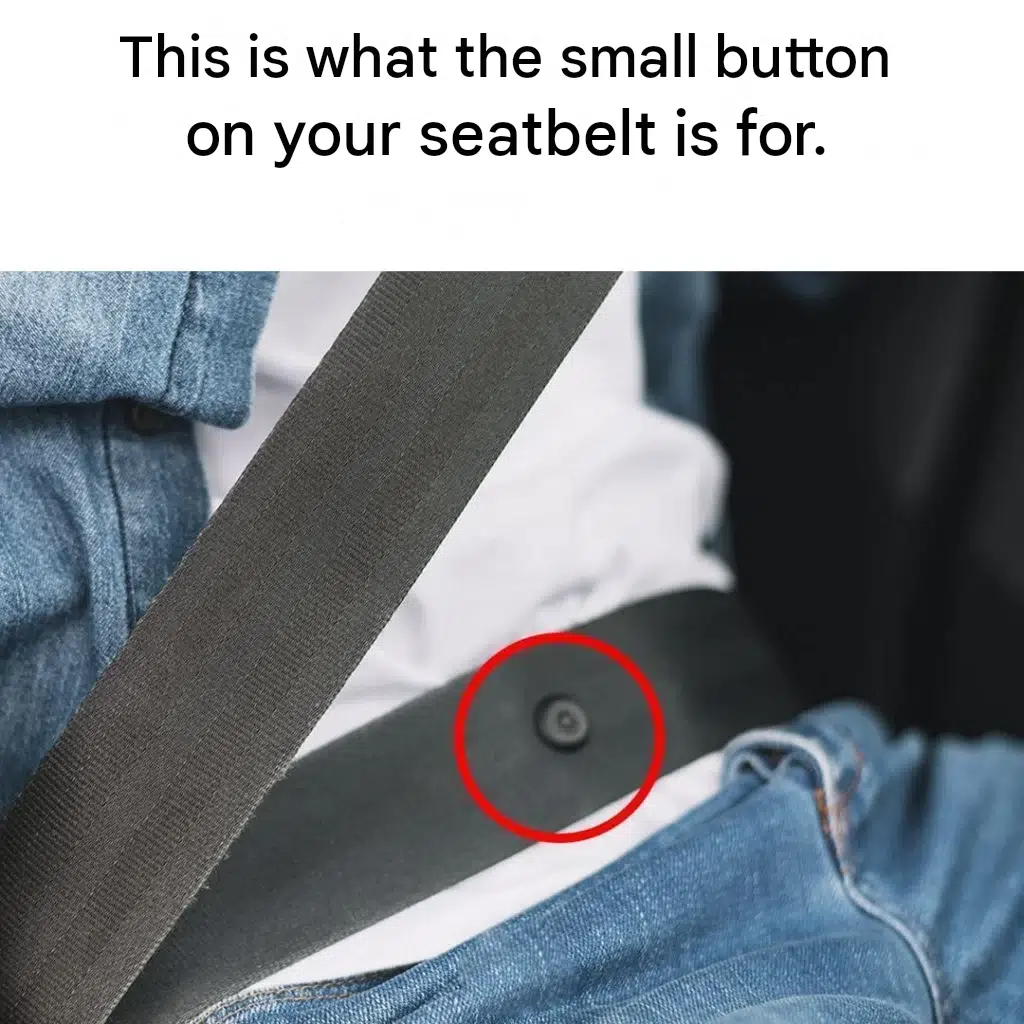
Modern automobiles are packed with subtle engineering details, safety features, and functional designs that most of us interact with every single day without a second thought. From the buttons on our steering wheels to the mechanisms holding our seats in place, every element serves a specific purpose. However, there are certain hidden design features that puzzle drivers for years. If you have ever looked closely at your car’s seatbelt webbing, you have likely noticed a small, seemingly insignificant plastic button stitched firmly into the strap. While many drivers assume it is merely a decorative tag or a manufacturing flaw, this tiny button plays a surprisingly crucial mechanical role in your vehicle’s safety system.
The Engineering Behind the Seatbelt Button
To understand why this small button exists, we have to look at how seatbelts function on a day-to-day basis. When you unbuckle your seatbelt, the heavy metal buckle tongue is designed to retract smoothly toward the upper pillar loop. Without a stopper, gravity would cause the metal buckle to slide all the way down to the floor, leaving it dangling near the door sill, getting caught in the car door, or making an annoying clattering sound against the interior panels.
1. The Stopper Function
The primary purpose of the small plastic button is to act as a physical stopper. It is positioned at a precise height on the seatbelt webbing to prevent the buckle tongue from sliding any lower than necessary. By keeping the buckle resting at a convenient, reachable height near your shoulder or hip, the button ensures that the seatbelt is always easy to grab the moment you sit down in the car.
2. Manufacturing and Safety Compliance
Creating this stopper requires a surprisingly robust manufacturing process. The button is typically made of two plastic halves that are heat-stamped or clamped through a hole in the woven nylon webbing, ensuring it can withstand thousands of impacts from the heavy metal buckle over years of daily use. While it may look simple, every component of a vehicle’s restraint system must comply with strict automotive safety regulations and rigorous durability testing.
Financial and Legal Considerations for Vehicle Maintenance
Maintaining your vehicle properly involves more than just oil changes and tire rotations; it is a vital part of protecting your overall financial health and vehicular investment. Faulty or damaged seatbelts compromise passenger safety and can lead to expensive appliance repair or vehicle component replacements if safety systems fail inspection.
If you are involved in an automotive accident or face disputes regarding vehicle component safety, consulting a qualified attorney or utilizing specialized legal services is essential for navigating insurance claims. Furthermore, keeping up-to-date vehicle insurance policies ensures that you are financially protected against unexpected accidents, preserving your long-term retirement savings and household business stability from sudden vehicular liabilities.
Practical Tips for Seatbelt Care and Maintenance
- Inspect Your Webbing: Regularly check your seatbelt straps for fraying, cuts, or weakened areas around the stopper button, as compromised webbing reduces crash protection.
- Keep It Clean: Clean dusty or stained seatbelt straps using mild soap and warm water, allowing them to dry completely before retracting.
- Never Remove Components: Never cut off or remove the small plastic stopper button, as losing it will cause the buckle to slide down out of reach.
Interesting Facts About Seatbelt History
- The Three-Point Seatbelt Invention: The modern three-point seatbelt was introduced by Volvo in 1959. Recognizing its life-saving potential, the company made the patent freely available to all other car manufacturers, saving millions of lives worldwide.
- Webbing Material Strength: Seatbelt webbing is made from high-tensile woven polyester or nylon, capable of withstanding forces of several tons during a high-speed collision.
- The Pyrotechnic Pretensioner: Modern seatbelts feature sophisticated pyrotechnic charge mechanisms that instantly tighten the belt milliseconds upon impact, securing the occupant firmly in place.
Conclusion
That small, unassuming plastic button on your car seatbelt is a masterclass in smart, practical design. By keeping the metal buckle within easy reach every time you enter your vehicle, it eliminates daily frustrations while contributing to overall convenience. Understanding these small automotive details enhances your appreciation for vehicle engineering, protects your valuable automotive investment, and ensures your daily commutes remain safe, comfortable, and well-organized.
FAQ Section
1. What is the small button on a seatbelt actually called?
In automotive manufacturing terms, it is generally referred to as a seatbelt button stop, webbing button, or buckle stopper.
2. Can I replace the button if it falls off?
Yes, replacement seatbelt buttons can be purchased online or at auto parts stores. They typically snap or heat-press together through the existing hole in the webbing.
3. Does the button affect the safety rating of the seatbelt?
The button itself is purely a convenience stopper and does not bear the load during a crash; the heavy-duty stitching and high-tensile webbing provide the actual crash protection.
4. Why do some cars have the button higher up than others?
Manufacturers place the button at varying heights depending on the vehicle’s interior layout, door pillar design, and average driver ergonomics to ensure the buckle rests comfortably.
5. Can a damaged seatbelt fail a vehicle inspection?
Yes, frayed webbing, a missing latch, or a broken buckle mechanism can cause a vehicle to fail safety inspections in many jurisdictions.
6. Should I consult an attorney if my seatbelt malfunctions during an accident?
If a safety restraint system fails during a collision due to a manufacturing defect, consulting an attorney specializing in product liability can help you pursue compensation and protect your rights.
7. How can website owners use everyday trivia to boost traffic?
Publishing engaging articles about hidden everyday objects captures user curiosity, increases average reading time, and drives social media shares, optimizing platform visibility for AdSense revenue.
