
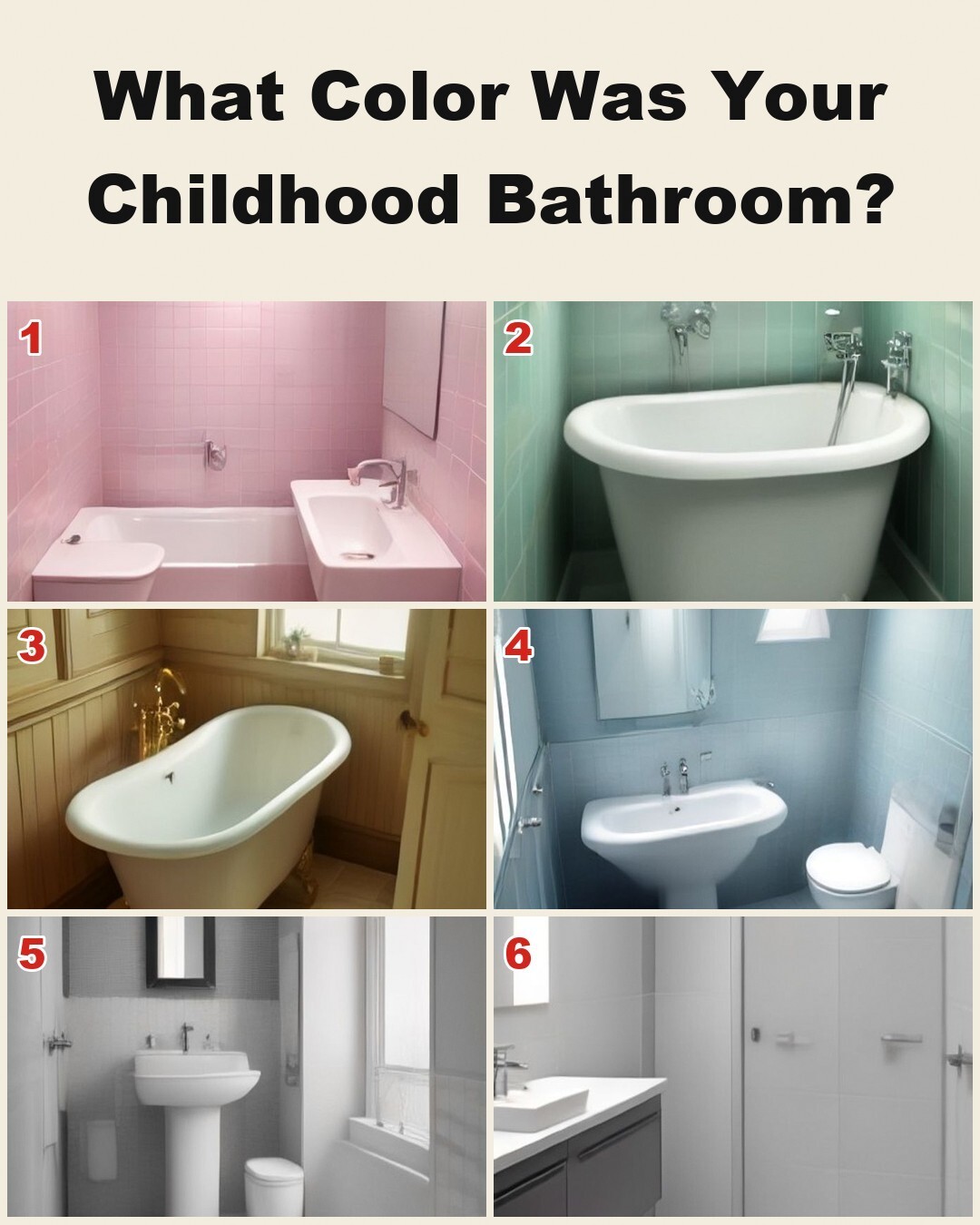
Throughout the mid-20th century, home interior design embraced bold, pastel-colored bathroom fixtures and tiled walls. A viral nostalgic image featuring six different numbered bathroom styles—asking “What Color Was Your Childhood Bathroom?” with options ranging from pastel pink (1) and jade green (2) to warm wood (3), powder blue (4), classic monochrome (5), and modern neutral white (6)—sparks fond memories of growing up in vintage family homes. Today, these retro color palettes are experiencing a major revival as homeowners look to restore historic properties or blend mid-century charm with modern functionality.
Understanding the history behind vintage bathroom colors, maintaining mid-century plumbing fixtures, and managing home renovation investments offers a fascinating look at classic home design.
The Evolution of Vintage Bathroom Color Trends
Mid-century American housing booms introduced vibrant ceramic tiles and matching porcelain fixtures that defined homes for decades.
1. Mid-Century Pink, Seafoam Green, and Powder Blue
Following World War II, pastel bathrooms became immensely popular in suburban home construction. “Mamie Pink”—popularized by First Lady Mamie Eisenhower in the 1950s—along with seafoam green and soft powder blue tiles, became iconic staples in millions of American households, symbolizing optimism and modern living.
2. Natural Wood and Neutral Transitions
By the late 1970s and 1980s, home design shifted toward earthy tones, beadboard wood paneling, warm beige tiles, and monochromatic monochrome finishes, laying the groundwork for the minimalist white and grey interiors popular in contemporary architecture today.
Restoring Vintage Bathrooms, Plumbing Maintenance, and Homeowners Insurance
Preserving original mid-century ceramic tilework and cast-iron tubs adds substantial historical character and value to older homes.
Preserving Original Tilework and Cast-Iron Tubs
Original cast-iron clawfoot tubs and porcelain sinks were built to last for generations. Professional reglazing or refinishing allows homeowners to restore scratched enamel and update color schemes without discarding heavy, high-quality vintage craftsmanship.
Water Leak Prevention and Renovation Insurance
When remodeling retro bathrooms, updating hidden supply pipes, shut-off valves, and floor waterproofing prevents structural water damage behind old tile walls. Major bathroom renovations or plumbing upgrades should always be reported to your homeowners insurance provider to ensure updated property replacement values are fully covered.
Practical Tips for Updating or Restoring Retro Bathrooms
- Reglaze Instead of Replacing: Refinish original cast-iron bathtubs and ceramic sinks to restore shine while preserving vintage charm.
- Inspect Hidden Plumbing: Upgrade original galvanized or brass pipes behind tile walls during renovations to prevent undetected water leaks.
- Match Era-Appropriate Fixtures: Pair vintage-style brass or chrome faucets with original tile colors for an authentic restored aesthetic.
Frequently Asked Questions (FAQ)
Why were mid-century bathrooms so colorful?
Post-WWII manufacturing advancements made colorful ceramic tiles and porcelain fixtures affordable, transforming bathrooms into decorative showcases.
Is it expensive to reglaze a vintage bathtub?
Professional bathtub reglazing typically costs a fraction of full replacement while making old porcelain look brand-new.
Does homeowners insurance cover water leaks behind bathroom tile?
Standard policies usually cover sudden, accidental pipe bursts, but long-term leaks caused by deteriorated caulking or aging pipes are often excluded
