
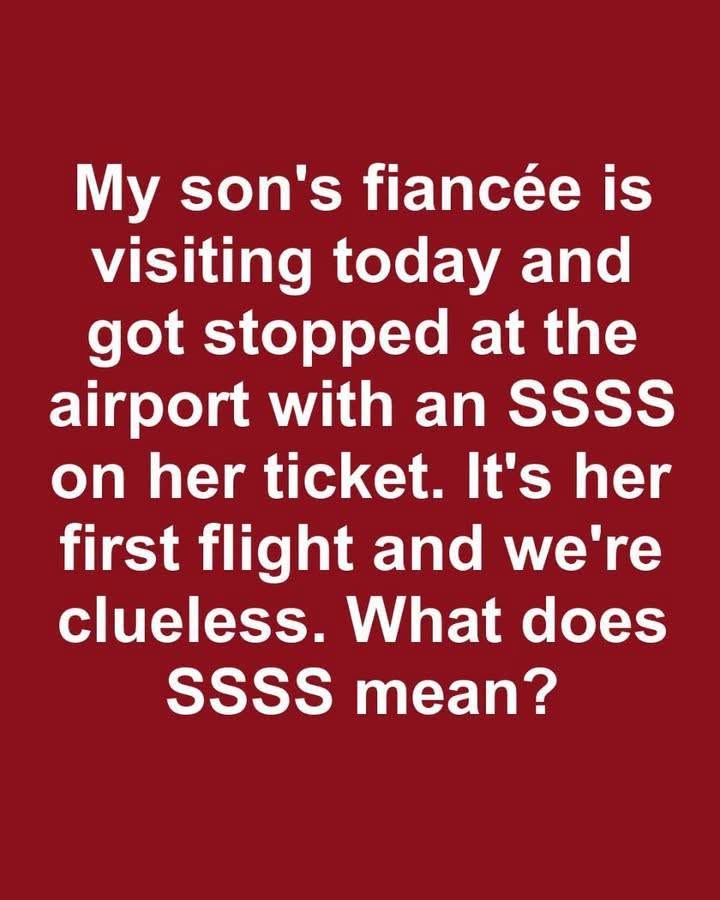
Navigating airport security can sometimes bring unexpected surprises for first-time travelers and seasoned flyers alike. A viral social media text image stating “My son’s fiancée is visiting today and got stopped at the airport with an SSSS on her ticket. It’s her first flight and we’re clueless. What does SSSS mean?” highlights a common travel question. Receiving an SSSS designation on a boarding pass simply means undergoing enhanced TSA security screening, which is often selected completely at random.
Understanding what SSSS stands for, why passengers are selected, and how to navigate the additional screening process smoothly ensures stress-free air travel.
Understanding the SSSS Boarding Pass Designation
The four letters printed on a boarding pass stand for a specific Transportation Security Administration (TSA) security protocol.
1. What SSSS Stands For
SSSS stands for Secondary Security Screening Selection. Managed by the TSA and Homeland Security systems, this code designates a passenger for additional security checks at the departure checkpoint before boarding the aircraft.
2. Common Reasons Passengers Are Selected
While selection is frequently random, certain booking patterns or travel factors can trigger the designation automatically:
- Last-Minute Ticket Bookings: Purchasing a ticket shortly before departure or booking one-way international travel.
- High-Risk Travel Routes: Traveling to or returning from high-risk international destinations.
- Lack of Travel History: First-time travelers or passengers missing from standard airline security databases.
- Random Selection: Algorithmically generated random selections applied across all flight manifests.
What to Expect During Secondary Screening
Experiencing secondary screening adds roughly 15 to 30 minutes to standard security lines.
Additional Screening Steps
Passengers with SSSS printed on their boarding pass will undergo full-body scanning, detailed pat-downs, physical swab testing for explosive residue on hands and baggage, and a manual inspection of all carry-on items. Once cleared, security personnel stamp or sign the boarding pass to allow gate entry.
Navigating Screening Efficiently
If you cannot print your boarding pass online or receive a mobile pass, it often indicates an SSSS selection that requires retrieving a paper pass directly from the airport check-in counter.
Practical Tips for Handling SSSS Airport Screening
- Arrive at the Airport Early: Allow an extra 30 to 45 minutes of buffer time to clear secondary security screening without rushing to your gate.
- Keep Electronics Accessible: Be prepared to turn on laptops, tablets, and electronic devices so officers can verify operational safety.
- Apply for Known Traveler Programs: Joining TSA PreCheck or Global Entry significantly reduces the frequency of random secondary selections.
Frequently Asked Questions (FAQ)
Does SSSS mean a passenger is on a government watchlist?
Not necessarily. While watchlist entries trigger secondary screening, the vast majority of SSSS prints result from automated booking triggers or pure random selection.
Can you skip secondary screening if you are in a rush?
No. Passengers designated with SSSS must complete secondary screening and receive officer clearance before boarding any commercial flight.
What should you do if you receive SSSS repeatedly?
If you receive SSSS on almost every flight, apply for a DHS REDRESS Number (DHS TRIP) to resolve misidentifications or database mismatches linked to your name.
