
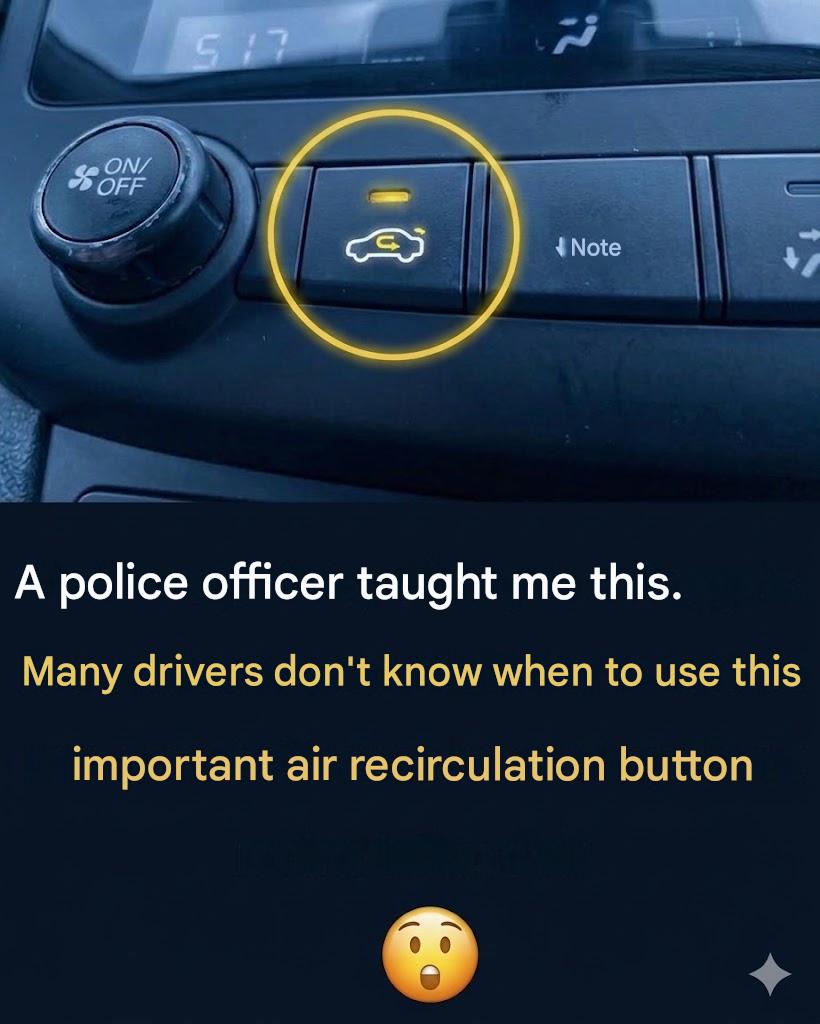
Modern automobiles are equipped with numerous climate control options designed to maximize passenger comfort, improve vehicle efficiency, and maintain clear driving visibility. Among the control panel switches present on almost every car dashboard is the air recirculation button—typically identified by an icon of a car silhouette with a looped arrow inside it.
Despite being located right next to standard fan speed knobs and temperature dials, a surprising majority of drivers rarely press this button or use it incorrectly. Knowing precisely when to turn air recirculation on—and, crucially, when to turn it off—can significantly boost your car’s air conditioning performance, reduce fuel consumption, shield your lungs from hazardous outdoor fumes, and prevent dangerous windshield fogging during adverse weather conditions.
In this comprehensive automotive and safety guide, we will analyze the mechanical function of the air recirculation system, explore ideal driving scenarios for its use, examine financial benefits related to fuel efficiency and repair costs, discuss health and legal driving standards, and provide actionable tips for optimizing your vehicle’s HVAC system.
How the Air Recirculation Button Works
To understand the practical benefits of the air recirculation feature, it helps to compare it to the standard fresh air intake mode found in automotive HVAC (Heating, Ventilation, and Air Conditioning) systems.
Fresh Air Mode vs. Recirculation Mode
- Fresh Air Mode (Recirculation OFF): The vehicle draws outside air through the cowl intake near the base of the windshield, passes it through the cabin air filter, heats or cools it according to your thermostat setting, and vents it into the cabin. This brings continuous fresh oxygen inside while expelling ambient interior air through small pressure-relief vents near the rear bumper.
- Recirculation Mode (Recirculation ON): The system closes the external air intake flap. Instead of pulling outside air, the climate control blower draws air directly from inside the passenger cabin, passes it through the evaporator core and filter, and redistributes it continuously.
By trapping and re-cooling air that has already been chilled, your vehicle’s air conditioning unit operates far more efficiently than when tasked with cooling hot, humid air from the outside.
When to Turn the Air Recirculation Button ON
Using air recirculation during specific driving conditions improves cabin comfort, air purity, and system efficiency.
1. Sweltering Summer Days
When your car has been parked under direct sunlight on a hot day, turn on the air conditioning and open the windows for 1 to 2 minutes to let trapped superheated air escape. Once the cabin air reaches ambient outside temperature, roll up the windows and press the air recirculation button. Because the system is re-cooling air that is already getting colder, your AC will chill the cabin significantly faster while placing less mechanical load on the engine compressor.
2. Heavy Traffic, Construction Zones, and Tunnel Driving
When driving behind diesel trucks, sitting in bumper-to-bumper rush hour traffic, passing agricultural fields, or navigating dust-heavy construction zones, turning recirculation ON prevents toxic exhaust fumes, carbon monoxide spikes, particulate matter, and unpleasant odors from entering your vehicle.
3. High Allergy and Pollen Seasons
During peak spring and summer pollen seasons, activating recirculation minimizes the volume of outdoor allergens drawn into your cabin, providing relief for drivers suffering from seasonal allergies or respiratory sensitivities.
When You Should NEVER Use Air Recirculation
While air recirculation is a powerful tool for hot weather and polluted roads, relying on it at the wrong time can introduce serious safety hazards.
1. Cold Weather and Defrosting Windows
Never leave air recirculation ON during cold weather or when trying to defog your windshield. Human respiration constantly releases moisture into the cabin air. When recirculation is active in cold temperatures, high interior humidity rapidly condenses against cold windshield glass, causing severe fogging that blinds the driver.
- Correct Defrost Procedure: Turn recirculation OFF (fresh air mode), turn the temperature to hot, activate the front defrost mode, and turn the AC on. Fresh outside air is much drier, allowing the defroster to clear condensation rapidly.
2. Long Highway Drives with Multiple Passengers
Operating a vehicle on extended road trips with recirculation active continuously can cause carbon dioxide ($CO_2$) levels inside a sealed cabin to rise gradually. Elevated $CO_2$ concentrations can induce mild drowsiness, headaches, and reduced alertness for the driver. Switch to fresh air mode periodically to maintain crisp oxygen levels.
Financial, Insurance, and Legal Implications of Vehicle HVAC Management
Proper management of your vehicle’s climate control system extends beyond basic driving comfort; it directly impacts fuel economy, maintenance budgets, and road safety liability.
Fuel Efficiency and Compressor Wear
Running an air conditioning compressor at maximum capacity constantly increases fuel consumption by up to 10% to 20% in warm climates.
- Fuel Savings: Using recirculation allows the AC compressor to cycle off more frequently once the target cabin temperature is reached, saving money at the gas pump or preserving battery range in Electric Vehicles (EVs).
- Preventing Costly Repairs: Overworking an AC compressor in high ambient heat can accelerate component wear, leading to expensive mechanical repair bills that can reach $1,000 to $2,500. Maintaining system efficiency protects your personal budget and vehicle resale value.
Roadway Safety, Law Enforcement, and Driving Visibility
Driving with heavily fogged or obscured windows poses a major traffic hazard. In many legal jurisdictions, state troopers and law enforcement officers can issue traffic citations for “failure to maintain full control” or “driving with obstructed vision” if a motorist operates a vehicle with fogged windows resulting from improper climate control use.
Maintaining clear glass through proper defroster settings prevents avoidable collision accidents, protecting drivers from complex auto insurance claims, rate hikes, or legal liability disputes.
Practical Tips for Keeping Vehicle Air Fresh and Clean
Maintaining your car’s climate control system ensures high air quality and reliable operation year-round.
- Replace the Cabin Air Filter Regularly: Swap out your cabin air filter every 12,000 to 15,000 miles (or once a year). A clogged filter restricts airflow, reduces cooling performance, and traps musty odors inside the HVAC housing.
- Turn Off Recirculation Before Reaching Your Destination: Turn off AC and recirculation 2 to 3 minutes before arriving home while leaving the fan running. This blows out residual moisture from the evaporator core, preventing mold, mildew, and stale odors from developing.
- Use Auto Climate Control Features: If your vehicle is equipped with automatic climate control, trust the system. Modern automotive computers automatically toggle air recirculation on and off based on ambient humidity and interior temperature sensors.
Fascinating Facts About Automotive Climate Control
- Automatic Recirculation in Reverse: Many modern luxury vehicles automatically switch off air recirculation or activate fresh air when shifting into reverse to prevent exhaust fumes from pooling around the vehicle intake.
- Pollution Sensors: Higher-end vehicles feature automatic air quality sensors (AQS) that detect external nitrogen oxides and hydrocarbon spikes, automatically engaging recirculation mode without driver intervention when driving behind dirty diesel vehicles.
- Electric Vehicle Heat Pumps: In modern EVs, air recirculation plays a vital role in heating systems during winter, as recycling cabin air requires far less battery energy than heating freezing external air.
Conclusion
The air recirculation button is one of the most useful yet misunderstood features on your car’s dashboard. By turning it on during hot summer days, heavy traffic, and dusty roads, you enhance AC performance, save fuel, and block toxic fumes. Conversely, switching to fresh air mode during cold weather ensures crystal-clear windows and optimal driving visibility. Mastering this simple control enhances your driving comfort, protects your health, and keeps money in your wallet.
Frequently Asked Questions (FAQ)
Should air recirculation be on or off when using heat in winter?
Air recirculation should generally be OFF when heating your car in winter. Using recirculation in cold weather traps moisture inside the cabin from your breath and wet shoes, leading to fogged windows. Fresh air mode brings in dry outside air that clears condensation efficiently.
Does turning on the air recirculation button save gas?
Yes. When air recirculation is active during hot weather, your car’s AC compressor does not have to work as hard to cool cabin air. This reduces engine load, resulting in improved fuel economy and reduced fuel costs.
Why does my air recirculation light turn off automatically when I turn on the defroster?
Car manufacturers engineer climate systems to automatically turn off air recirculation when front defrost is selected. This safety feature forces the system to pull in dry outside air to clear fogged windows as quickly as possible.
Can driving with air recirculation on make you sleepy?
Yes, on long drives with multiple passengers inside a sealed vehicle, continuous air recirculation can cause carbon dioxide ($CO_2$) levels to build up while reducing fresh oxygen. This can lead to fatigue, mild headaches, or decreased driver alertness. Switch to fresh air mode periodically on highway trips.
