
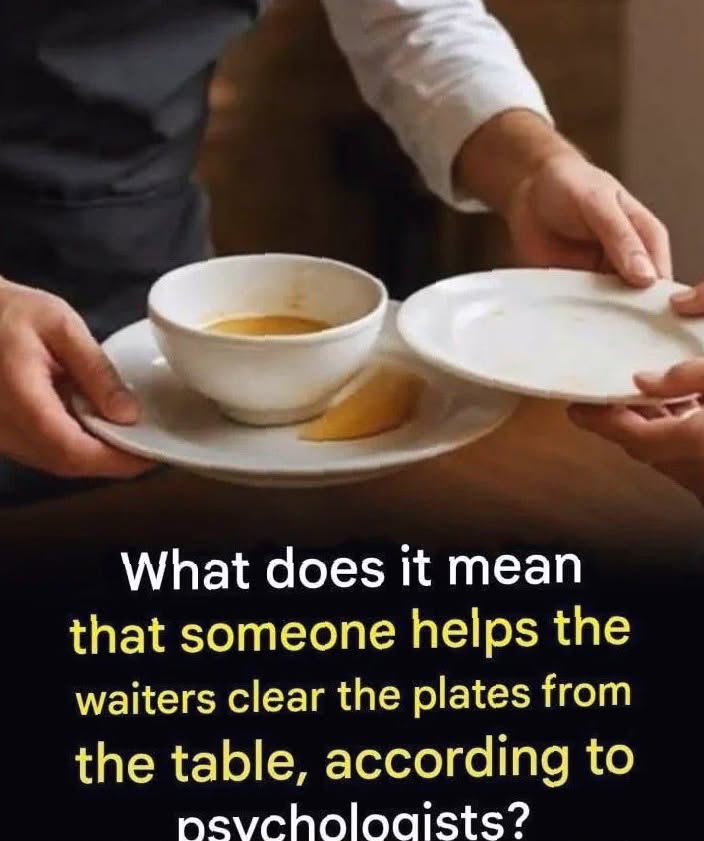
Social media posts exploring human behavior and dining etiquette regularly generate intense discussion online. A popular viral graphic featuring a waiter collecting soup bowls and plates asks: “What does it mean that someone helps the waiters clear the plates from the table, according to psychologists?”
While stacked plates and handed dishes might seem like simple, everyday acts of politeness, behavioral psychologists and hospitality experts view this habit through various psychological lenses. In this comprehensive guide, we examine the personality traits behind helping servers, the debate surrounding restaurant etiquette, social anxiety dynamics, and practical tips for polite dining.
1. High Empathy and Prosocial Behavior
Psychologists often associate the impulse to assist service staff with elevated levels of empathy and prosocial traits:
- Perspective-Taking: Individuals who have worked in customer service or hospitality naturally put themselves in the server’s shoes, anticipating physical exertion or busy shifts.
- Agreeableness and Consideration: In the Big Five personality framework, high agreeableness manifests as a strong desire to cooperate, maintain harmony, and ease the workload of others in social settings.
- Proactive Altruism: Handing over empty glasses or moving finished dishes to the edge of the table represents an automatic gesture aimed at making another person’s job slightly easier.
2. The Desire for Control, Order, and Tidiness
For many diners, clearing plates is less about altruism and more about maintaining personal comfort and spatial order:
- Need for Physical Space: Finished dishes clutter the dining area. Stacked plates create clean physical boundaries and free up room for conversation or dessert.
- High Conscientiousness: People with highly organized personalities feel uncomfortable sitting in front of mess or dirty tableware, prompting an immediate urge to tidy up their immediate environment.
- Task Completion Mindset: Finishing a meal signals the end of a culinary event; moving dishes away provides a psychological sense of closure and cleanliness.
3. Social Anxiety and “People-Pleasing” Dynamics
Behavioral health professionals also note that helping servers can stem from internal social pressure or anxiety:
- Over-Responsibility Complex: Some individuals feel hyper-responsible for the comfort of everyone around them, worrying that sitting idle while a server works makes them appear demanding or rude.
- Discomfort with Being Served: People raised in self-reliant households or those unused to fine dining may feel awkward being waited on, using physical assistance to balance perceived social power dynamics.
- Fear of Negative Judgment: Assisting service staff can serve as a subconscious buffer to ensure staff and fellow diners view them favorably.
4. The Hospitality Perspective: When Helping Can Be Unhelpful
While intention matters, hospitality professionals highlight that stacking plates can sometimes create unintended challenges for waitstaff:
- Disrupting Balancing Systems: Professional servers train extensively to stack and balance plates along their arms using specific weight-distribution techniques. Pre-stacked dishes can alter the balance center and cause spills.
- Hiding Silverware: Stacking bowls or plates incorrectly can trap cutlery between layers, increasing the risk of dropped utensils or broken glassware.
- Scraping and Noise: Scraping food scraps or clattering dishes at the table can disrupt the atmosphere for surrounding guests.
Fascinating Facts About Dining Psychology and Etiquette
- The “Busser’s Grip”: Professional servers use precise hand placements to carry up to four or five plates simultaneously without dropping items or dirtying the undersides of dishes.
- Resting Utensil Signals: In traditional fine dining, placing your knife and fork parallel at the 4 o’clock position on your plate silently signals to the waiter that you have finished your meal.
- Mirroring Behaviors: Group dynamics often dictate table behavior—when one person begins stacking plates or clearing space, others at the table almost always follow suit automatically.
Frequently Asked Questions (FAQ)
Is it rude to stack plates at a restaurant?
It depends on the setting. In casual dining, server assistance is generally appreciated. In upscale or fine dining establishments, staff prefer to clear dishes using specific sequence protocols, so it is best to leave plates untouched.
How can I help my waiter without causing mess or breakage?
The safest way to assist is simply grouping finished items near the edge of the table without stacking them awkwardly, keeping cutlery flat, and making sure glassware is easy to reach.
What is the best way to show appreciation to restaurant staff?
Beyond simple gestures like clearing space, verbal gratitude, clear communication regarding dietary needs, and generous tipping remain the most impactful ways to thank servers.
Conclusion
Whether driven by empathy, a desire for tidiness, or social anxiety, helping waiters clear dishes reveals fascinating insights into human psychology and social interaction. By understanding basic dining etiquette and matching helpful intentions with restaurant environments, you can ensure a pleasant, respectful dining experience for both guests and service staff.
